The Cost of This Job
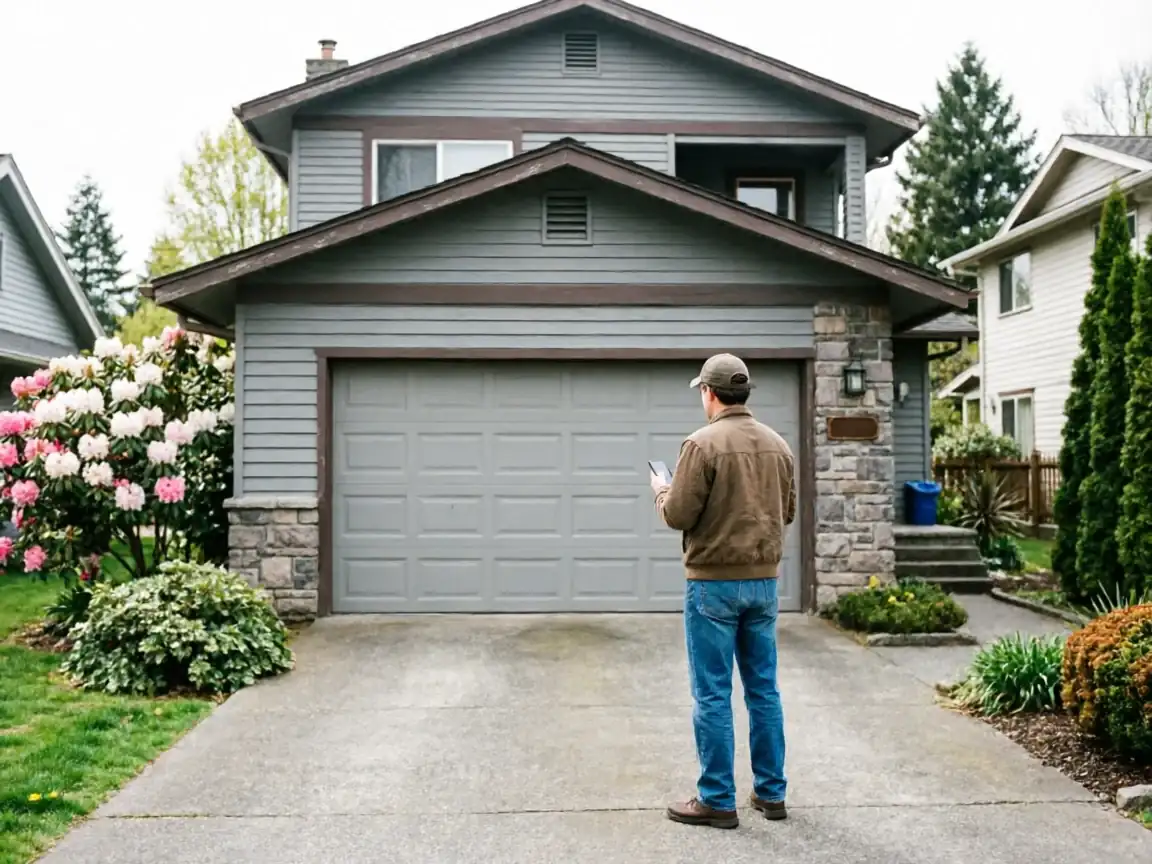
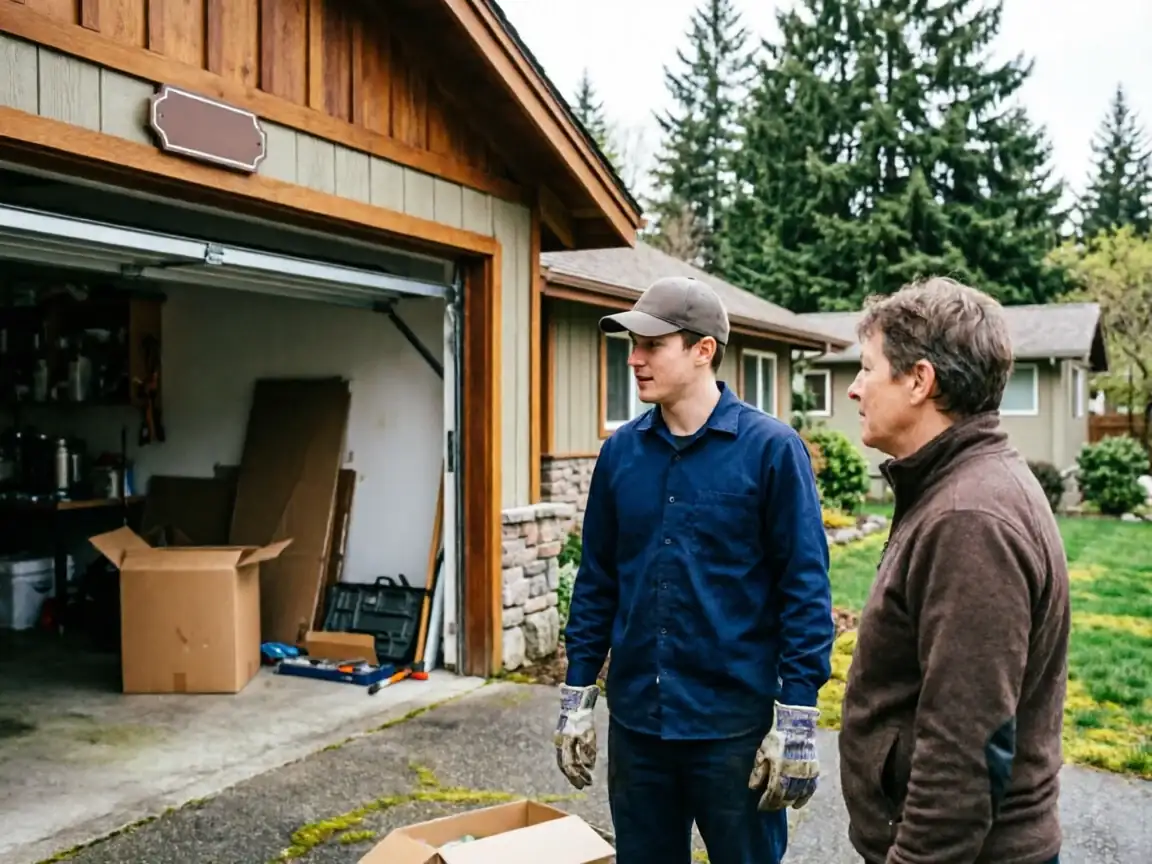
We can't quote you a number without seeing the door, and we won't pretend otherwise. What we can tell you is what drives the cost on a house like most in this area: age and part availability. Eugene's housing stock runs 1950 to 1997, with the median build year landing around 1980, and across the nine named areas we work in the bulk of that stock is 1980s-90s construction. That means a lot of doors out there are original hardware - steel rollers, single-stage openers, torsion springs sized for a lighter door than what replaced it somewhere along the way. Parts for a 40-year-old track system aren't always on the truck; sometimes they have to be ordered, and that adds a day or two, not because anyone is dragging their feet but because nobody stocks a part that old in volume anymore. A newer door with a bad noise is usually a quick adjustment. An older door with the same noise can mean the whole roller and hinge set is due, which costs more simply because there's more to replace. We'll tell you straight which one you've got before we touch anything.
What to Check
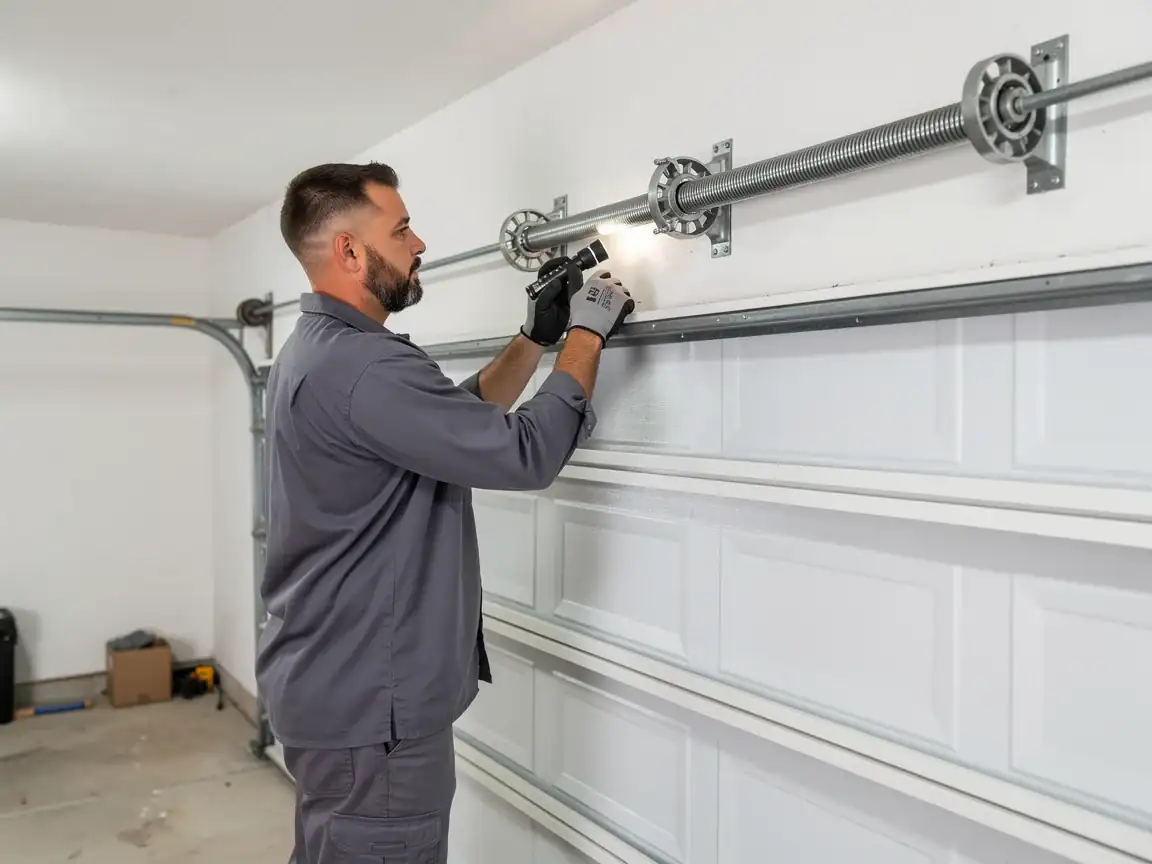
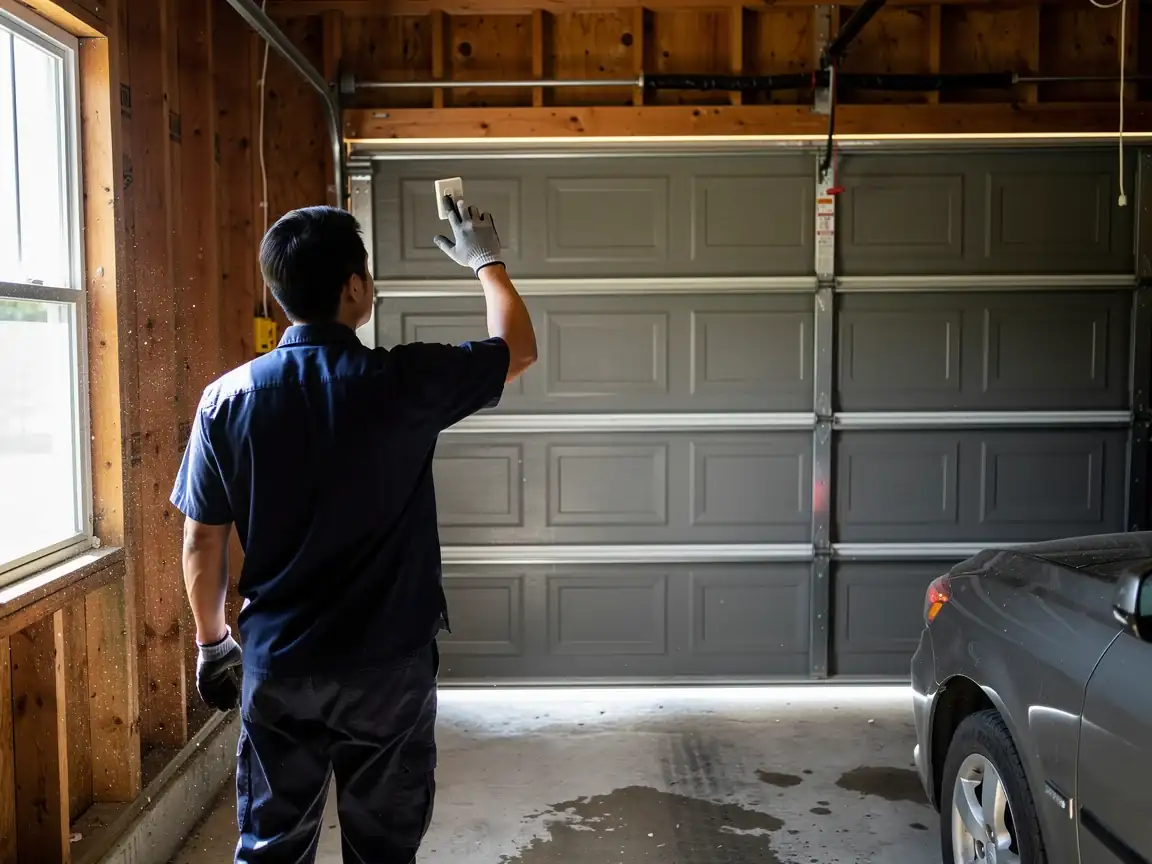
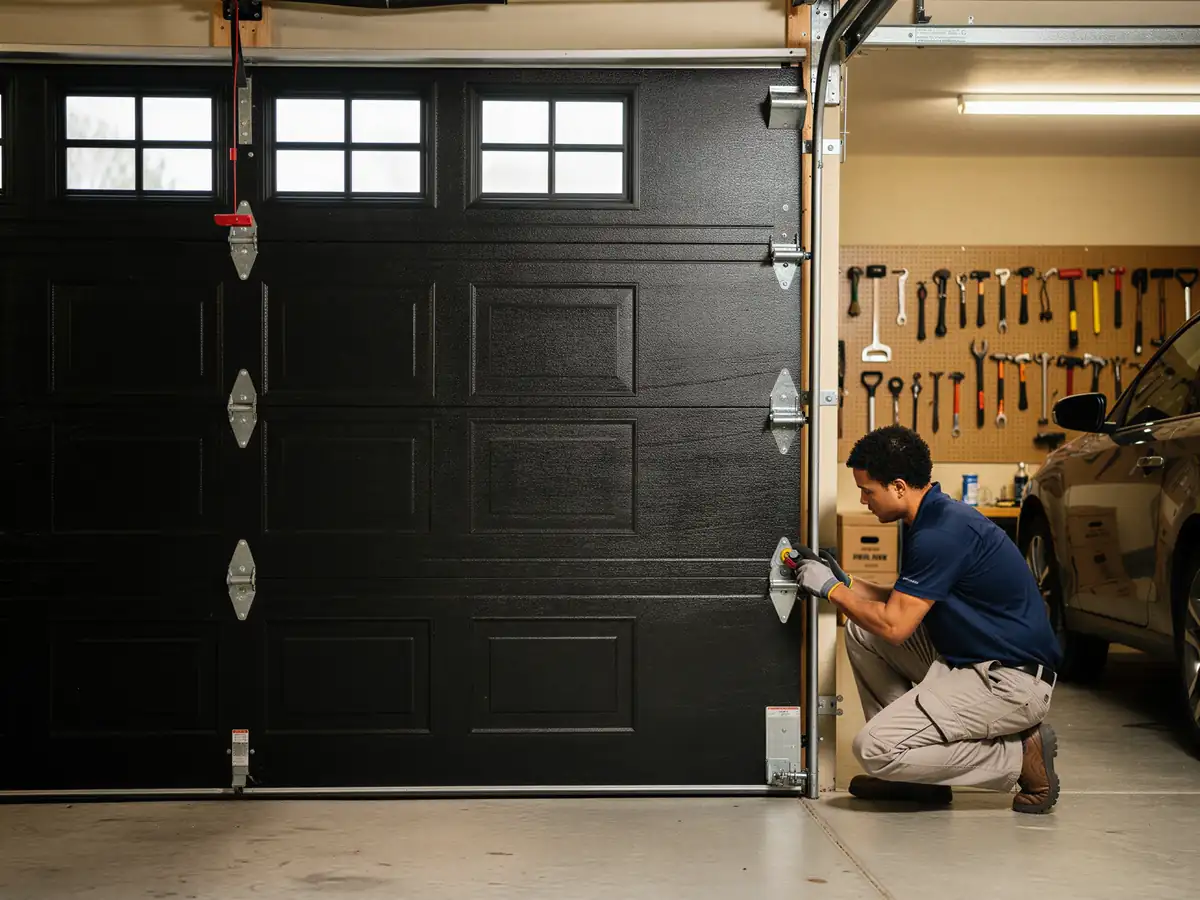
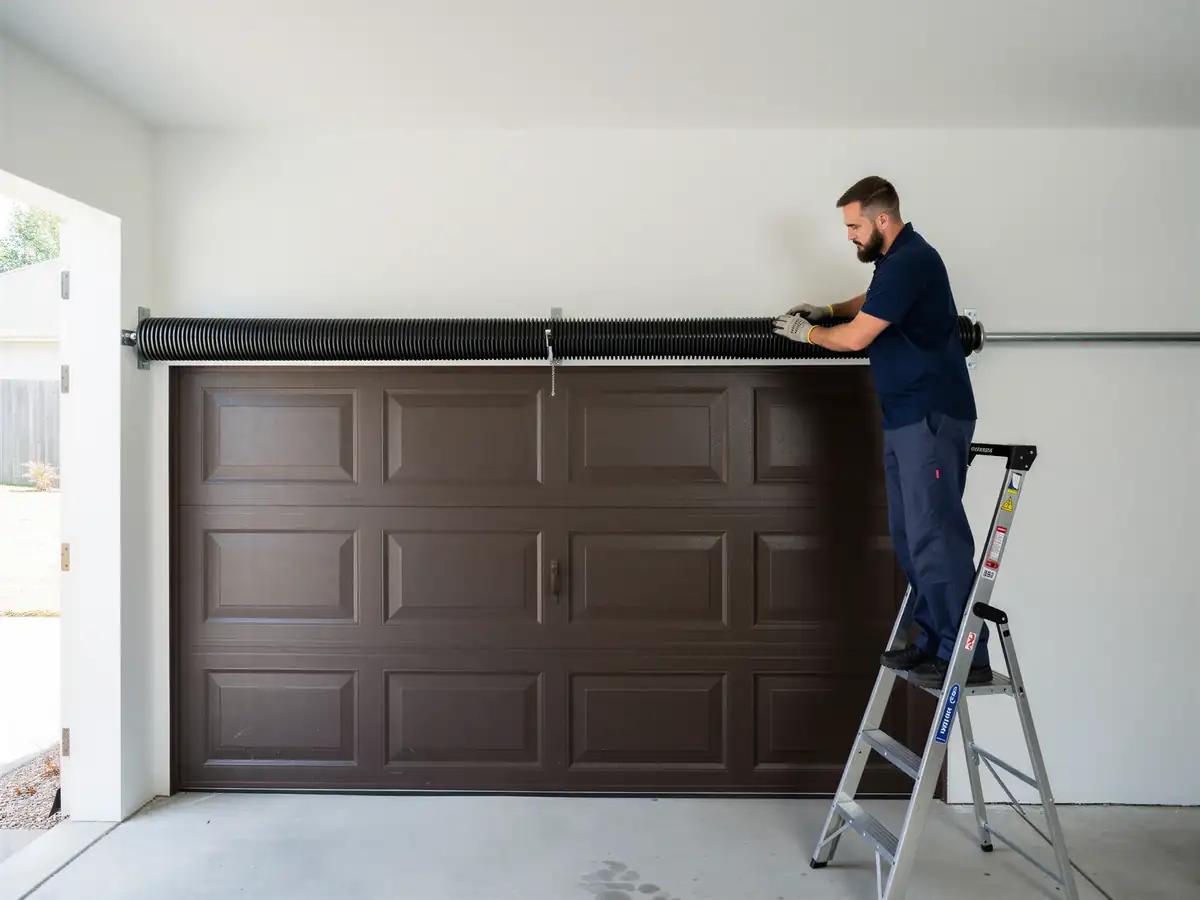
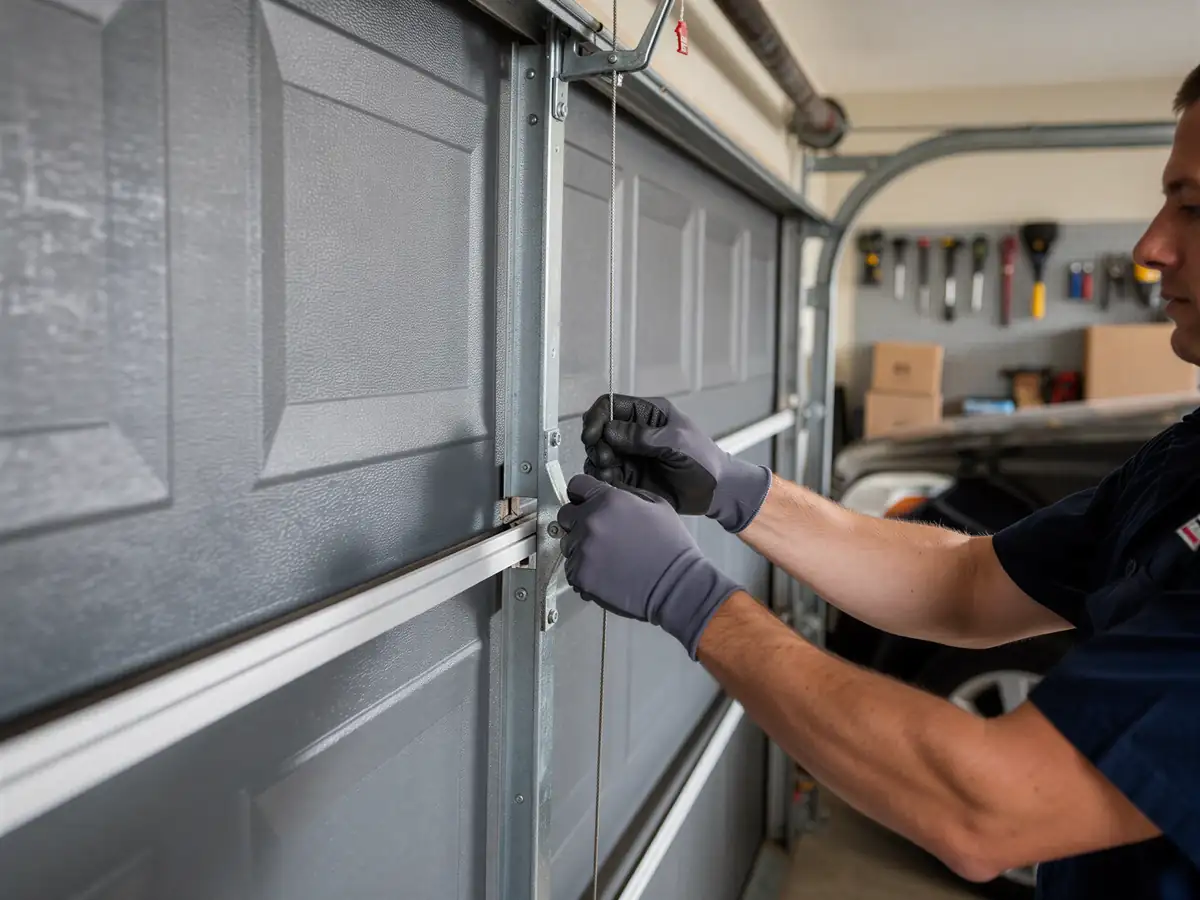
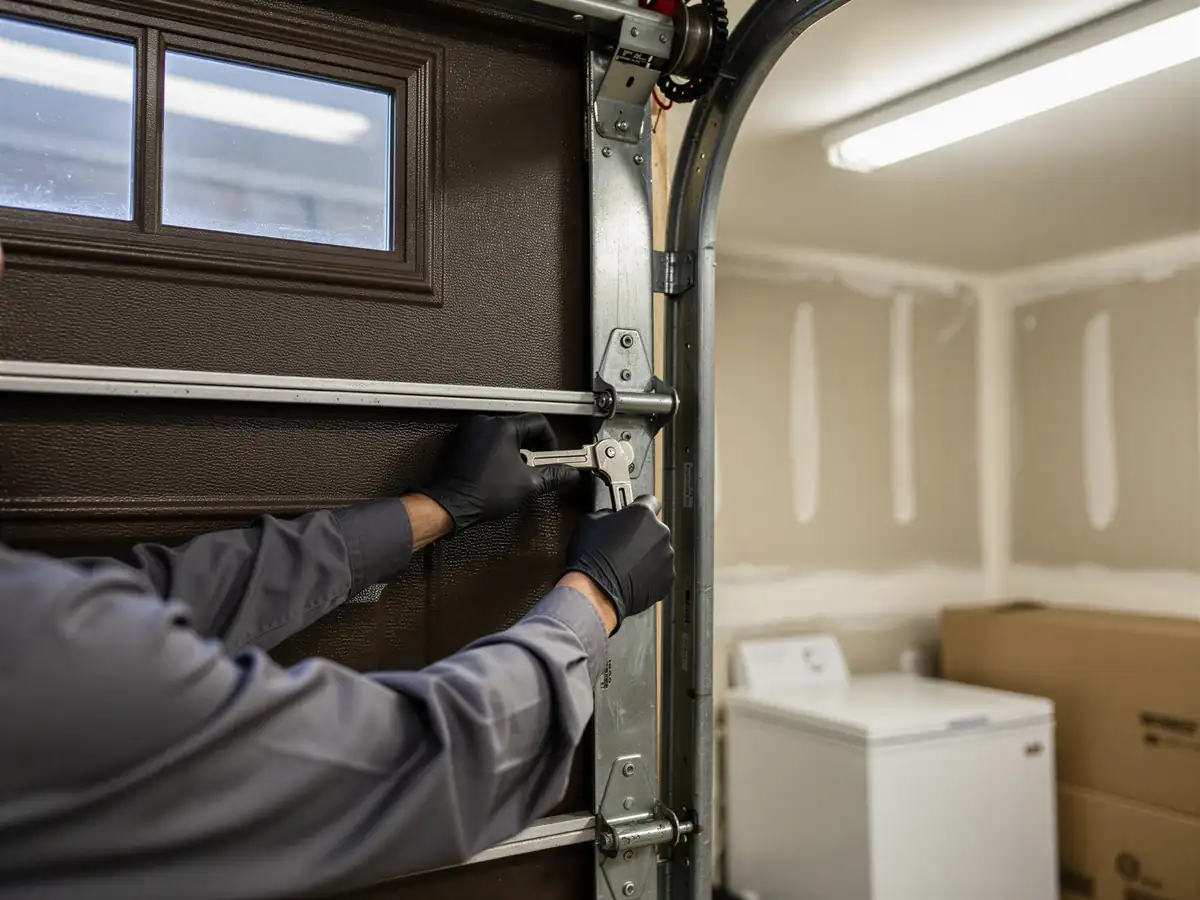
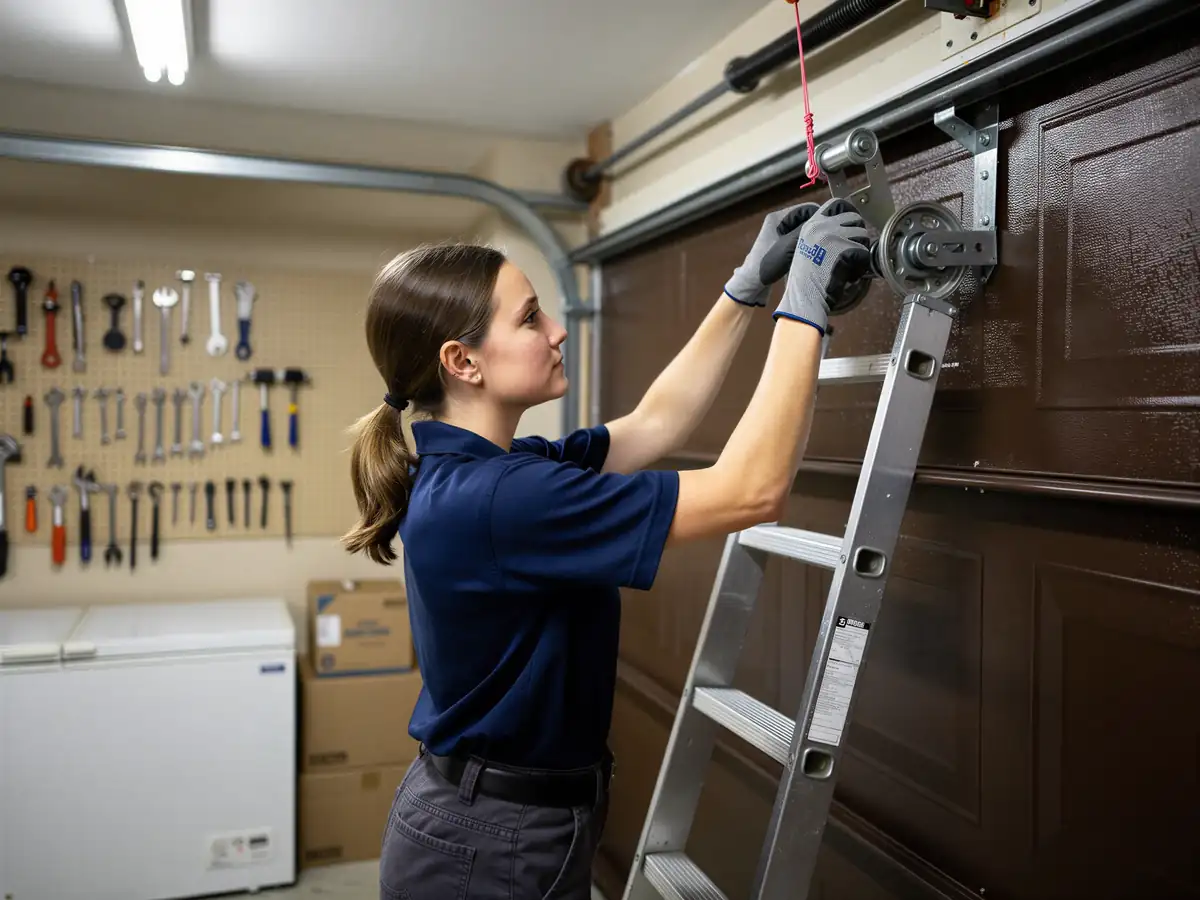
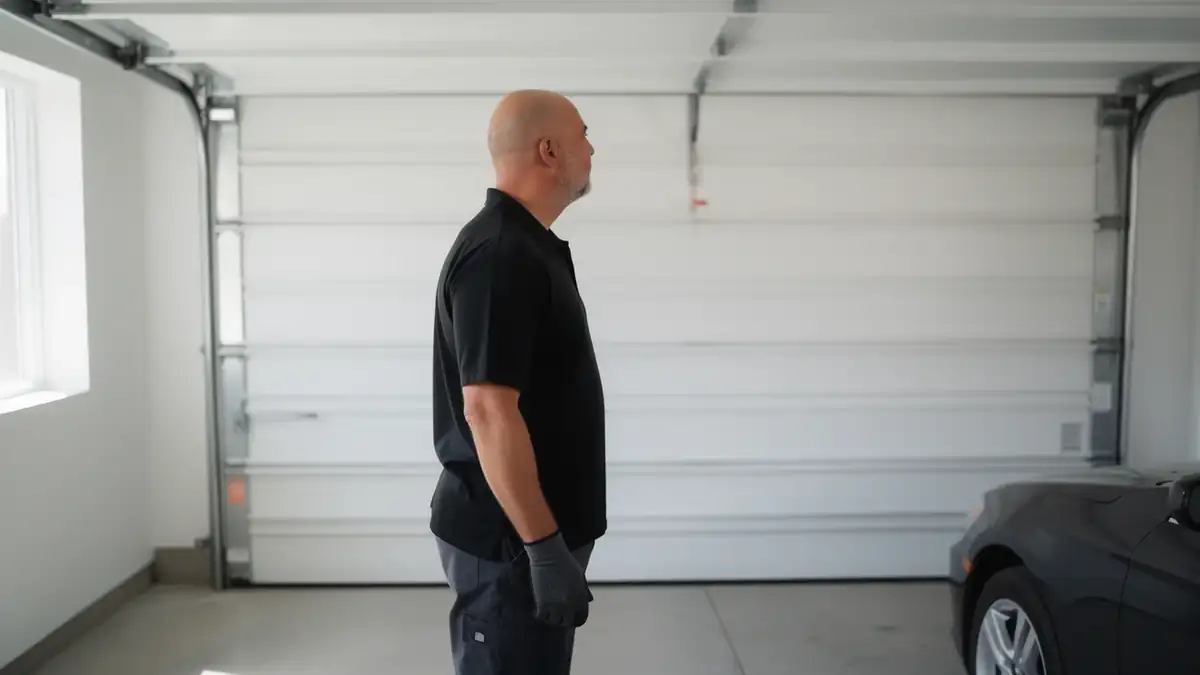
Stand next to the door, not in front of it, and run it up and down once. Note where in the cycle the noise happens - right at the start, partway through, or only at the very top. A noise only at the top often means the door is hitting the end of its track travel rougher than it should, which can be a spring balance issue rather than a roller problem. Look at the rollers themselves if you can see them: steel rollers with flat spots or rust streaks, or nylon rollers with visible cracks at the stem, are both past their working life. Check the hinges for play - grab one and wiggle it; if it moves more than a little, the hinge pin is worn. None of this requires tools, just a flashlight and five minutes. What you shouldn't check yourself is spring tension. A door built in the 1950-1997 range may still be running on its original torsion spring, and those hold enough stored force to hurt you badly if you don't know what you're doing with them.
What Local Conditions Do
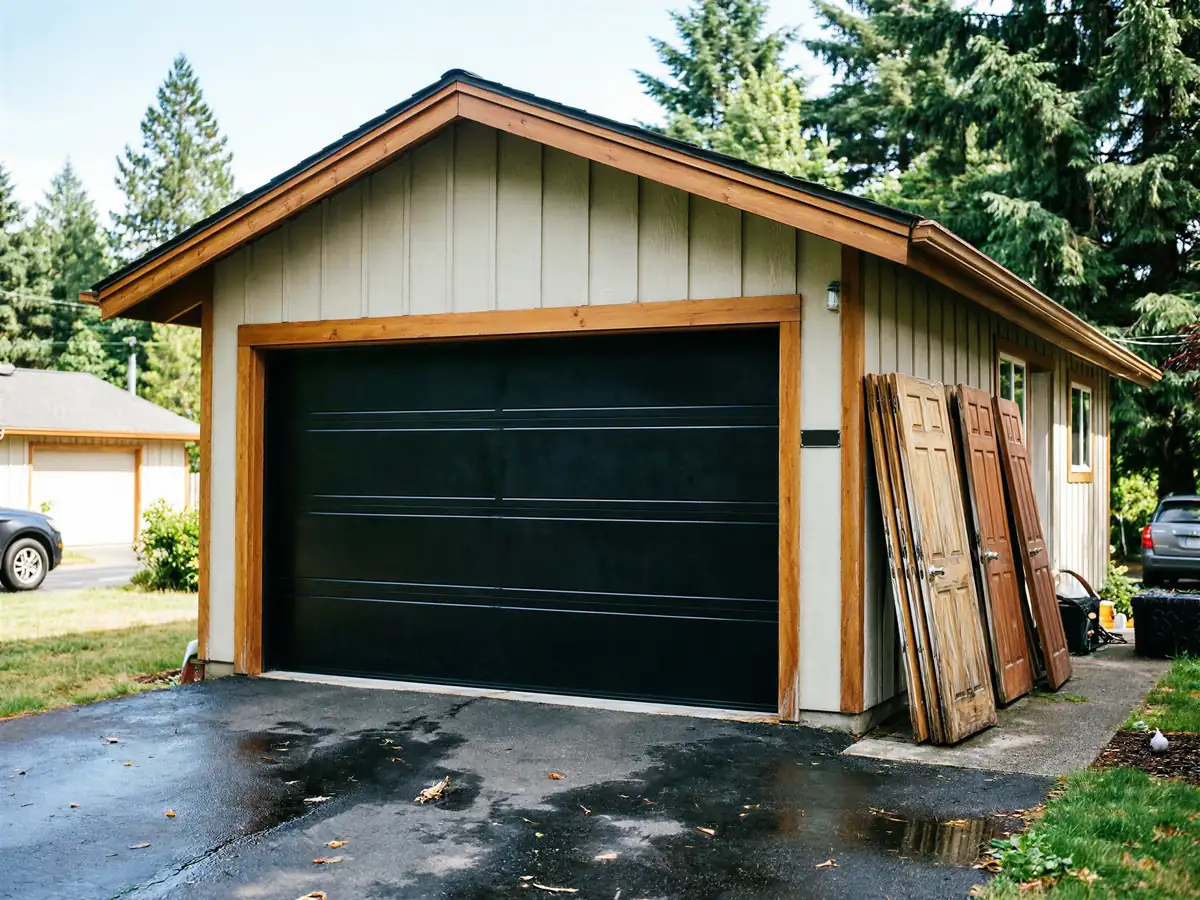
Eugene sits in a cold, moderate climate band, and that combination of cold and damp is harder on garage door hardware than dry cold would be. Moisture gets into the track and hinge pivots over a wet winter, washes out the grease, and leaves bare metal to oxidize. Come the dry months, that same metal expands and contracts again, and the cycle repeats every year. Across the roughly 14,400 owner-occupied houses we see in this service area, the doors that develop noise fastest are usually the ones facing west or north, where they take the brunt of wind-driven rain. This isn't a one-season problem - it's accumulated wear from a climate that never really lets hardware dry out and stay dry. A once-a-year lube of the rollers, hinges, and track doesn't stop metal fatigue on a 40-year-old door, but it does slow it down, and it's the one maintenance step most owners here skip.