The Cost of This Job
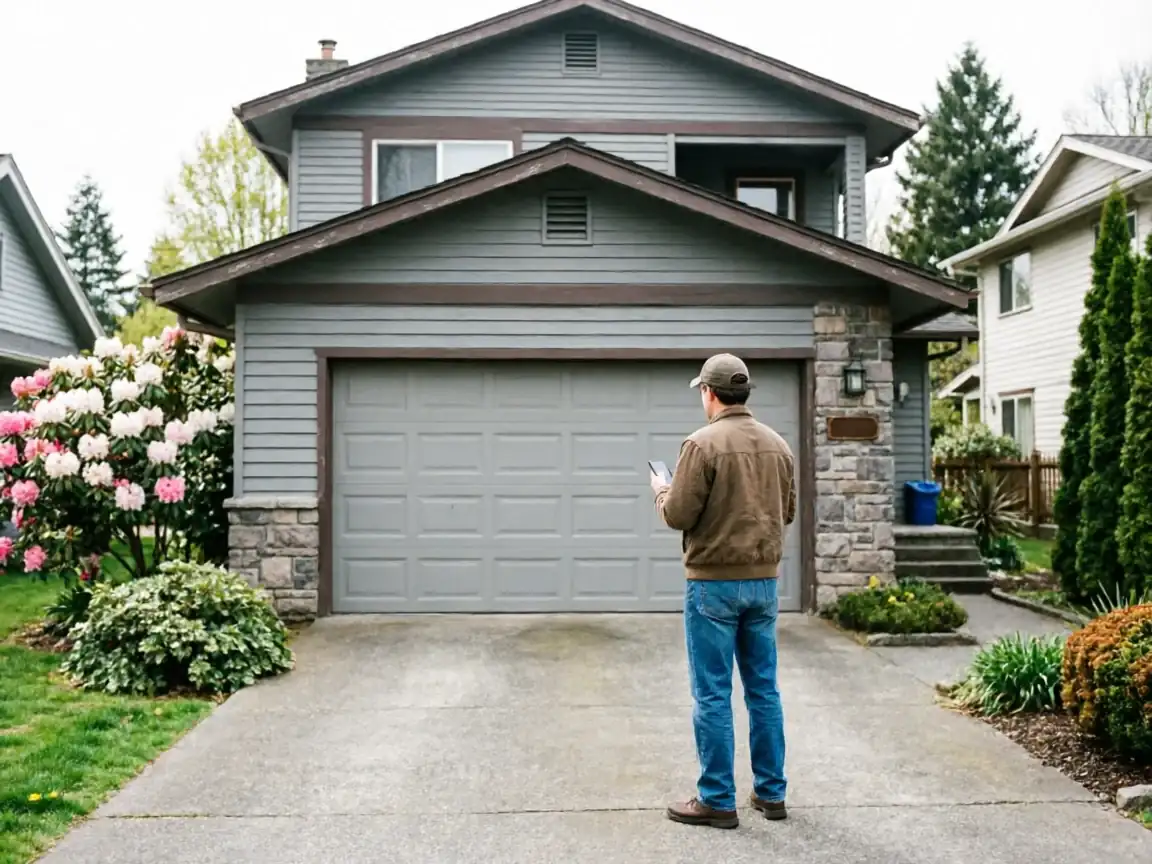
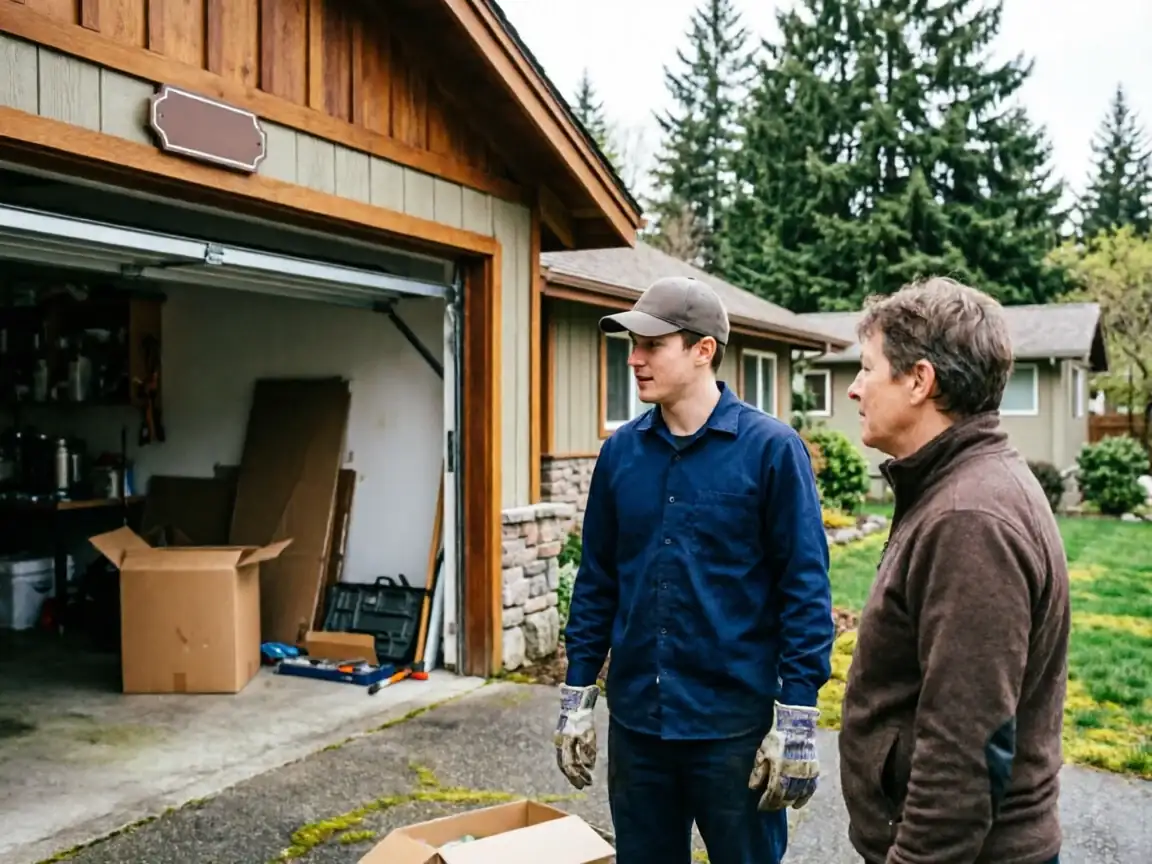
We don't post a flat number here because the job isn't flat. A service call covers the diagnostic, the labor, and whatever parts the door actually needs - and in this area that varies more than people expect. Across the service territory there are 38,353 households and about 14,398 owner-occupied houses, and a good number of those garages still run original torsion or extension hardware from when the house went up sometime between 1950 and 1997. A spring swap on a door that age costs less in parts than a full opener replacement, and a call that turns up a cracked panel costs more than one that doesn't. With a median household income of $74,006 in this area, most owners we talk to want the call to find and fix the actual failure - not get sold a new door when the old one has another decade left in it. That's the honest limitation: we won't quote a number before we've seen the hardware, because guessing a price over the phone on a 40-year-old torsion system is how you end up back here next month for something we missed.
What to Check
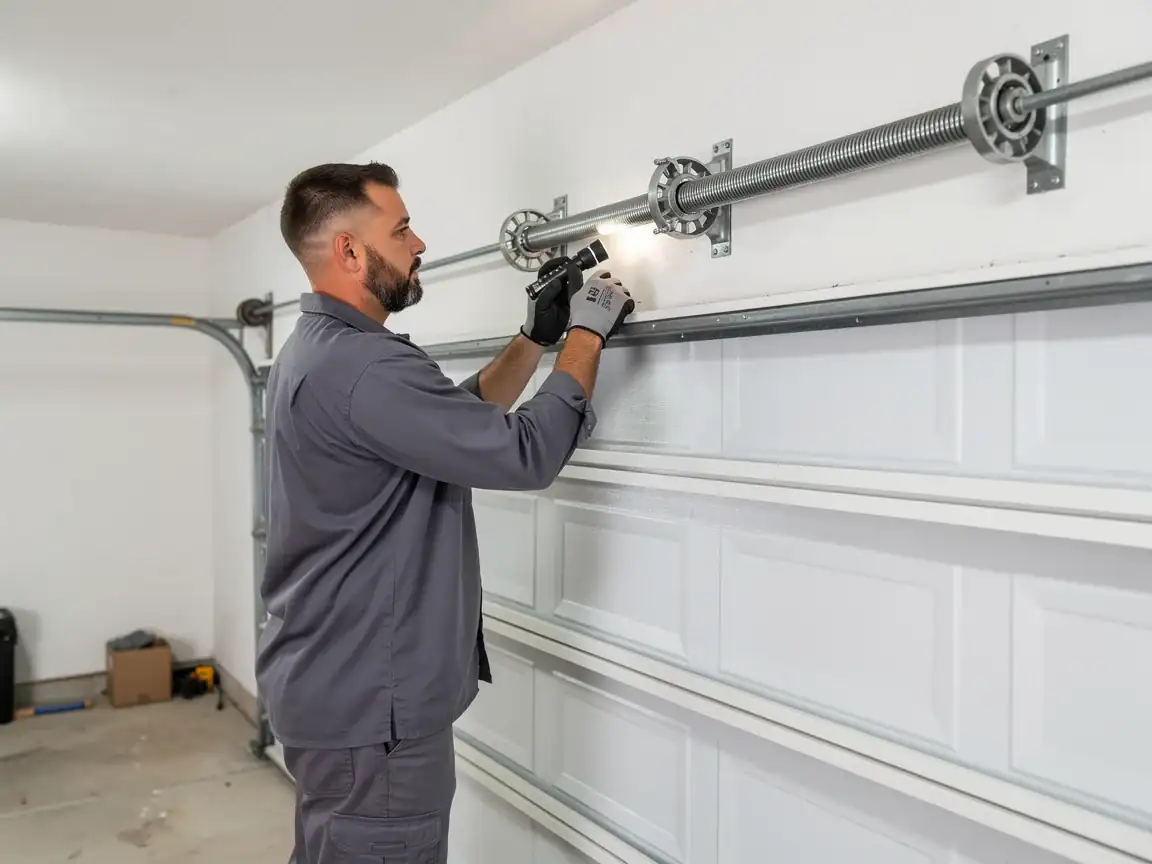
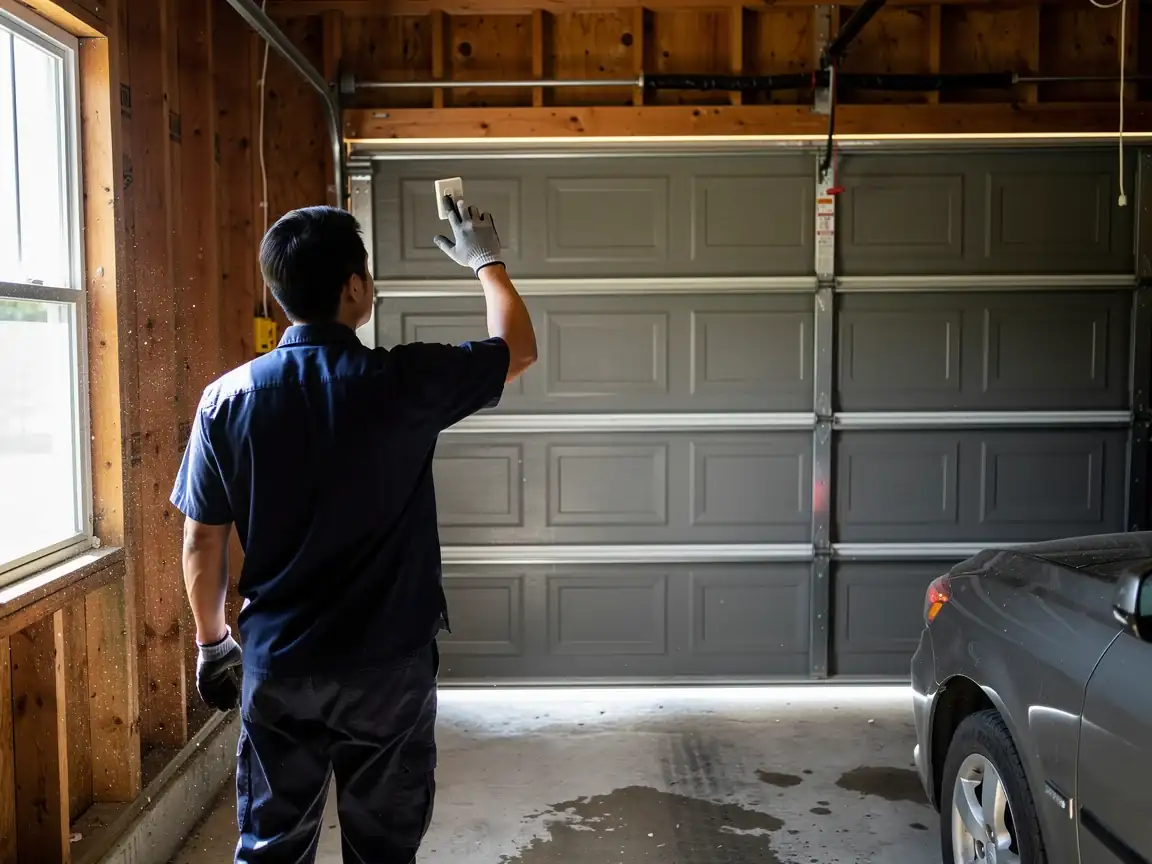
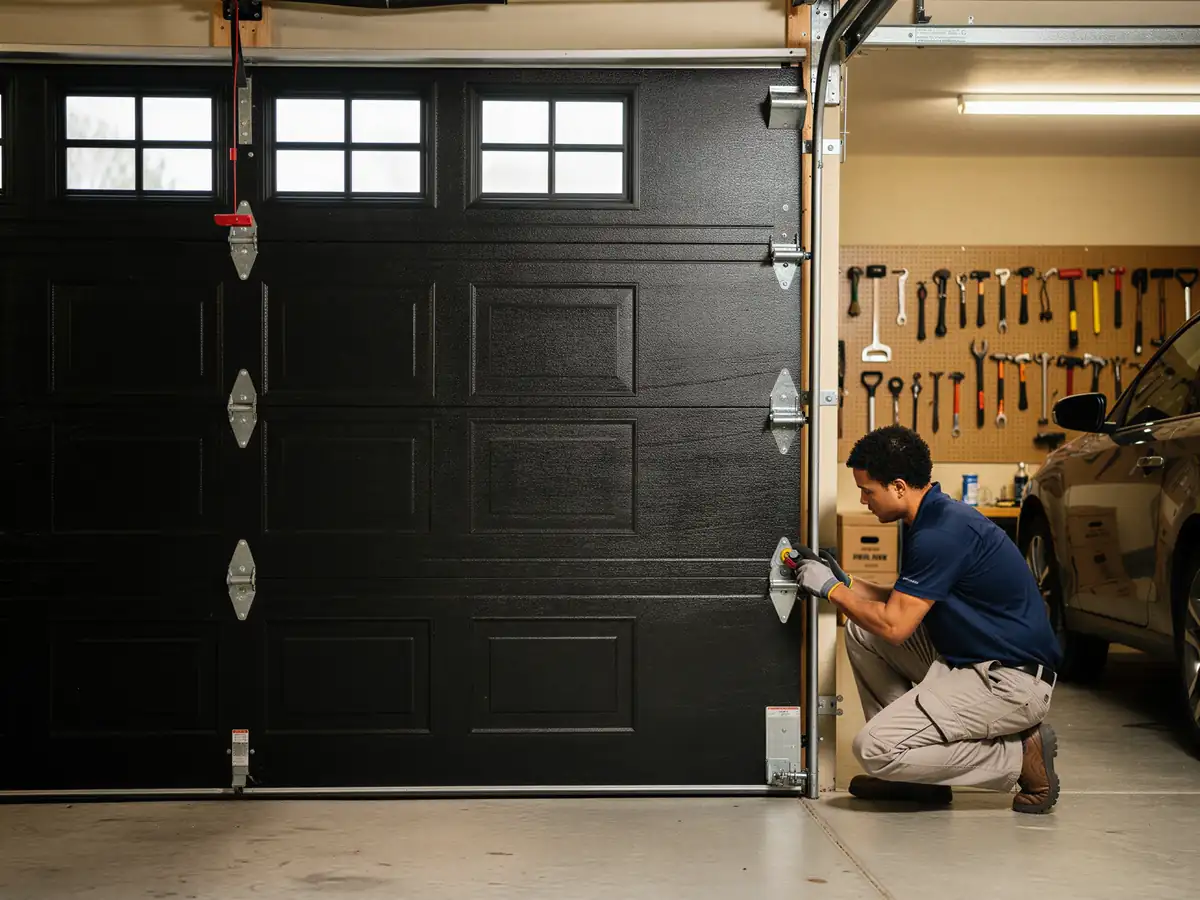
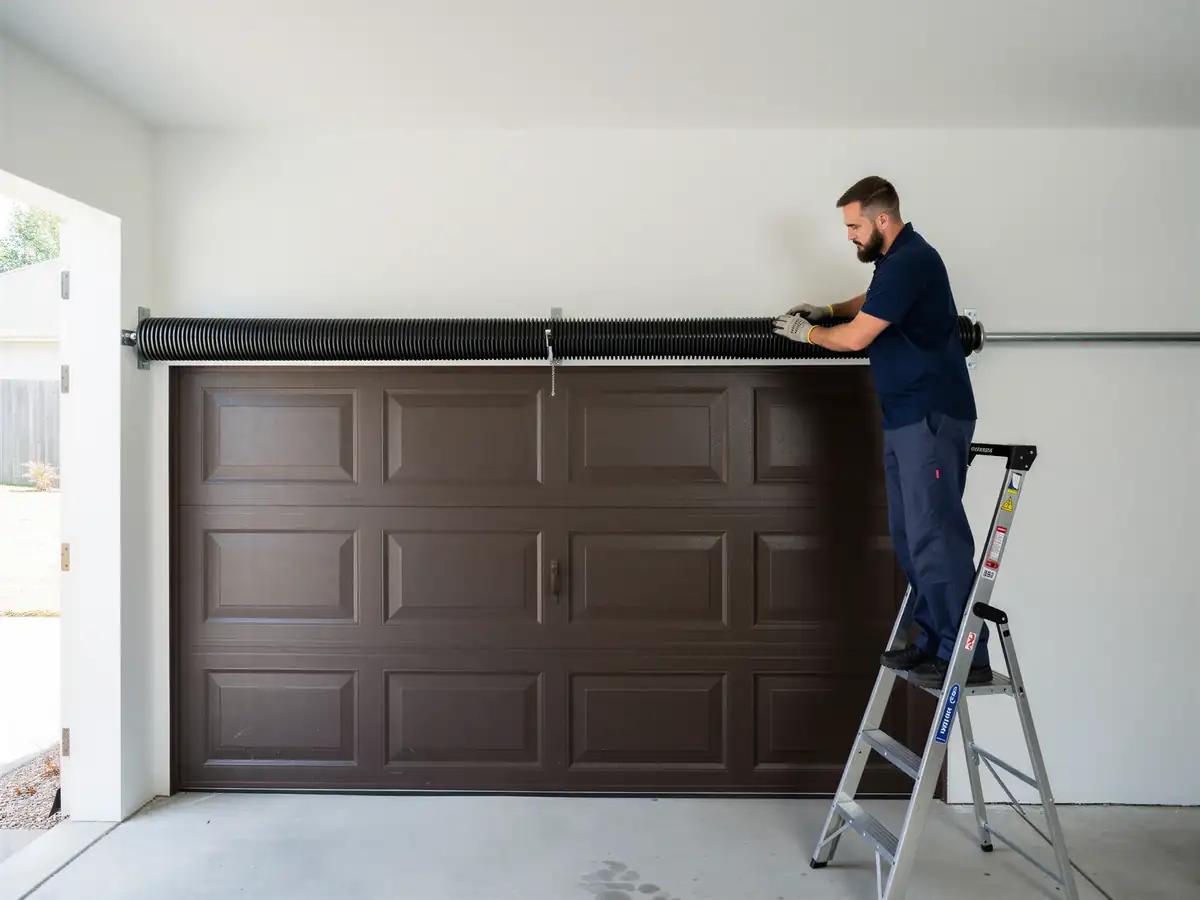
Before you call anyone, look at a few things yourself. Check the springs above the door - torsion springs mounted on a bar, or extension springs along the horizontal tracks - for any gap or separation in the coils, which usually means a spring that's about to go or already has. Check the rollers for flat spots or rust, especially if the door's original to a 1980s or 90s build; steel rollers from that era wear unevenly and bind in the track long before they fully fail. Look at the bottom seal for cracking or gaps - in a cold moderate climate, a torn seal lets in enough cold air to stiffen the lubricant on the track hardware, which is often what people mistake for a dead opener. Check the opener's logic board for a model number if you can find it; if it's original to a house built before 1997, parts for that exact board likely aren't being made anymore, and that's worth knowing before a tech shows up.
What Local Conditions Do
This area sits in a cold moderate climate band, which doesn't mean brutal winters, but it does mean enough temperature swing through the year to work on steel. Tracks and springs contract overnight and expand through the day, and that cycle loosens bolts, throws roller alignment off by a hair, and eventually fatigues a spring faster than a steady climate would. On houses built in the 1950-1997 window - most of the stock here - that cycle has had decades to work, which is a lot of the reason springs and rollers fail at this age rather than earlier or later. It also means a call out to Springfield, 7 miles out, or Elmira, 12 miles west, isn't just a drive-time line item - it's covering the same climate exposure on a different street. The conditions don't change much across the service area; what changes is how old the hardware is that's been sitting in them.