Why It Happens Here
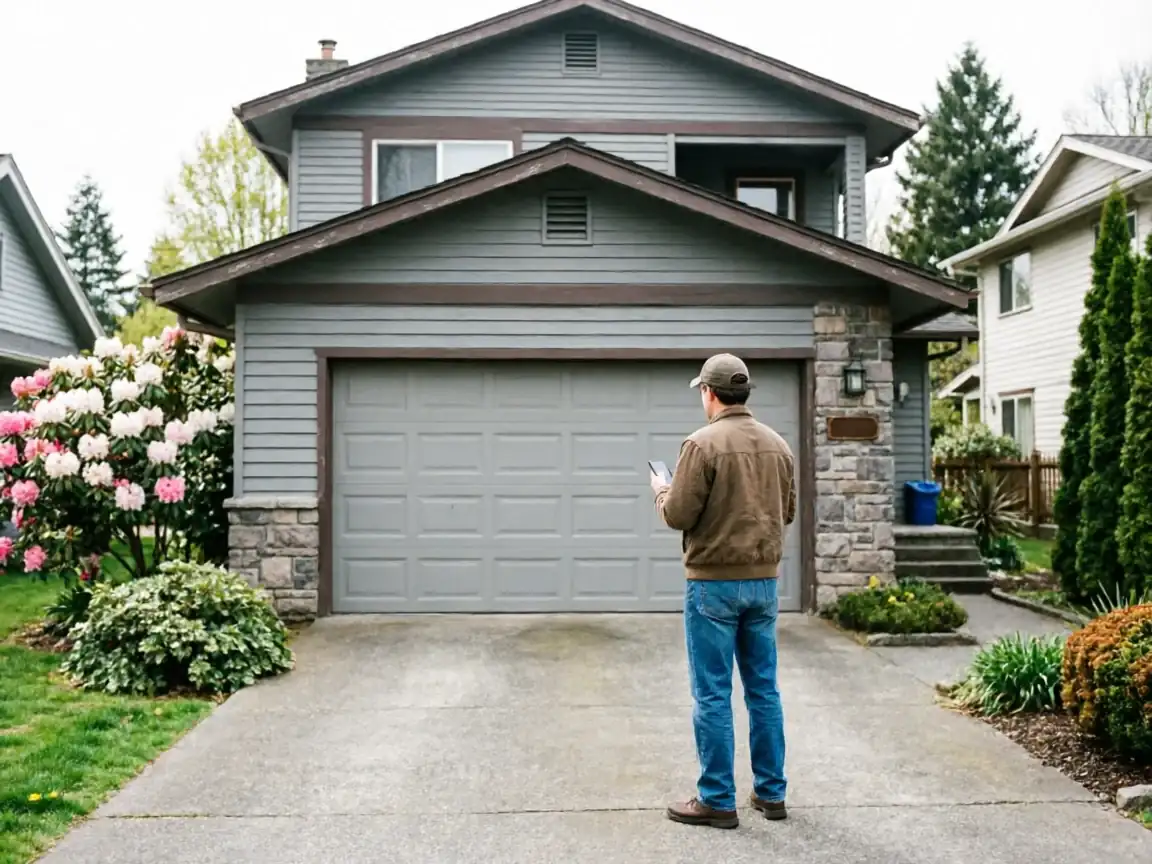
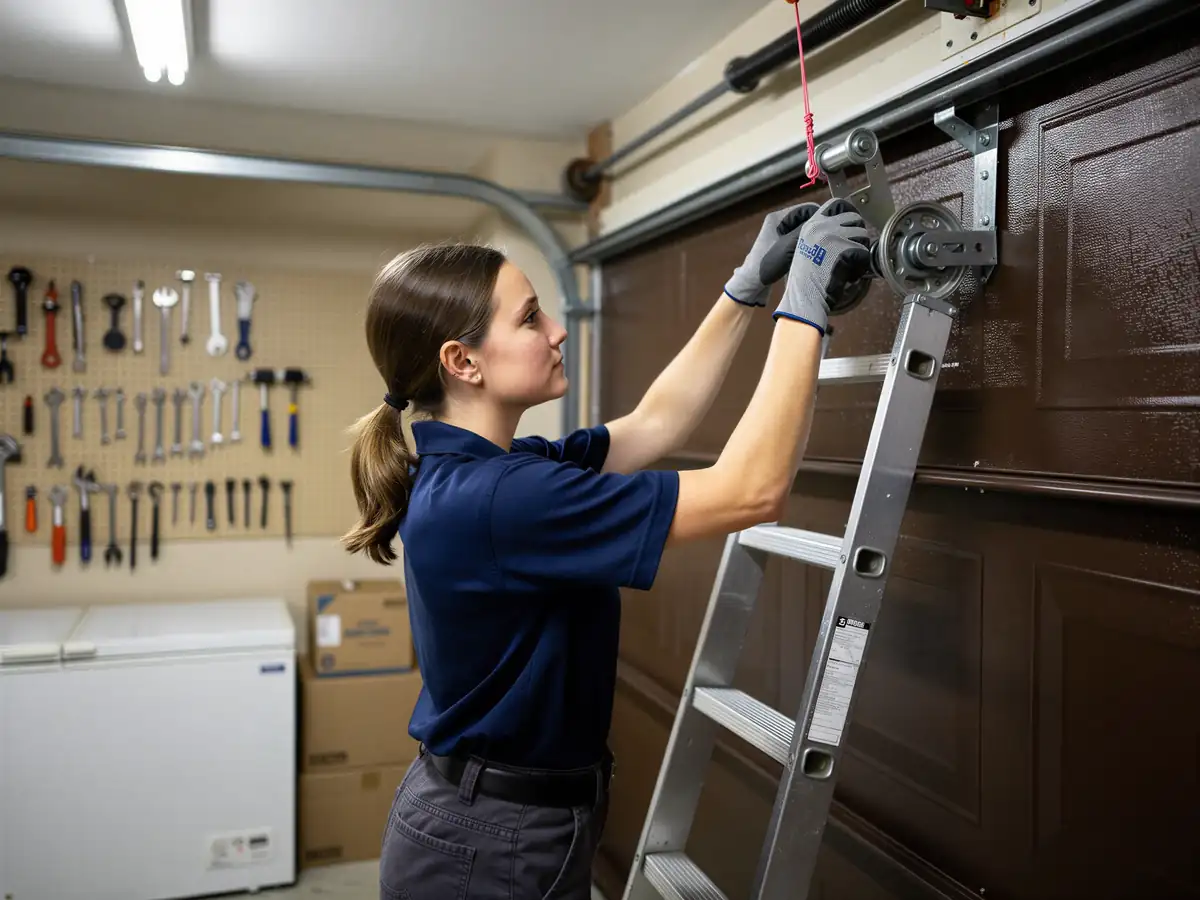
Most of the housing stock in this service area went up between 1950 and 1997, with the bulk of it dating to around 1980. That matters more than people think. A door track off-track problem almost always starts with hardware that's older than the homeowner realizes - bent rail, worn rollers, loose brackets that have been flexing for decades. Across the nine named neighborhoods we cover, including the pattern repeats: 1980s and 90s steel track, original fasteners, and nobody's touched the alignment since the house was built.
Then you add the climate. This area sits in a cold, moderate band, which means temperature swings between a mild afternoon and a cold overnight low are routine for months at a time. Metal track contracts in the cold. A rail that was a quarter-inch out of plumb in summer can bind just enough in winter to throw a roller off the lip entirely. Garage doors don't usually jump track because of one dramatic event - they jump because small misalignment, old hardware, and seasonal temperature swings stack up until the door finally gives.
It's a slow failure dressed up as a sudden one.
How Long It Takes
How long a fix takes depends on what's actually wrong
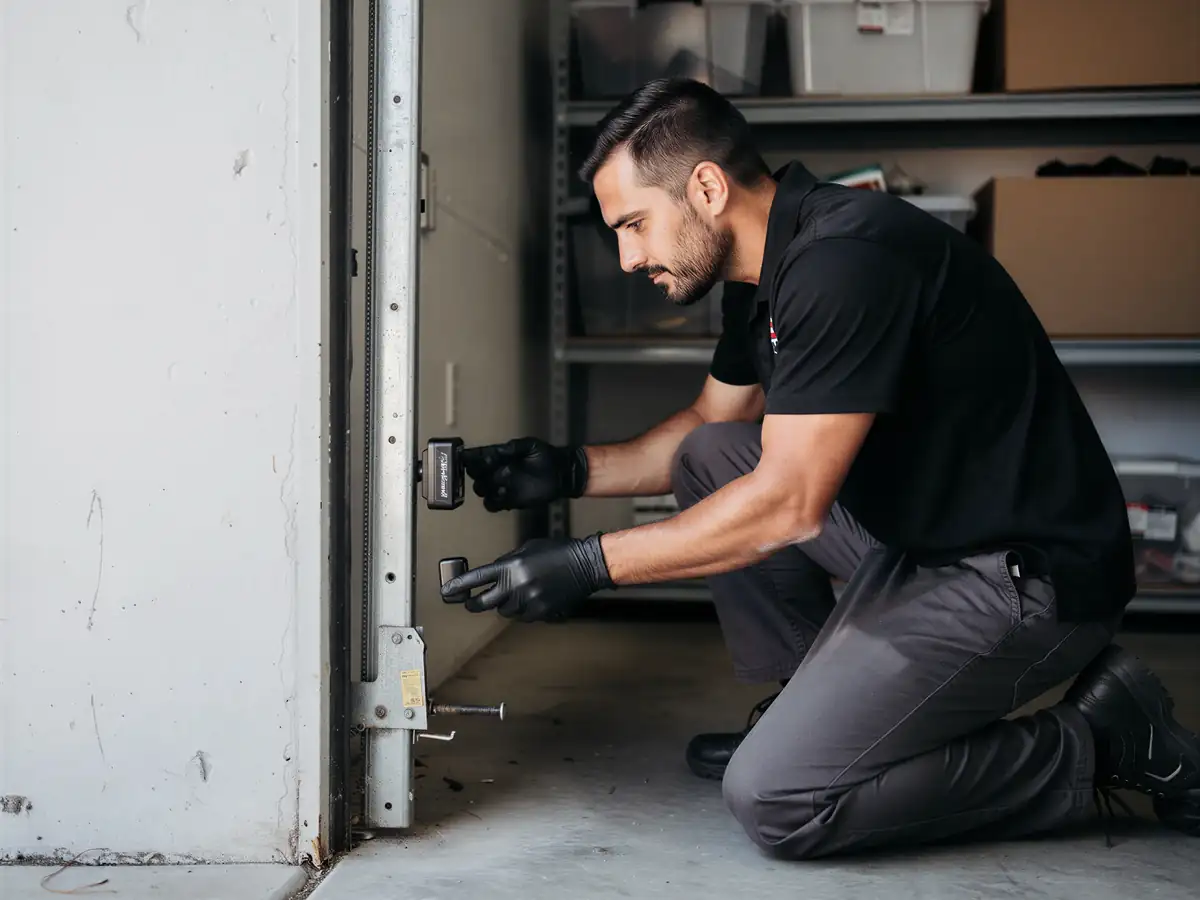
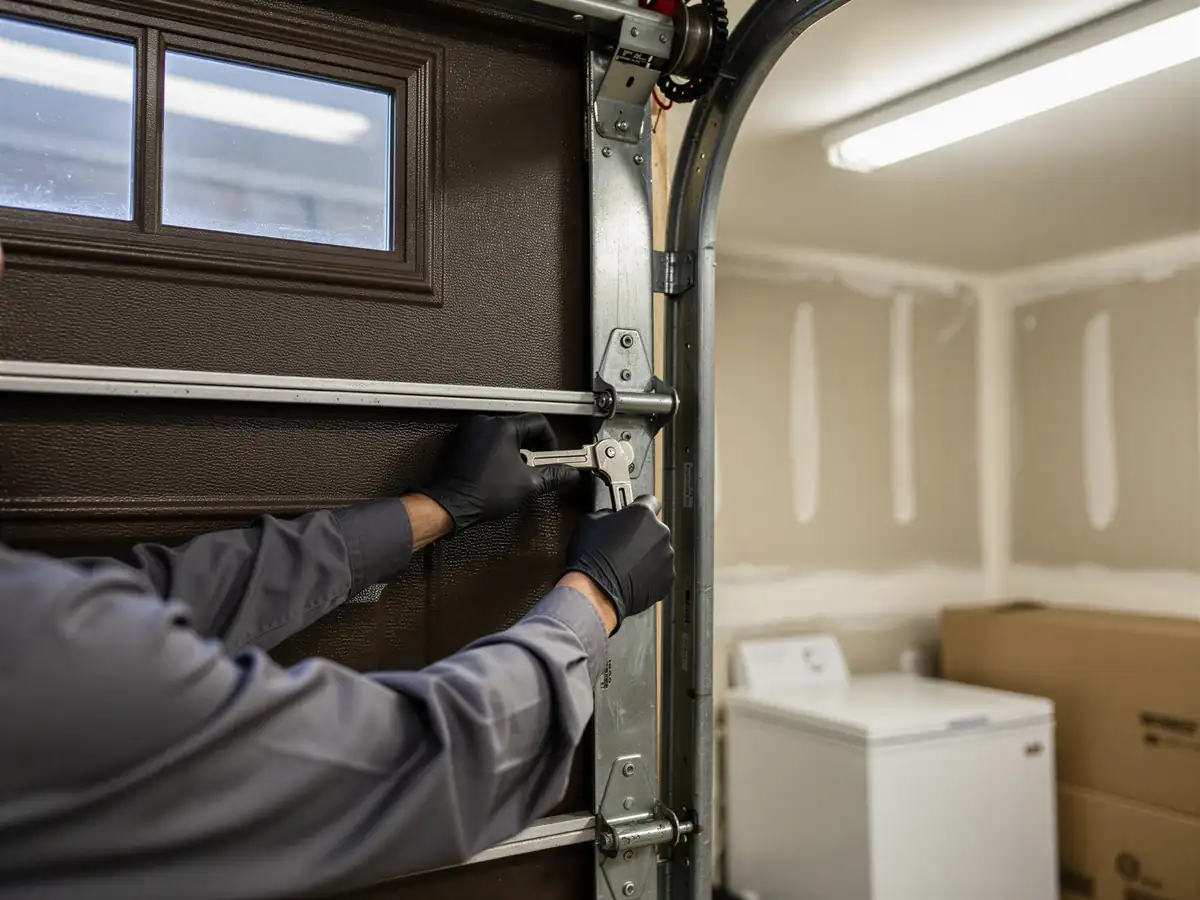
Not just that the door looks crooked in the opening. A roller that's popped out of a track but hasn't bent anything is a different job than a track that's pulled away from the wall bracket or a cable that's come off a drum because the door was forced. On older hardware - the kind common across this service area's 1980s-era housing - the bracket screws are often stripped or the track itself is slightly warped from years of minor impacts, which changes the job from a quick reset to a track replacement.
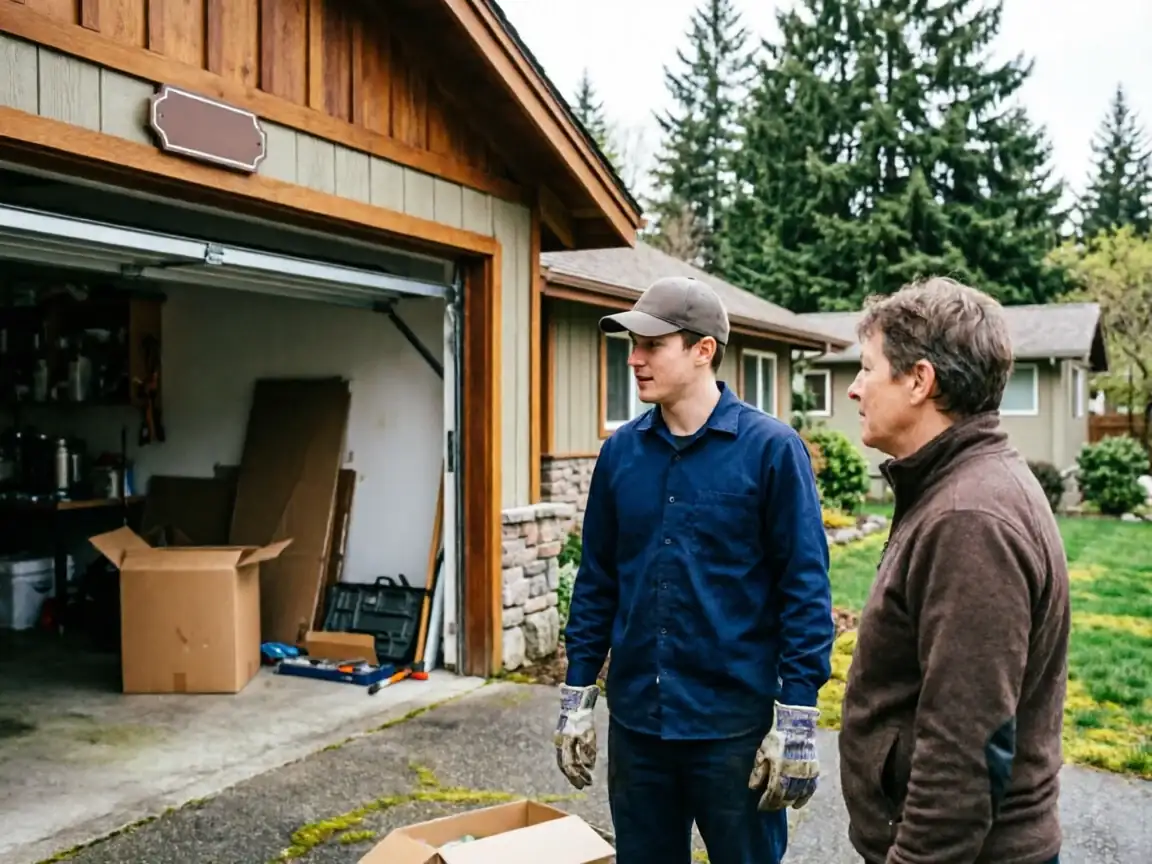
We won't quote a time here that doesn't hold up once we're standing in front of the door
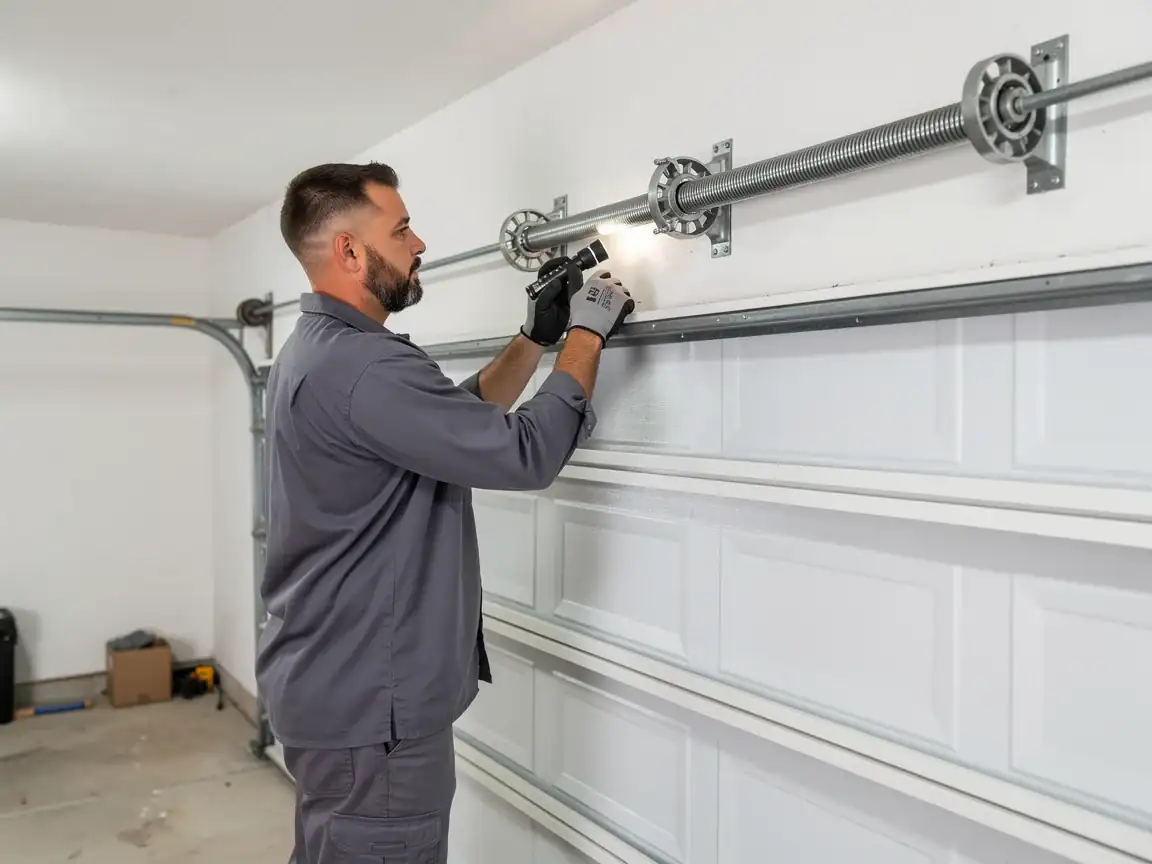
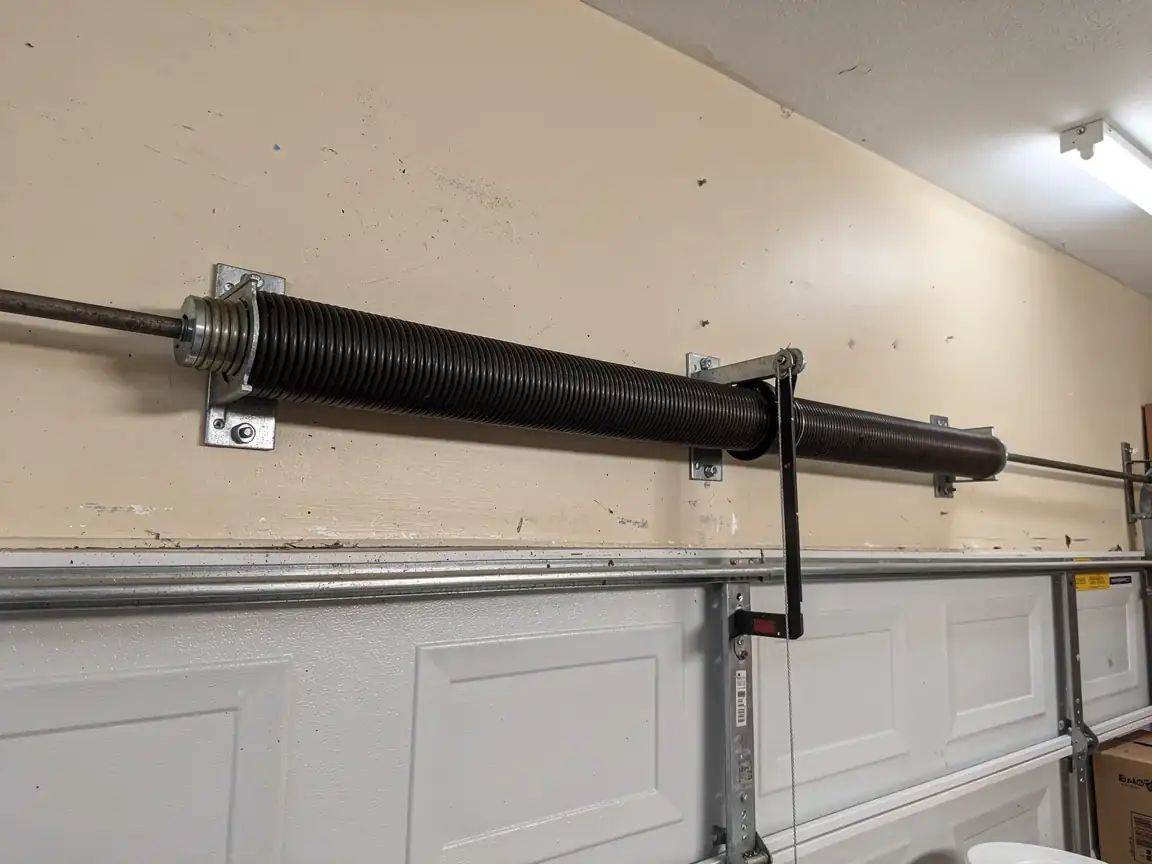
What we can tell you is that the variables that matter are: how many rollers are off, whether the track is bent or just loose, whether the opener forced the door against resistance before it quit trying, and whether the spring system is still carrying proper tension. A door that's been run hard against a jammed track for even a few cycles usually has more damage than one caught early.
The DIY Question
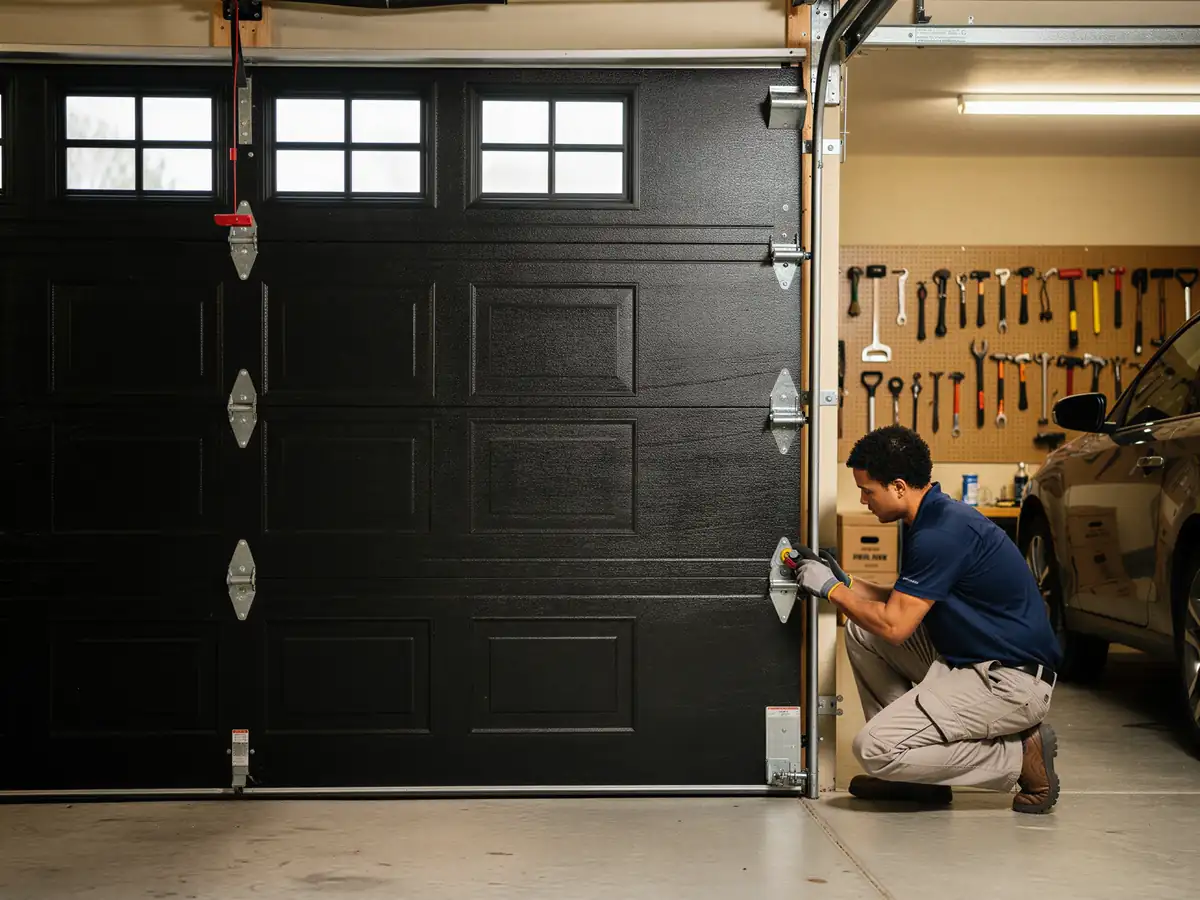
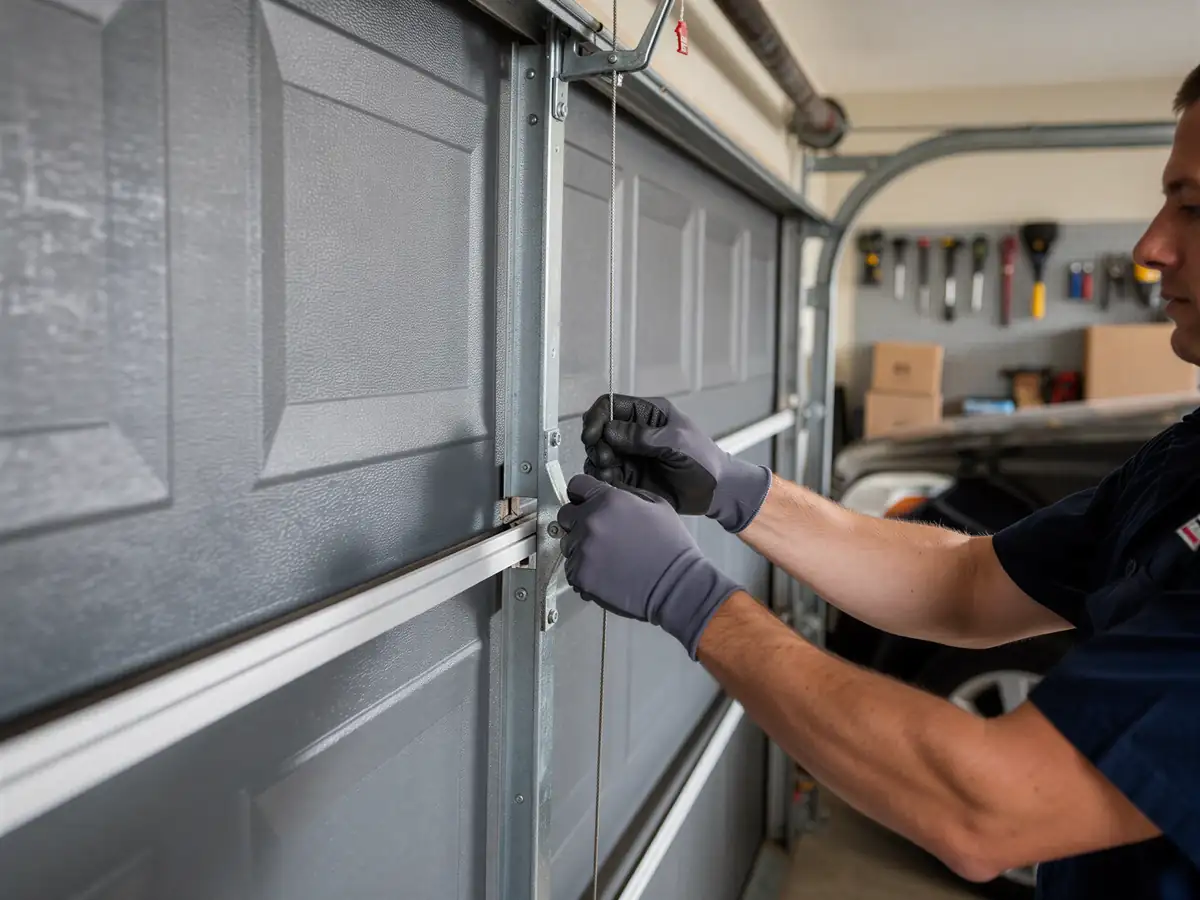
A door that's partway off track is under spring tension, even when it looks still. That's the part people underestimate. Pushing on the door to shove it back into the track, or cutting the cables to relieve pressure so you can lift the panel out, puts your hands next to a system storing enough force to do real damage if it releases. We're not going to tell you every off-track door needs a service call - if a single roller has popped out at the bottom of the track and the door is sitting level, sometimes a careful reset with the door fully down and unplugged is manageable.
Where we draw the line: if the track itself is bent, if a cable has come off a drum, if the door is torqued or hanging unevenly in the opening, or if you're not sure which of those you're looking at, stop. That's not a DIY repair, it's a way to turn a one-panel problem into a cracked panel, a bent header bracket, or an injury. Our honest limitation here is the same one any tradesperson should give you: we can't diagnose spring tension or cable damage over the phone, and guessing wrong on this one costs more than the service call would have.
What You Are Seeing
The signs vary depending on what actually let go. Sometimes it's obvious - a visible gap between the roller and the track, the door hanging at an angle in the opening, or a grinding sound right before the door stopped moving. Other times it's subtler: the door runs fine going down but hesitates or jerks partway up, or the opener strains and reverses without an obvious reason. On the older track systems common in this area's 1980s-90s housing stock, a slow failure often looks like increasing noise over several weeks before the day a roller finally jumps the rail.
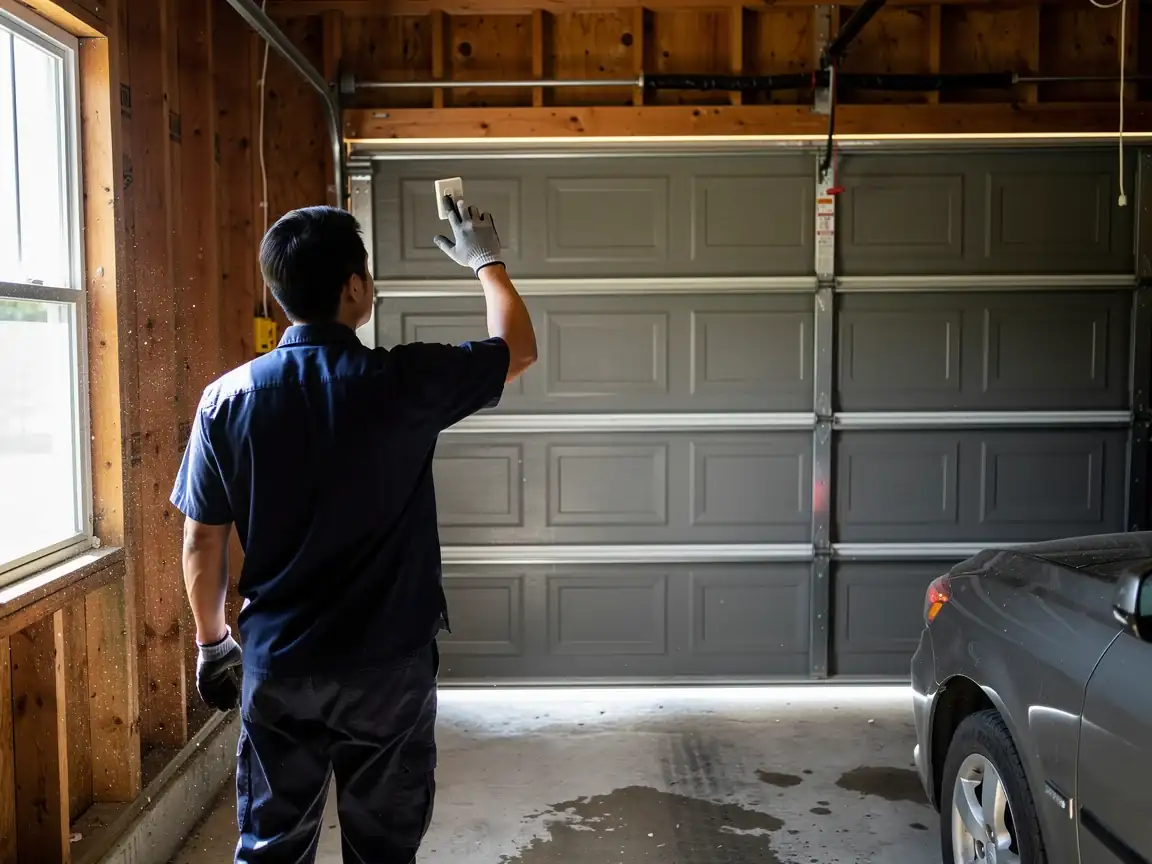
If the door won't move at all and the opener motor is running, that's usually not a track problem by itself - something downstream, often a cable or spring, has let the door bind. If the door moved partway, then stopped at an angle with visible daylight between one roller and its track, that's the classic off-track signature. Either way, leave the door where it is. Don't run the opener again trying to force it through - that's how a contained problem spreads to the header, the panel, or the track on the other side of the door.