Why It Happens Here
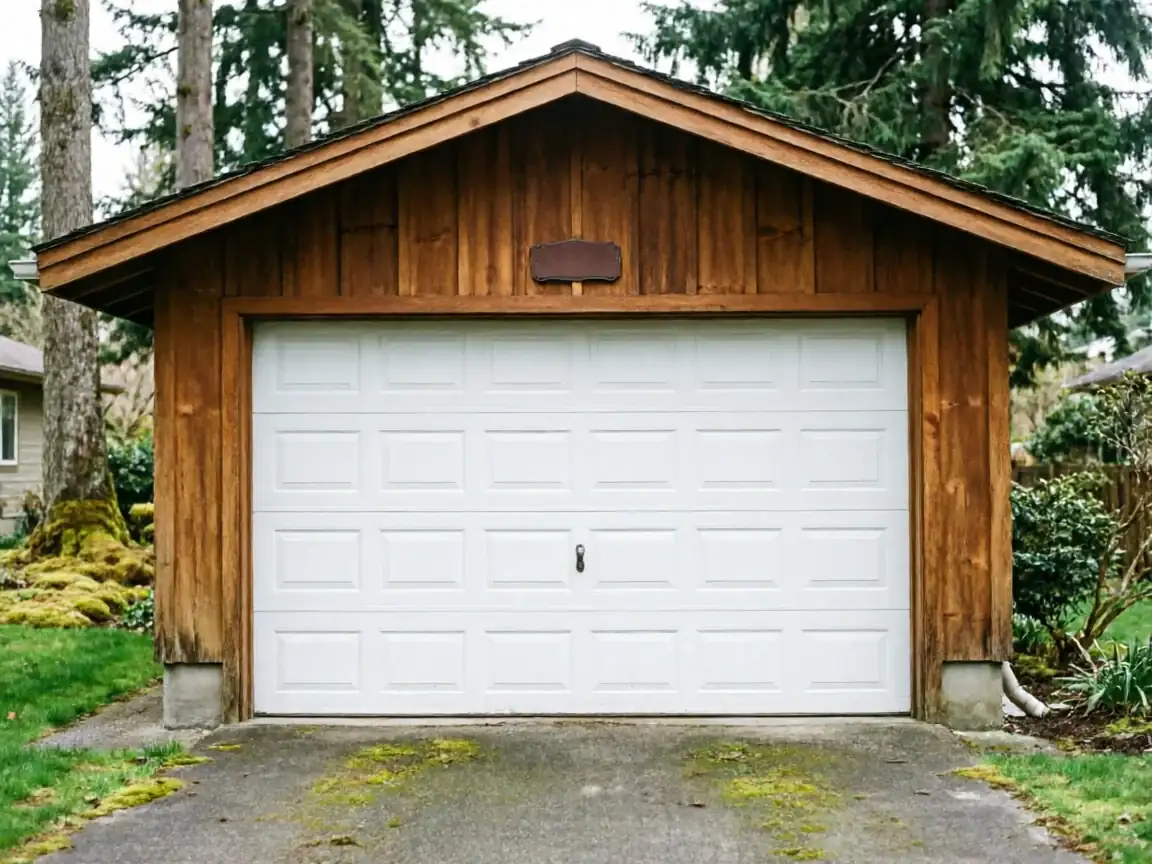
Most of the housing in our service area went up between 1950 and 1997, with the median build year sitting around 1980. That matters for springs because a torsion spring is rated for a set number of open-close cycles, not years, and a door that's been doing two or three trips a day since the Carter administration has usually burned through its rated life a long time ago. Across the nine named areas we work - most of that stock dates to the 1980s and 90s, so we see the same failure pattern show up block after block: original spring, original cable, original bearing plates, all tired at once. On top of cycle fatigue, Eugene sits in a cold-moderate climate band. The seasonal swing between wet winters and dry summers pulls moisture into the coil wind and the center bearing, which speeds up rust and pitting even on a spring that hasn't hit its cycle count yet. Rust doesn't just weaken the steel - it changes how the spring flexes, so it can snap without warning instead of gradually losing tension. That combination - older original hardware plus a damp-to-dry climate - is why spring repair is one of the calls we get most.
The DIY Question
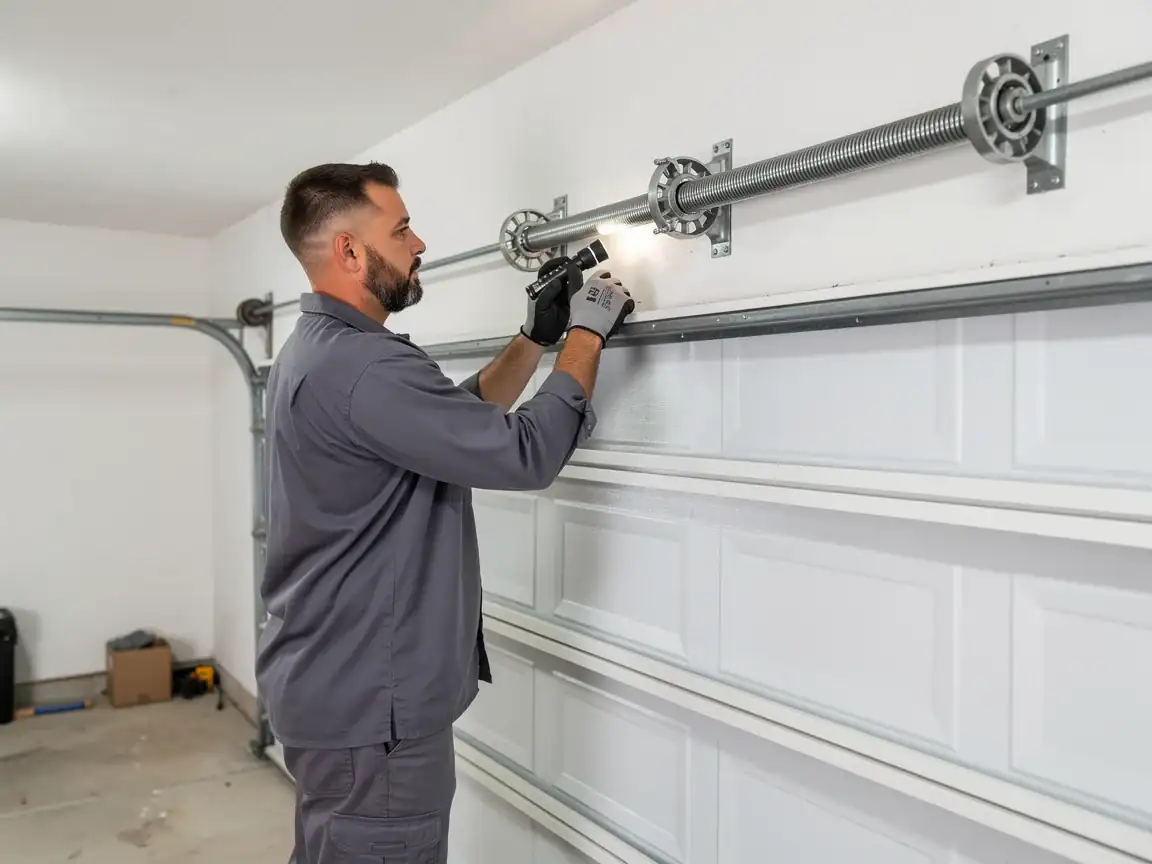
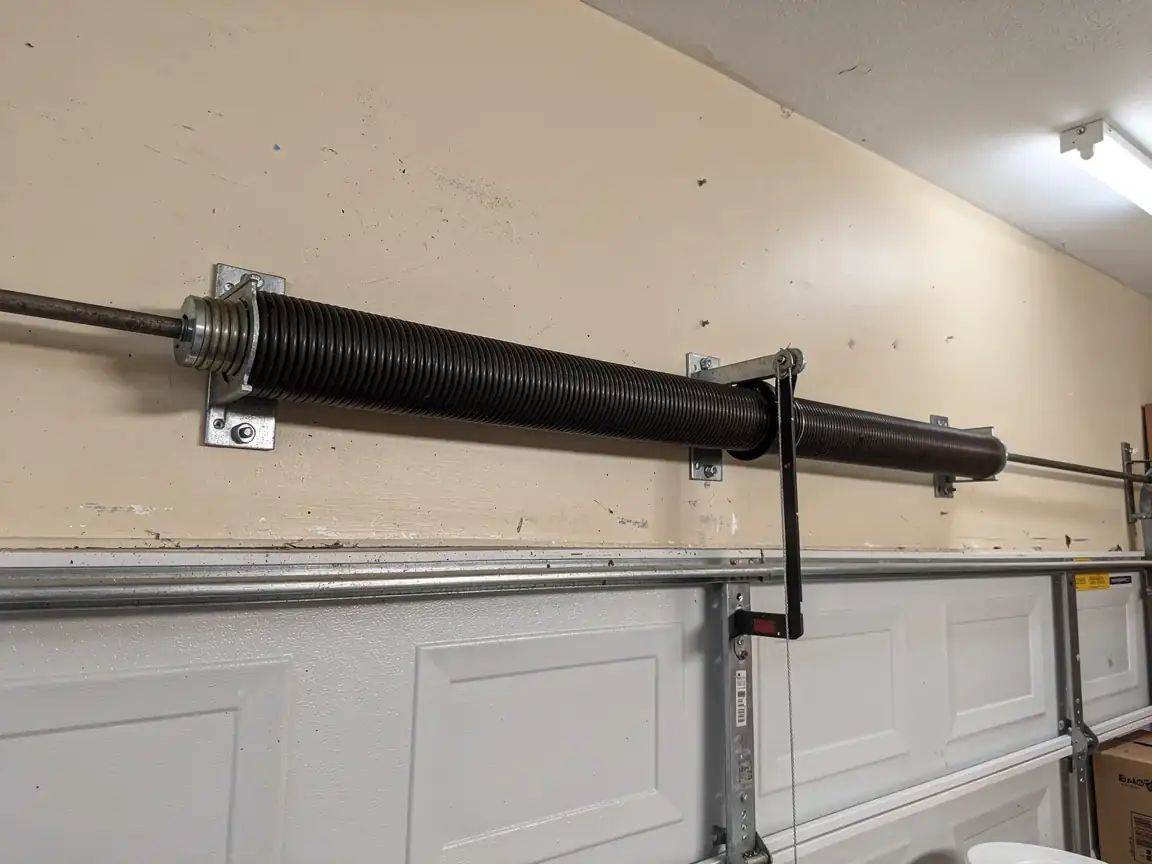
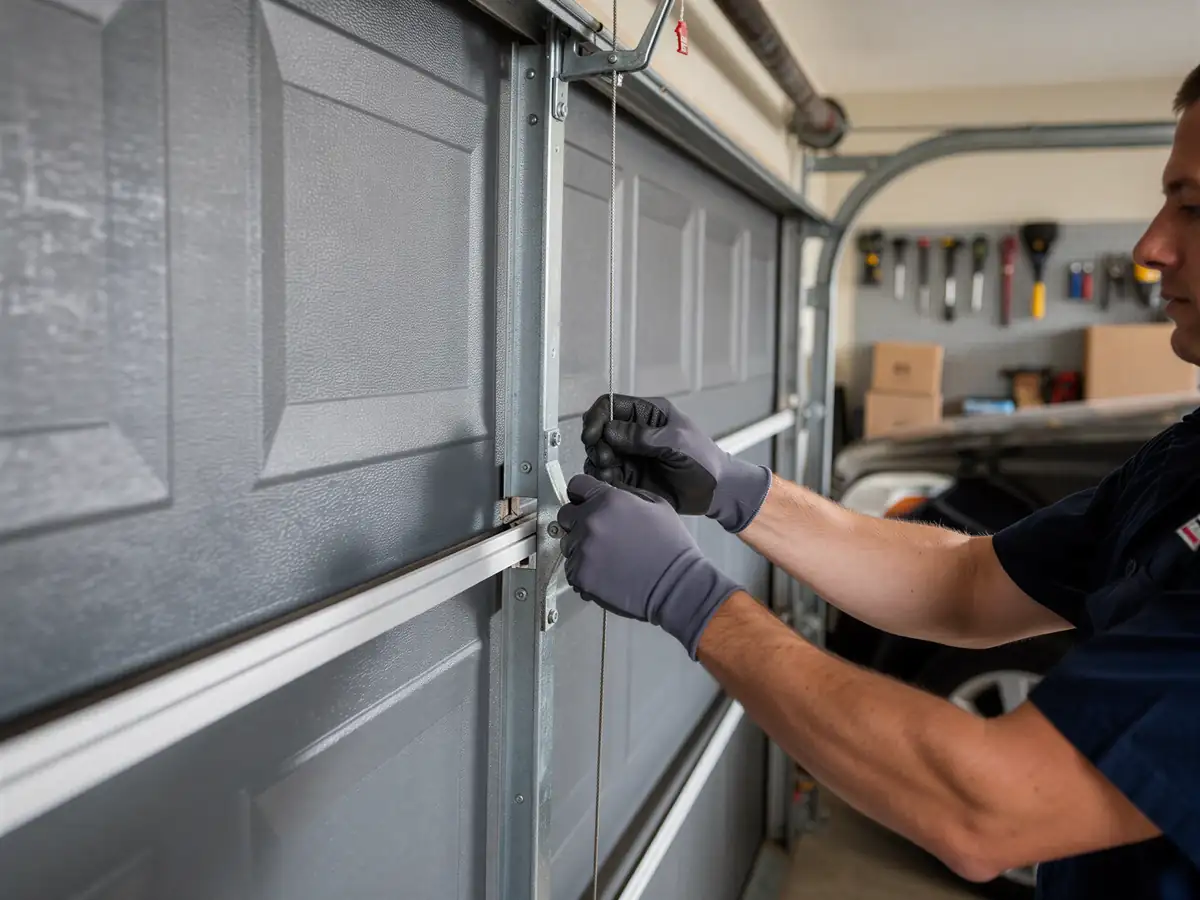
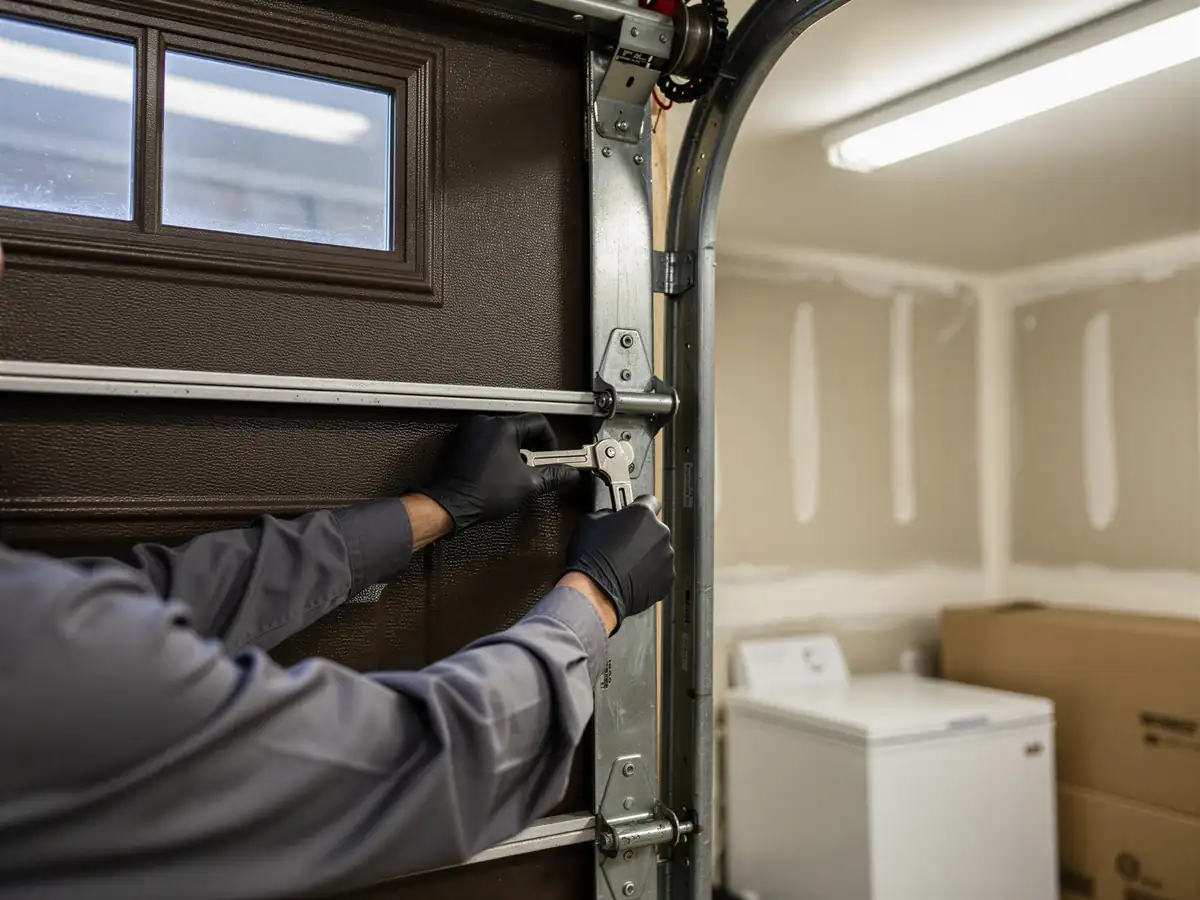
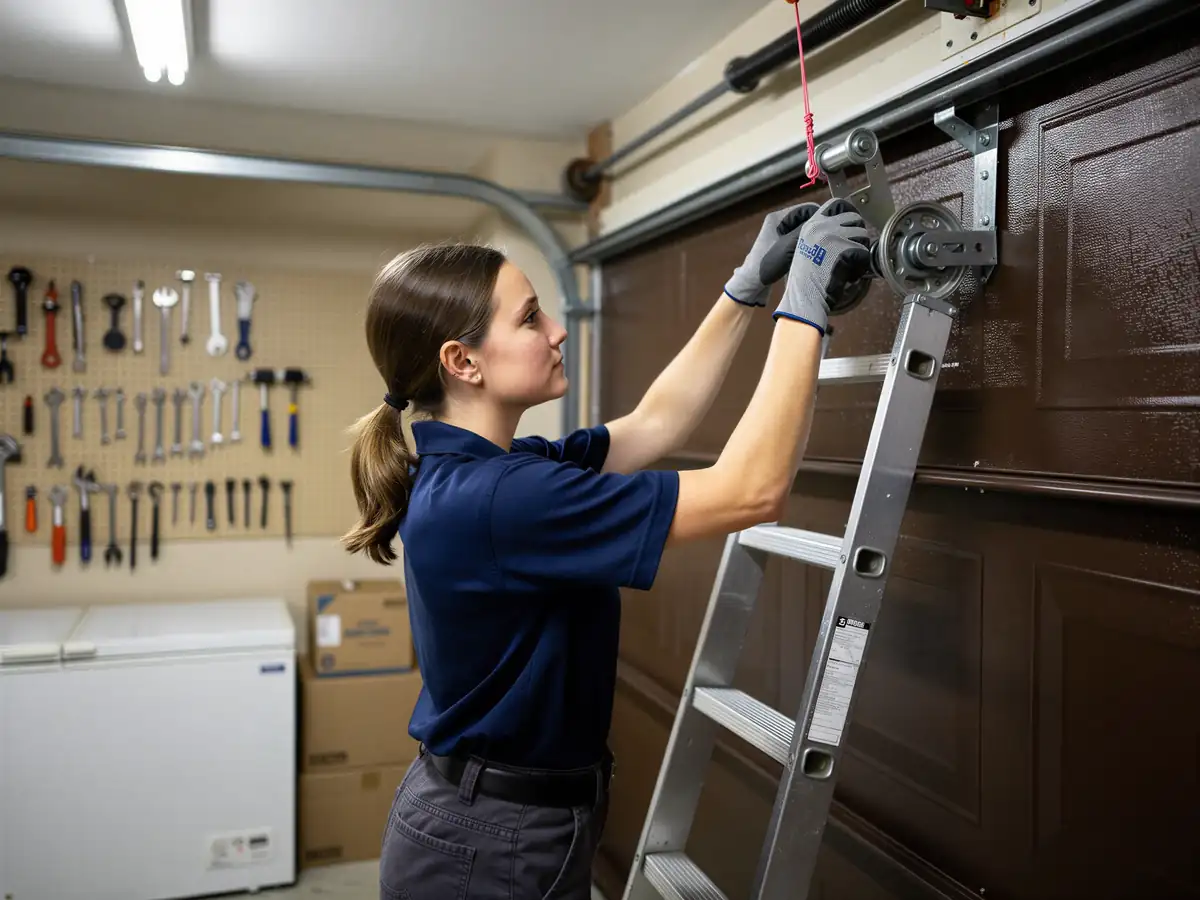
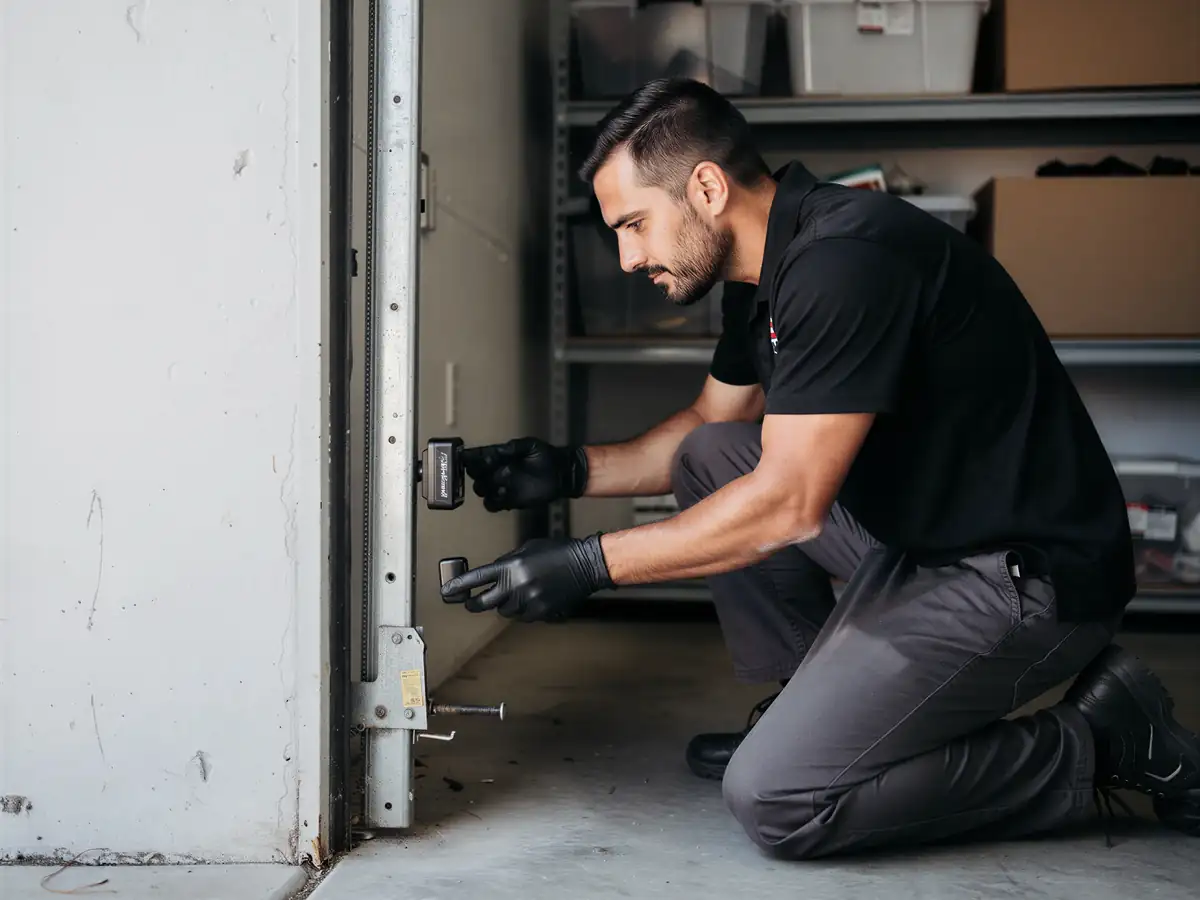
A wound torsion spring holds a lot of stored energy, and letting it go wrong - stripped winding bars, the wrong cone, a cable that jumps the drum - is how people end up in the emergency room, not just frustrated. We're not going to pretend there's a safe shortcut here. If you're comfortable with hand tools, there's plenty you can check yourself before calling anyone: look at the spring for a visible gap in the coil (that's a break), check if the door is noticeably harder to lift by hand with the opener disconnected, and look at the cables for fraying near the bottom bracket. All of that tells you something is wrong. None of it is a job to finish yourself. And sometimes the honest answer isn't repair at all - if the door itself is original to a 1980s build and the track, rollers, and springs are all failing around the same time, replacing the door can cost less over a few years than repairing it piece by piece. We'll tell you when that's the case instead of running up a repair bill on a door that's done.
What You Are Seeing
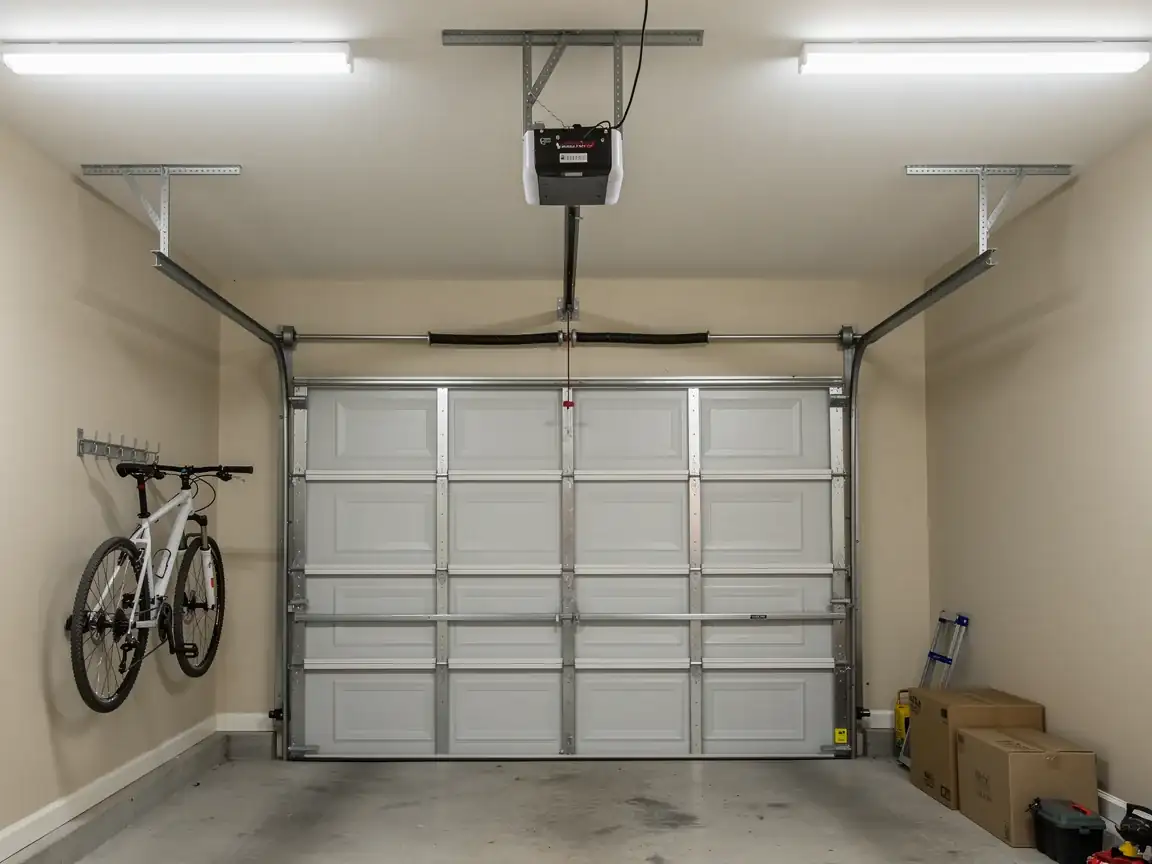
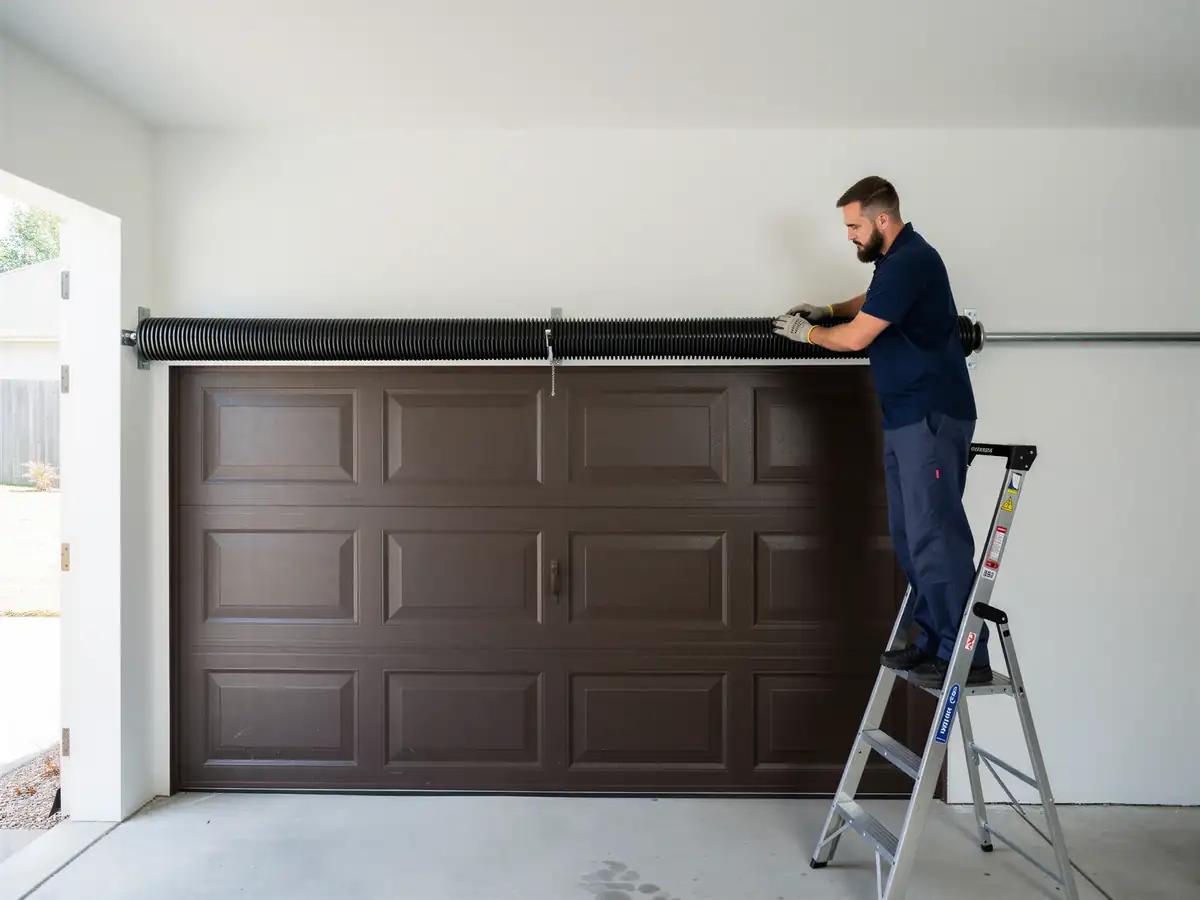
A broken spring usually announces itself - a loud bang from the garage, often mistaken for something falling, followed by a door that won't budge or that an opener strains against and then stops. Look up at the spring bar above the door: a torsion spring with a visible gap in the coil has let go. Other signs are quieter. A door that's gotten noticeably heavier to lift by hand, one that closes crooked or faster on one side than the other, or cables that look loose or frayed near the bottom brackets - all of those point to a spring or cable system that's close to failing, even before it breaks outright. Given how much of the stock in this area sits in that 1980s-to-90s window, it's common for a spring to go without much warning simply because it's reached the end of a long service life. If your opener is grinding, reversing on its own, or the remote seems to need extra tries, that can be spring-related too - a struggling spring makes the opener do work it was never built to carry alone.