The Cost of This Job
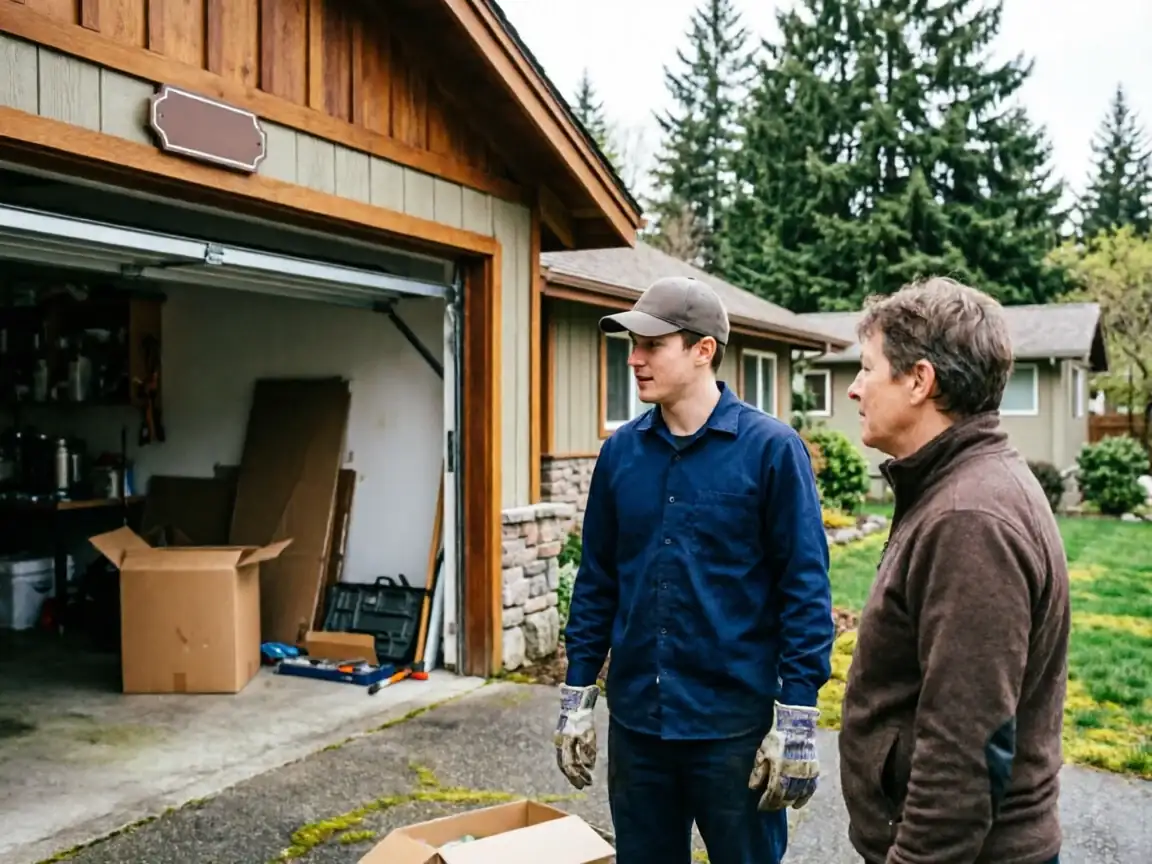
Springfield sits about 7 miles from our shop in Eugene, and that drive is part of how we price a roller job here - it's short enough that a roller call doesn't turn into a half-day trip, which matters on a job that's otherwise quick work.
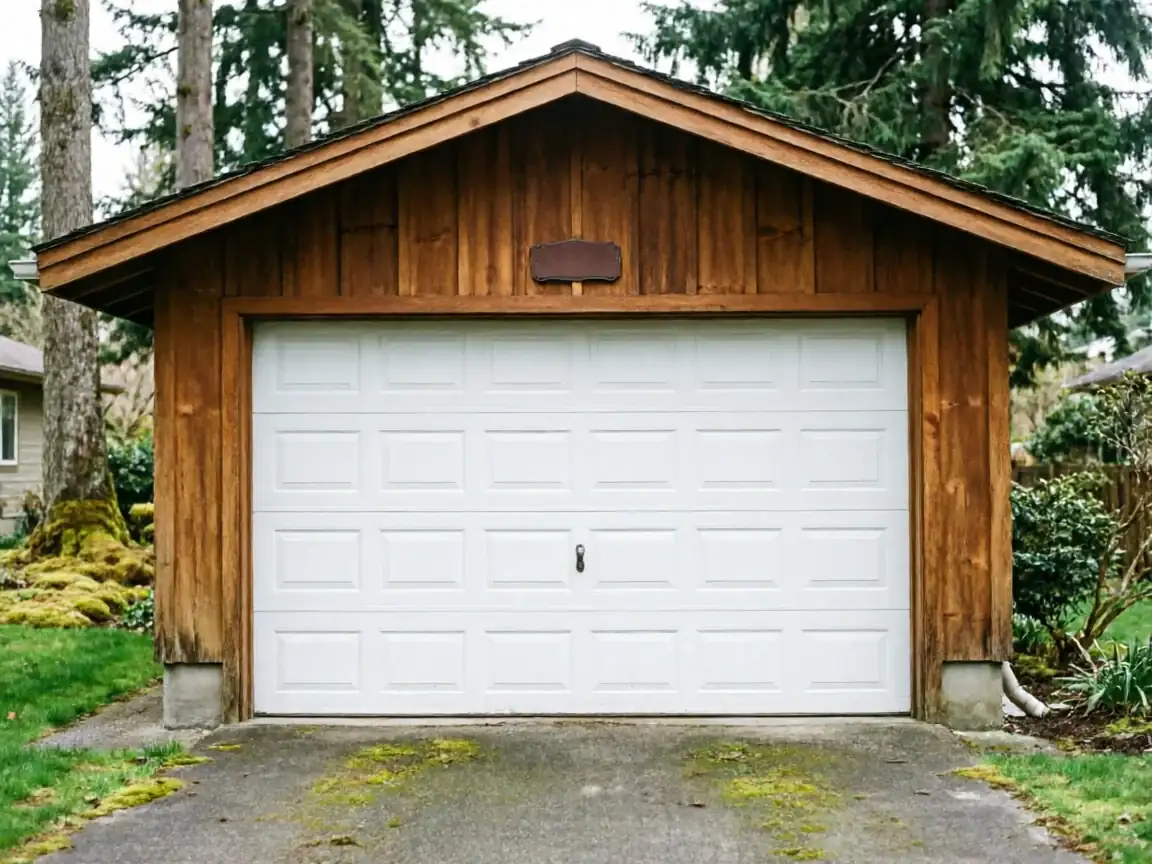
Most of the housing in this part of the service area went up around 1976, which puts a lot of doors here on their second or third set of rollers already - the original steel ones, or a cheap nylon swap done without bearings. What you're replacing changes the price more than the brand does: steel rollers with open bearings run less than sealed nylon, but they're also why the door sounds like it's dragging a chain.
Household income in this stretch of the area runs lower than the wider Eugene service area average, and we don't pad a roller job with upsells it doesn't need. If the track is straight and the springs are sound, replacing ten rollers is what we quote - not a full opener tune-up nobody asked for.
We don't carry every roller size on every truck, and a non-standard stem length can mean a short order delay. That's a real limitation, not a sales line, and we'll tell you up front if your door needs it.
Getting It Booked In
Because every job here starts with a drive from Eugene
We ask a few questions on the phone before we load the truck - how old the door is, whether it's grinding at the top of the track or just at the bottom, and whether anyone's already swapped parts on it. A door built around the mid-1970s almost always means original hardware we can identify before we arrive, which saves a second trip for a part we didn't know we needed.
We book roller jobs the same way we book any repair in this part of the service area
One visit, one truck, no separate estimate appointment. If the rollers turn out to be the symptom and a bent track is the cause, we'll say so on site rather than quoting a job that won't actually fix the noise.
How Long It Takes
A straight roller swap - ten rollers, no track work - usually finishes within the hour once the truck is parked. Doors from the 1976 era that still have their factory track brackets sometimes need those re-set or re-shimmed at the same time, since forty-plus years of steel rollers wear a groove into the track that a new nylon roller won't ride smoothly over. That adds time, but it's the difference between a quiet fix and one that's loud again in a year.
We don't rush the track check to hit a shorter number. A roller that looks fine on the ground can still be the wrong diagnosis if the track itself is bent.
What Is on the Truck
For this area we stock both 7-ball steel rollers and sealed nylon rollers, because the mixed housing stock here means we don't know which one's on the door until we're standing in front of it. The service area's climate runs cold and moderate rather than extreme, so sealed nylon rollers hold up well here without the cracking you'd see somewhere with harder freeze-thaw cycles - that's part of why we lead with nylon on newer swaps rather than matching back to steel.
We carry standard stem lengths and the common bracket hardware that pairs with them. What we don't carry is every oddball stem length a custom door builder used decades ago - if your door needs one of those, we'll order it rather than force a fit that won't track true.
How We Fix It
We pull the door, check the track alignment first
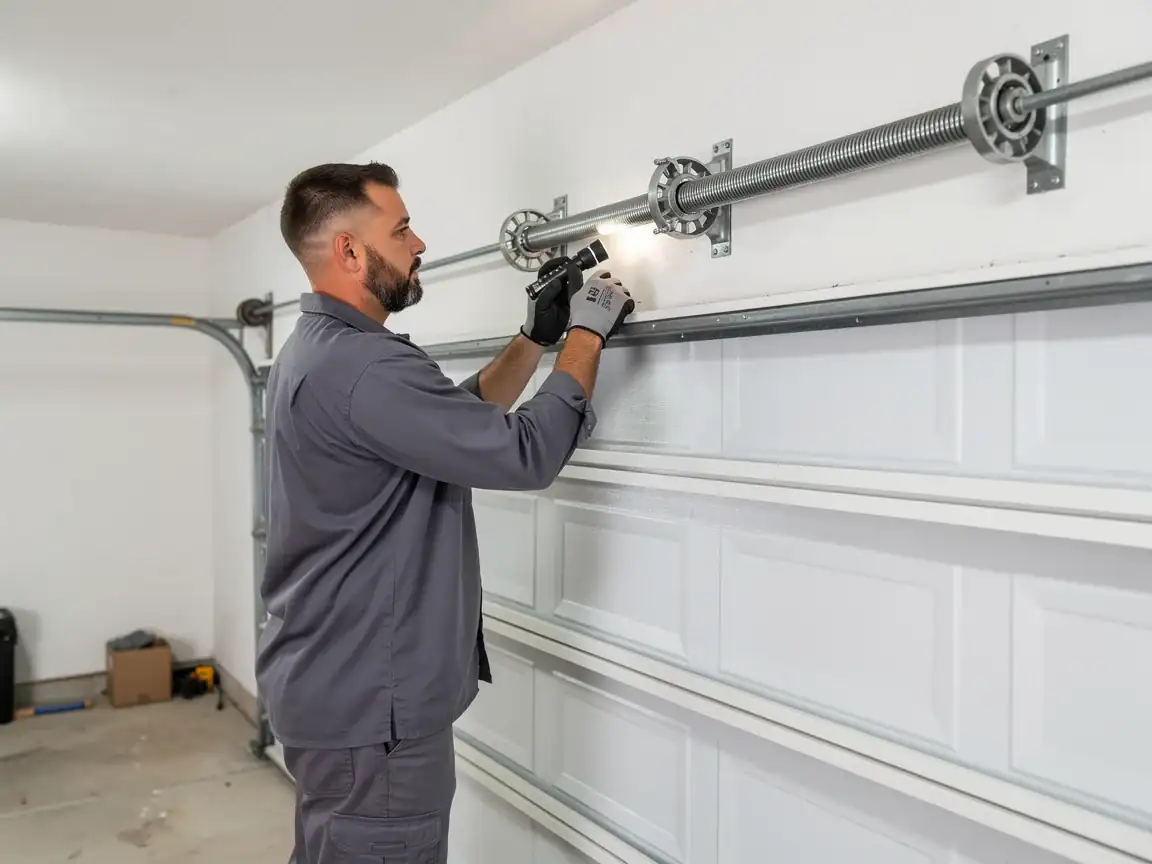
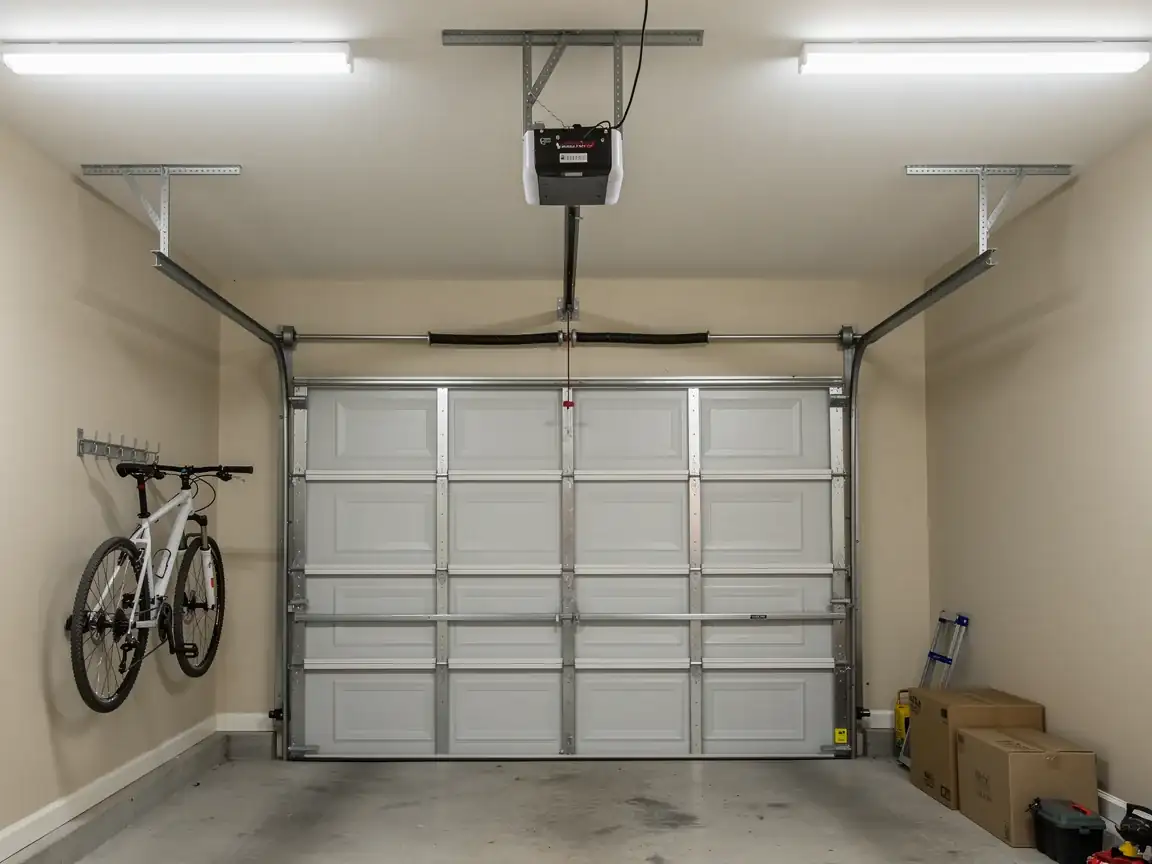
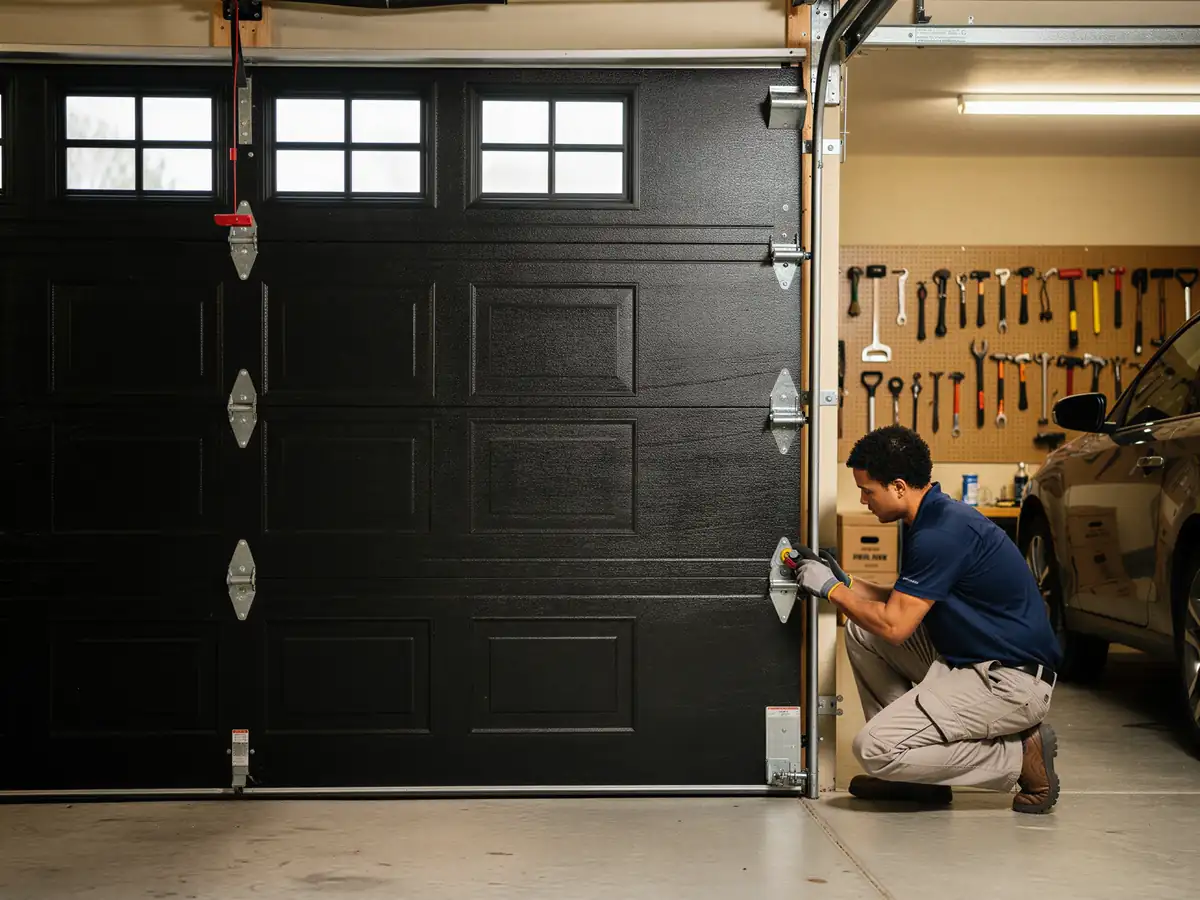
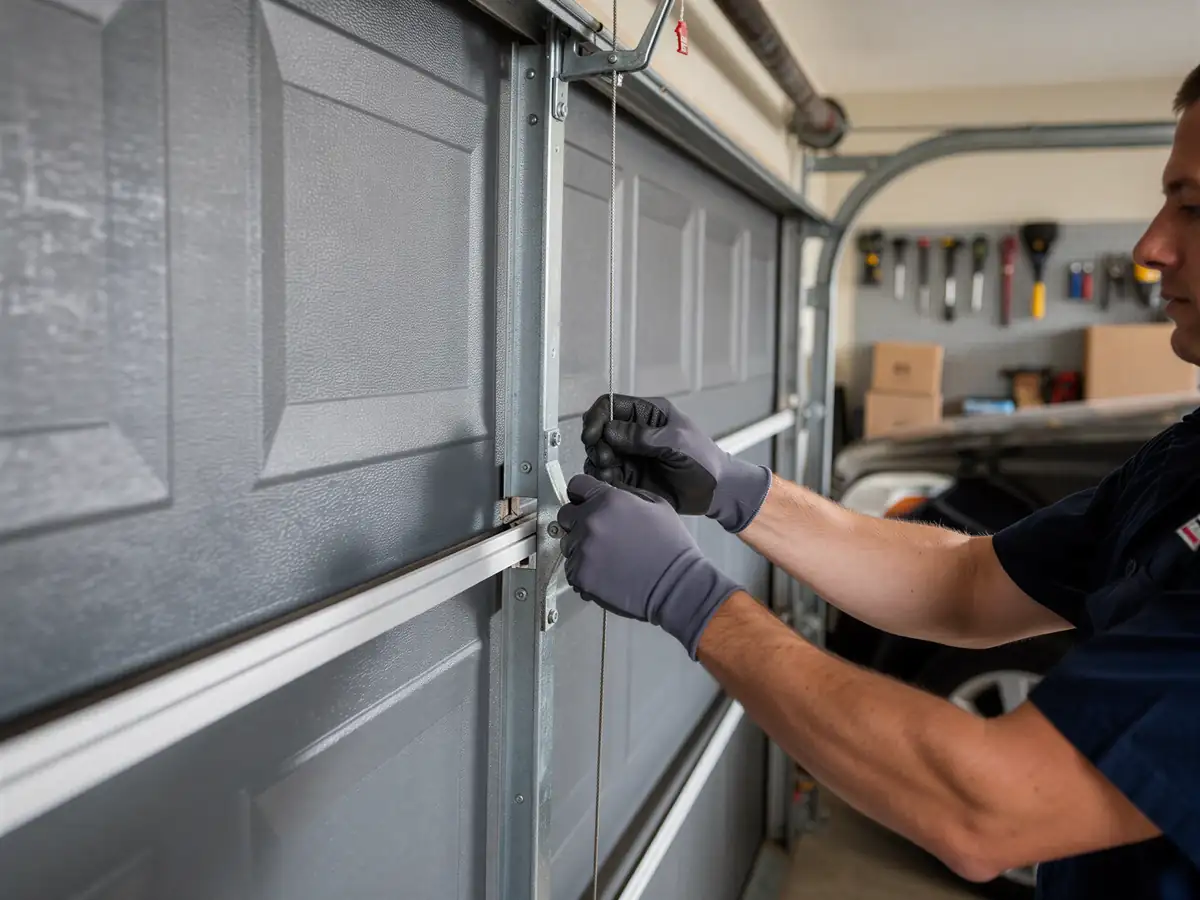
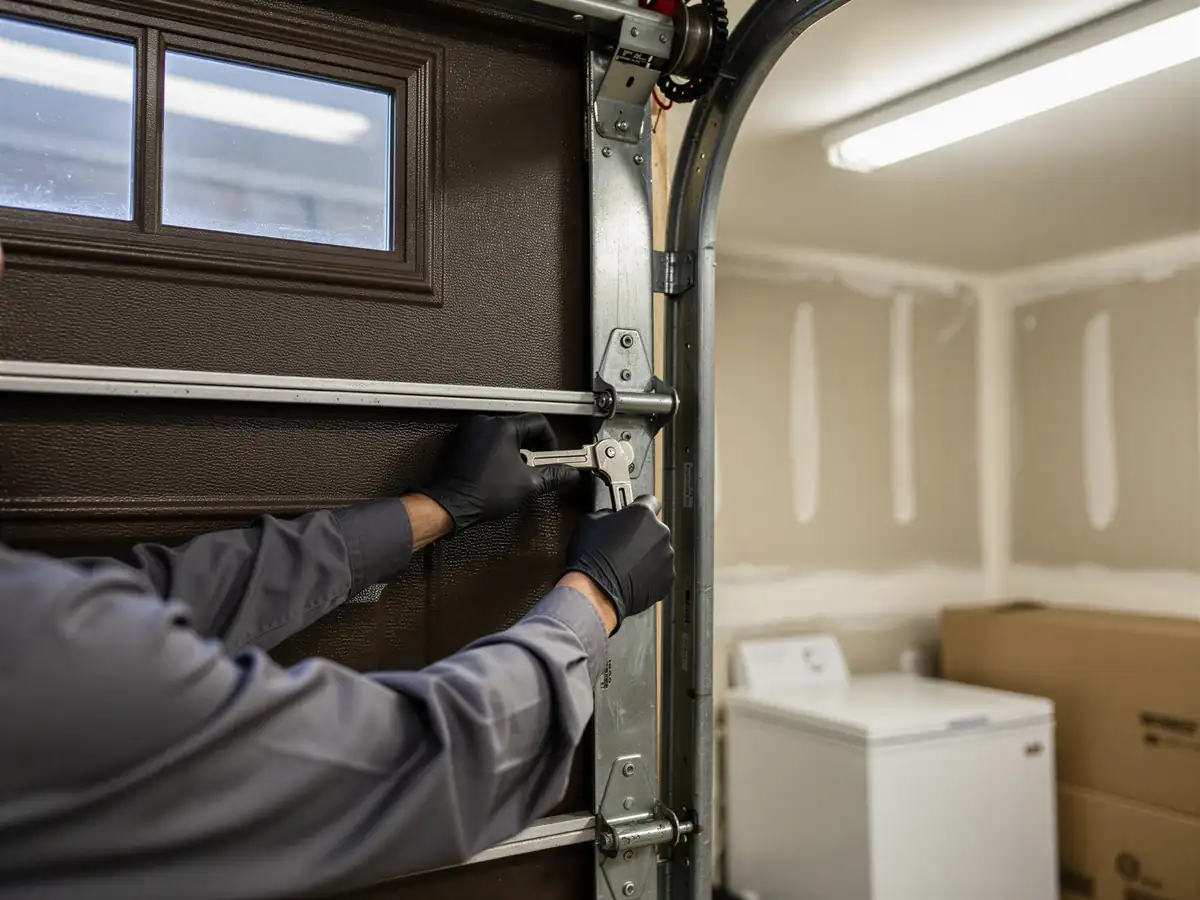
Then replace rollers one at a time rather than dropping the whole assembly - it keeps the door supported and lets us catch a bent section before it becomes a bigger job. On a door from the 1976 era we're usually also checking the roller brackets themselves, since decades of steel-on-steel wear can loosen the mounting screws enough that a new roller won't sit square.
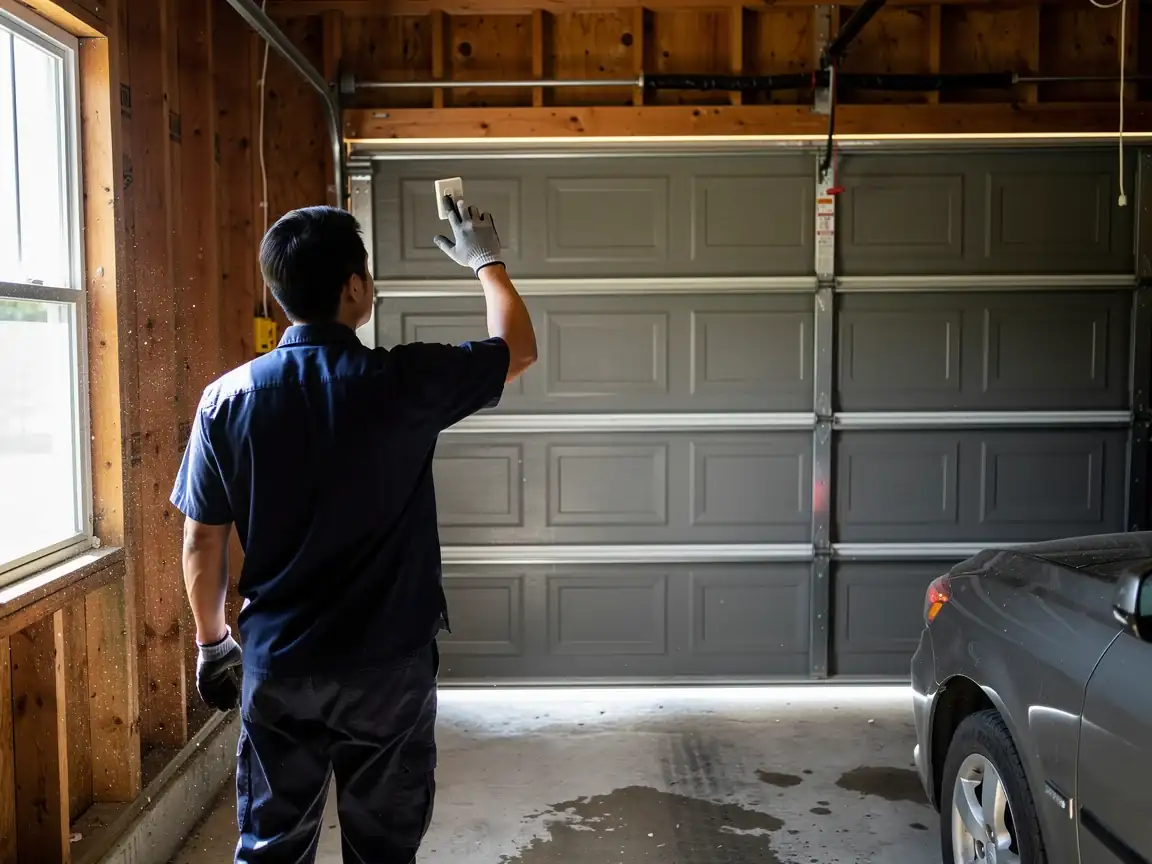
Once the new rollers are in, we run the door through a full cycle by hand before we hand it back
Listening for drag at the spot where the old groove wore into the track. If that groove is deep enough to keep catching, we'll say so rather than call the job done.