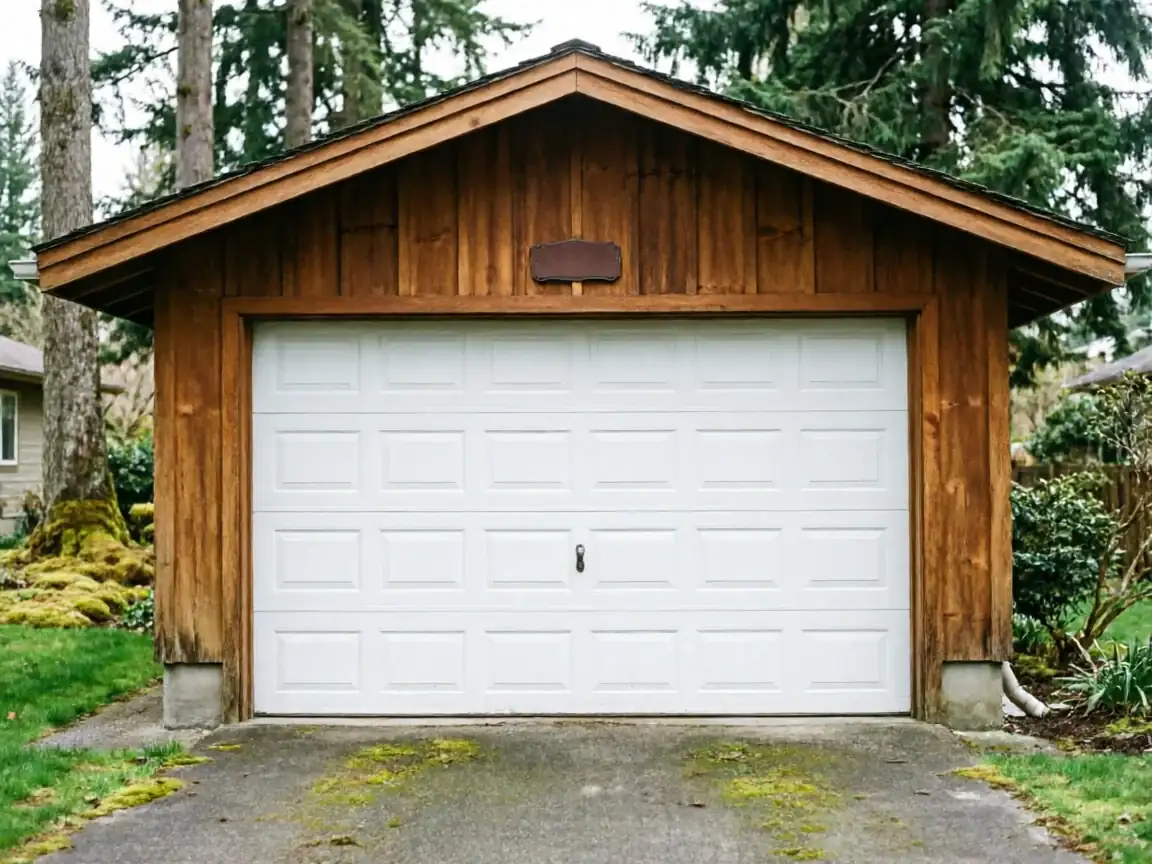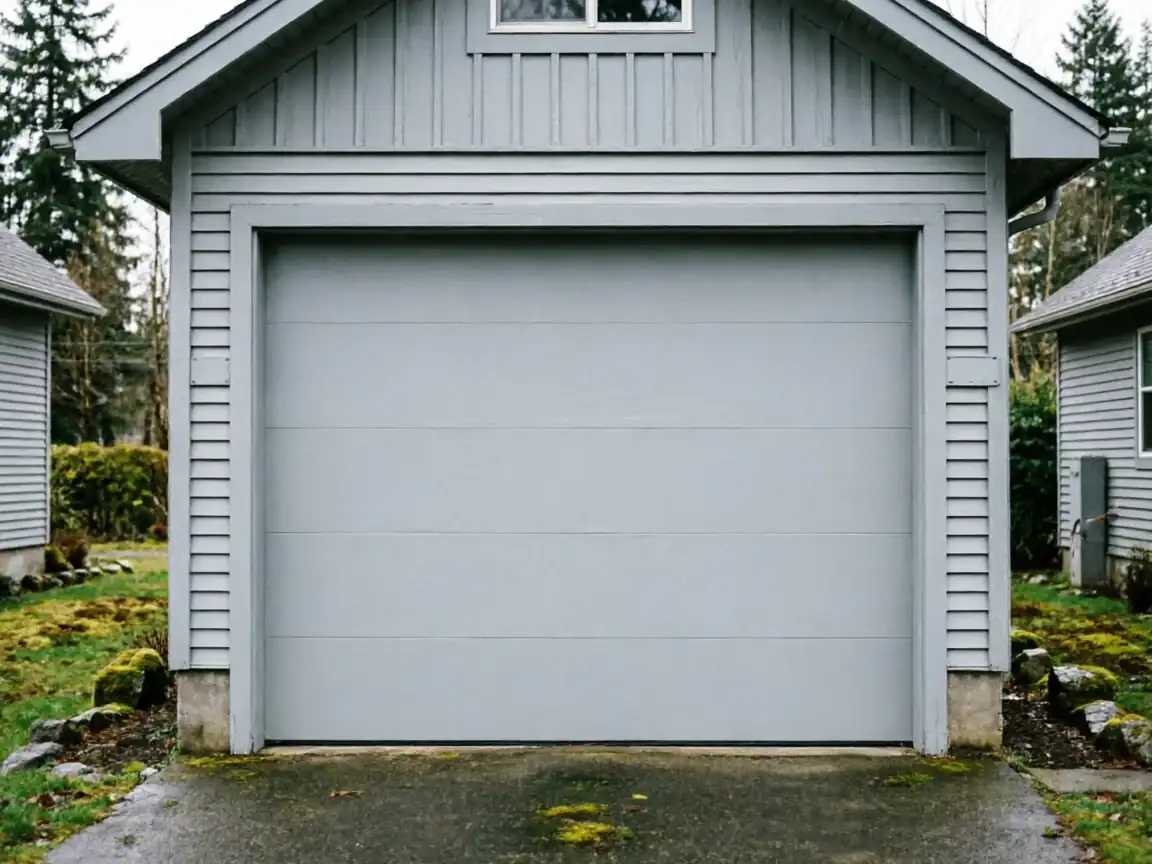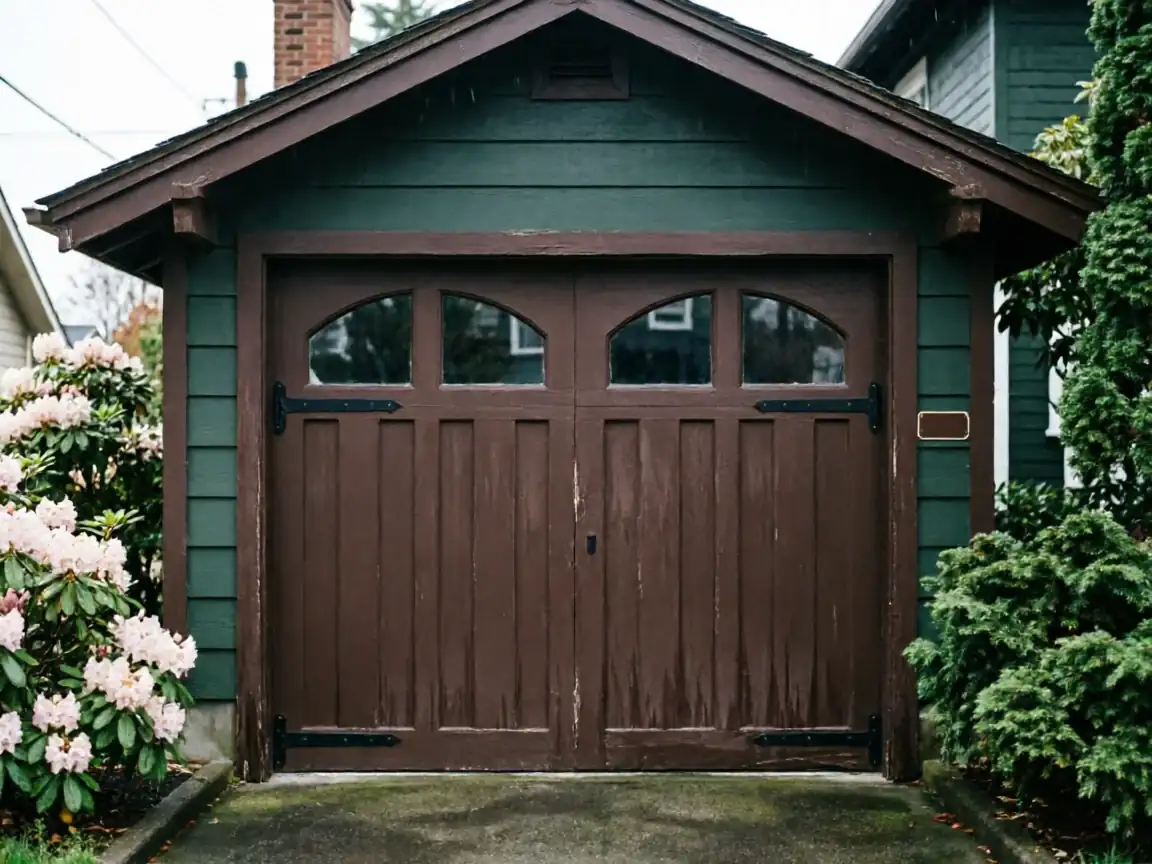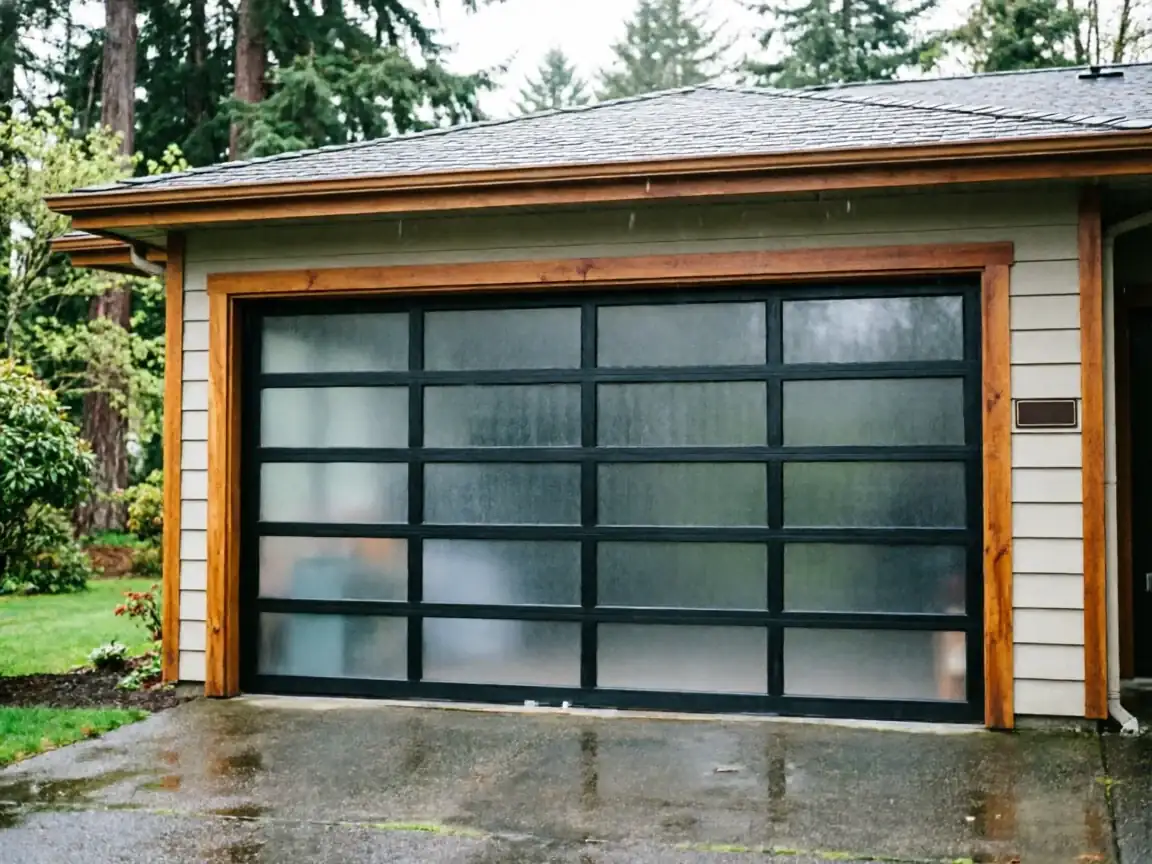
What You Are Seeing
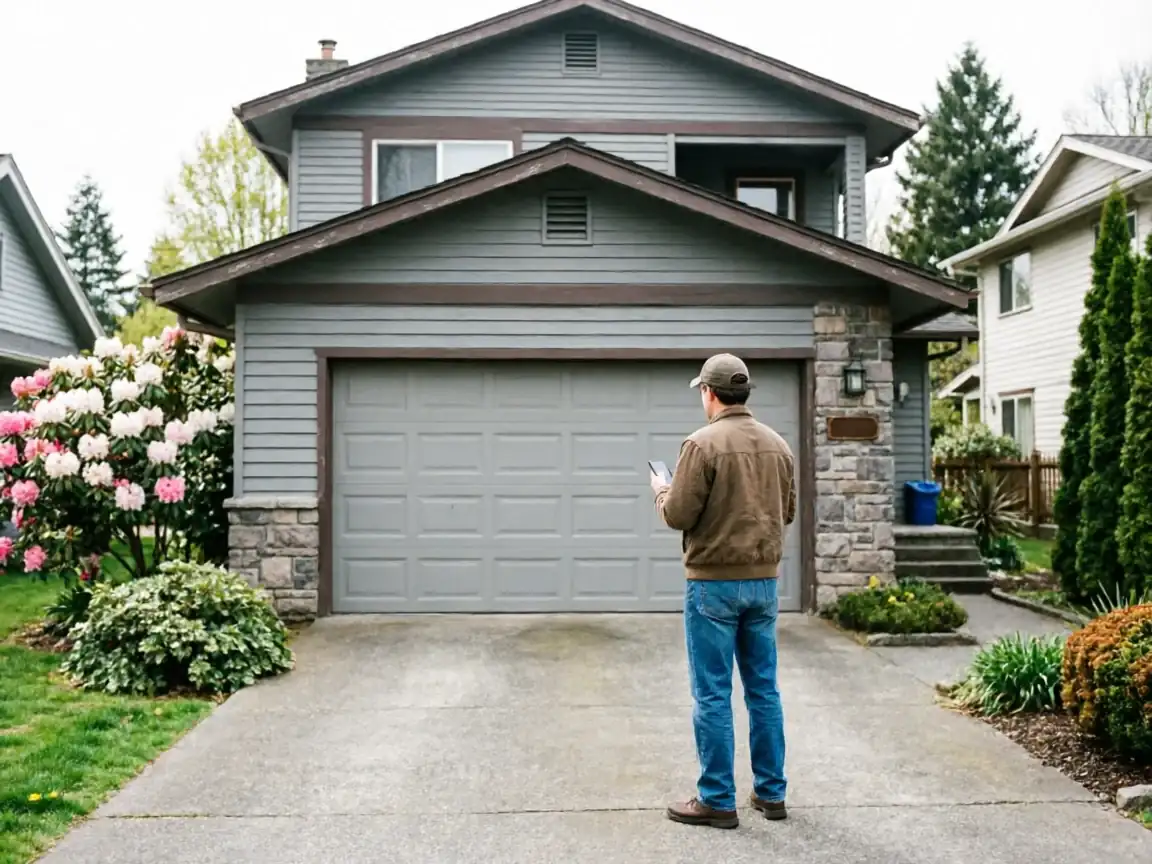
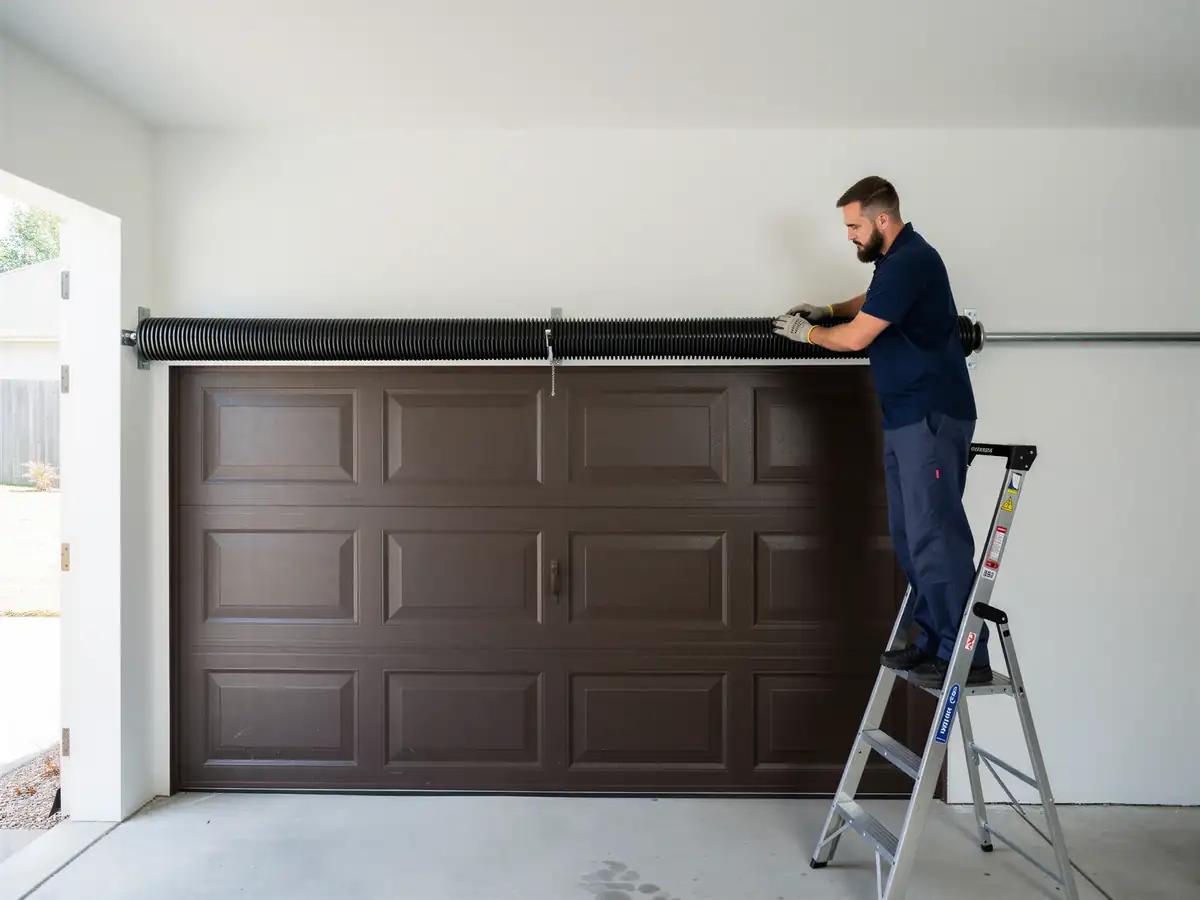
The fault we see most in Harrisburg isn't a broken spring out of nowhere - it's a spring that's been cycling for three or four decades on the same galvanized coil, slowly losing tension until the door starts feeling heavy on the way up, or the opener strains and reverses halfway. Harrisburg's housing stock centers on 1984, which puts a lot of these doors and their original torsion hardware well past the point where anyone should expect factory parts to still be doing their job quietly.
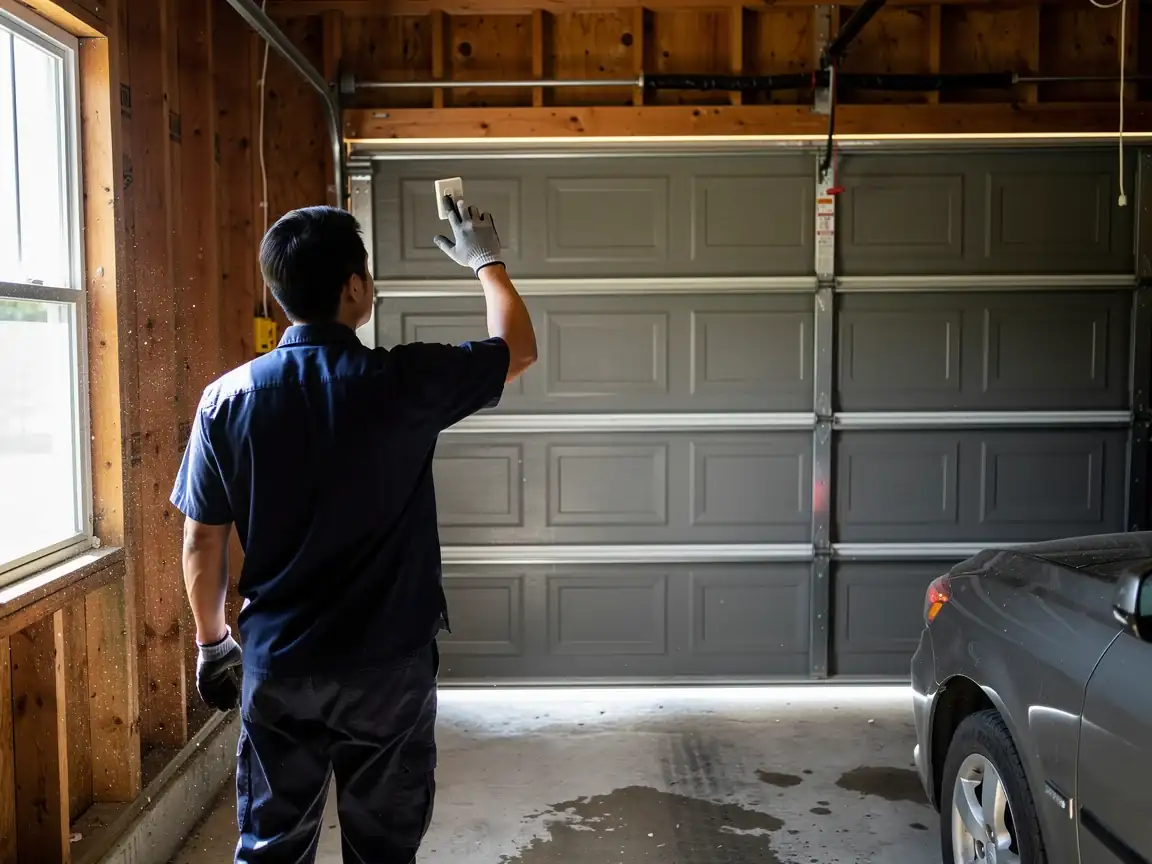
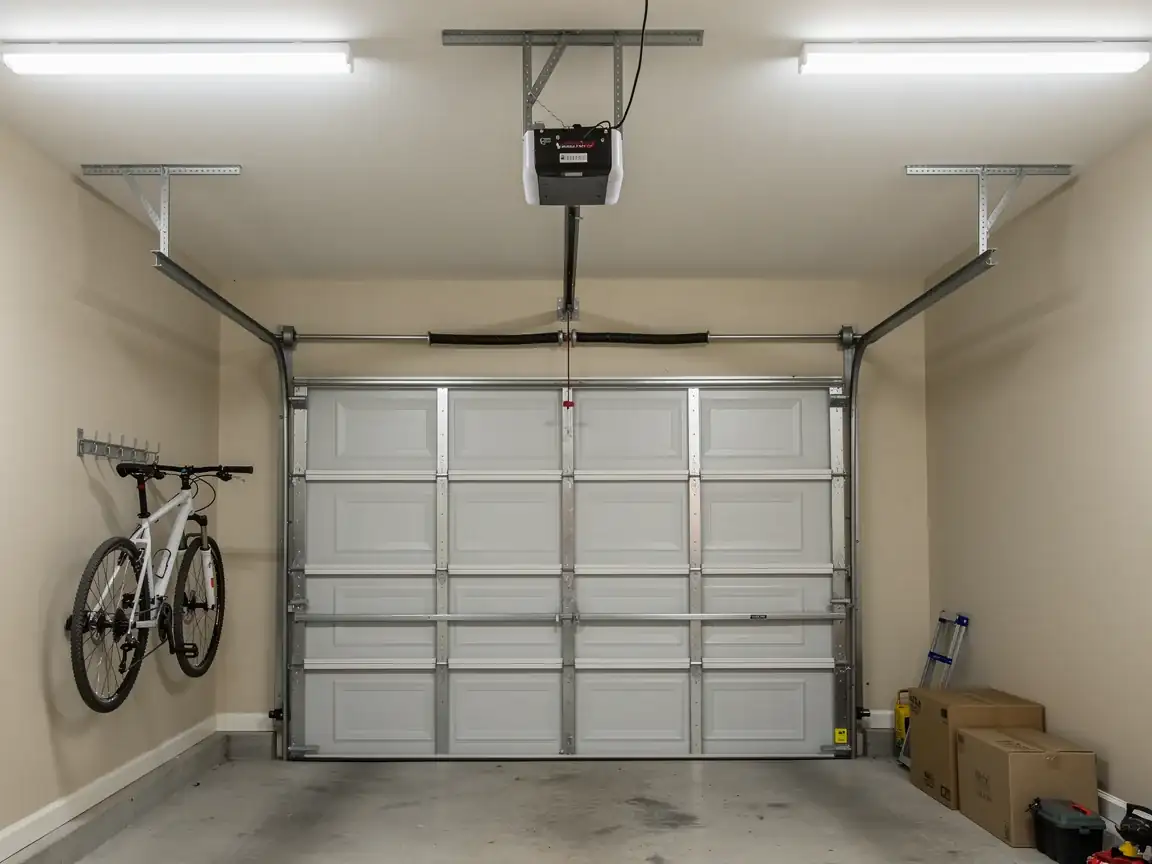
That build era also means a lot of these garages were fitted with chain-drive openers from the same period - units that were solid for their time but were never built with modern safety-reversal sensors or the quieter belt systems that came later. When we get called out here, it's usually one of two things: hardware that's simply tired from age, or an opener that's starting to show its wear through noise, slow response, or inconsistent reversing.
None of this is unique to one house. It's a pattern that shows up across a town where most of the garages went up within a few years of each other, which means a lot of Harrisburg doors are hitting the same wear point around the same time.
How Long It Takes
A standard maintenance visit
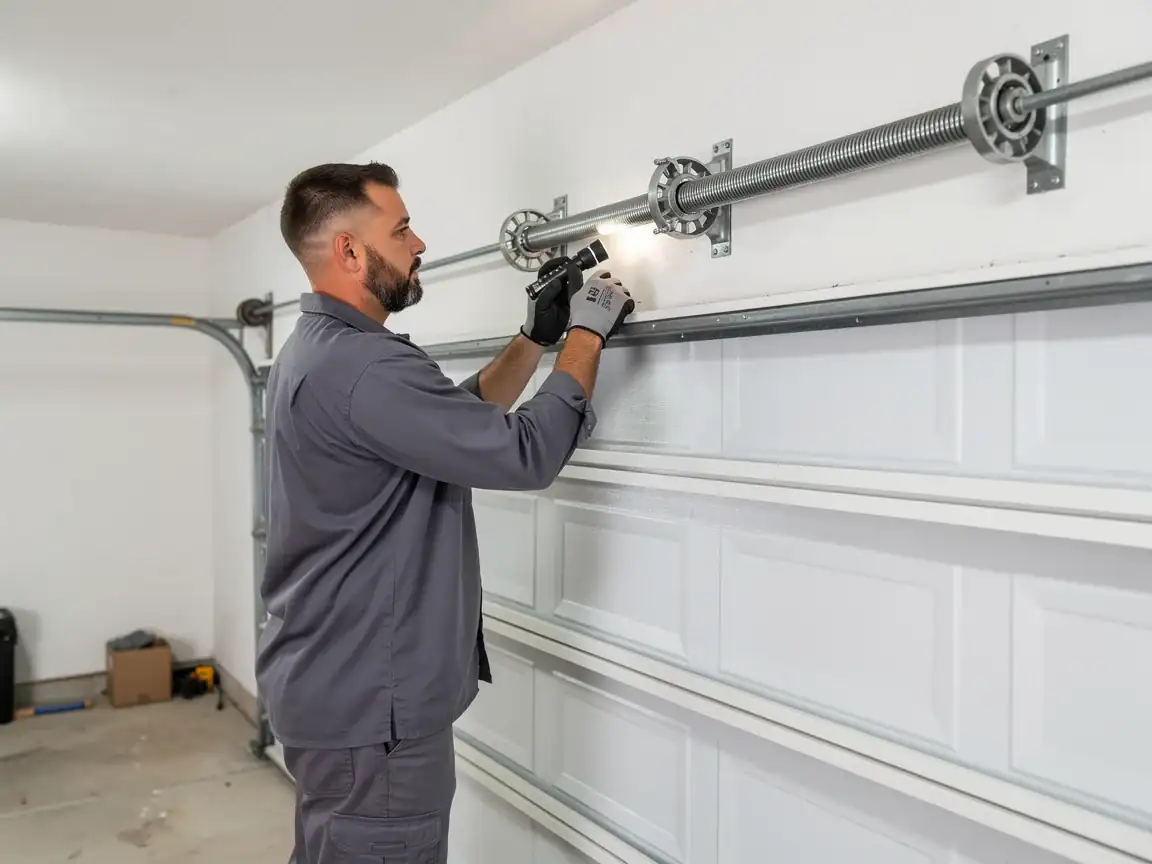
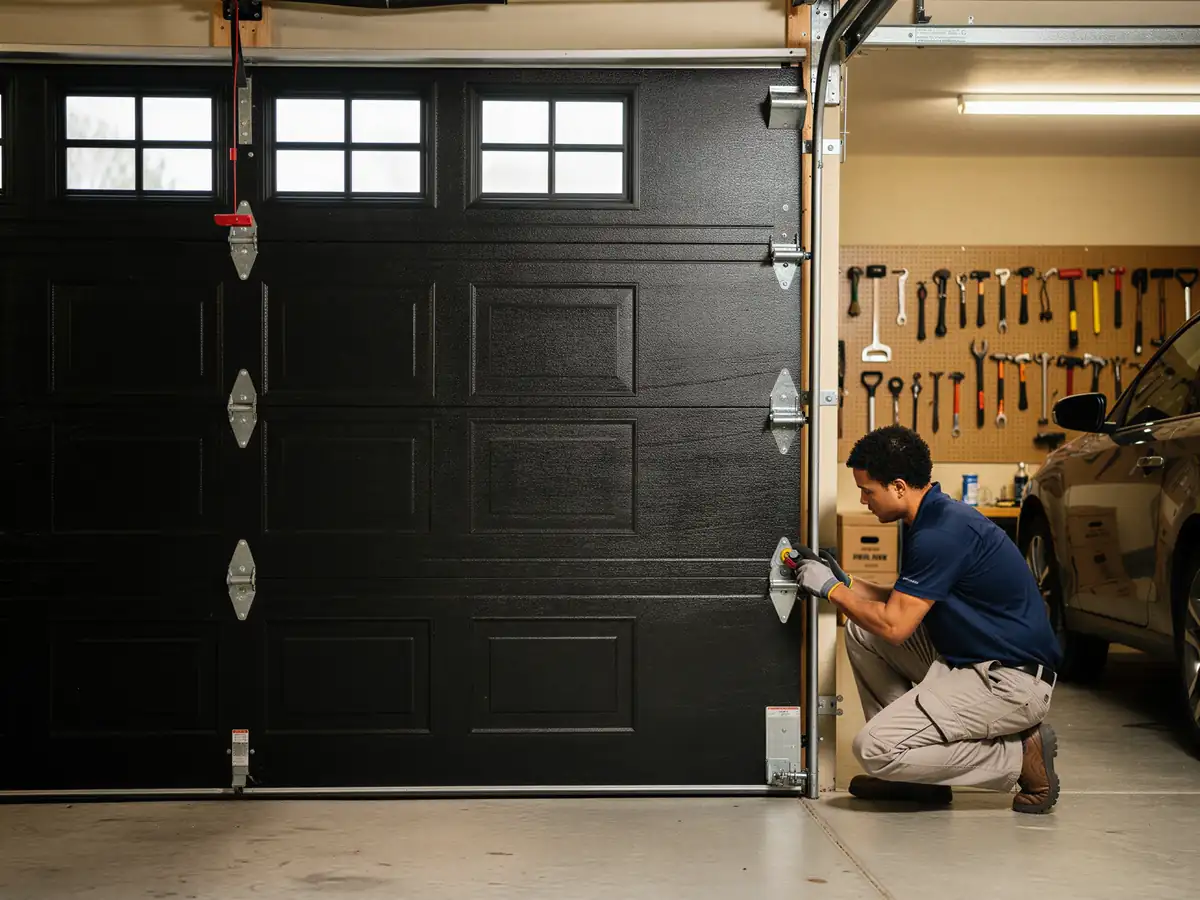
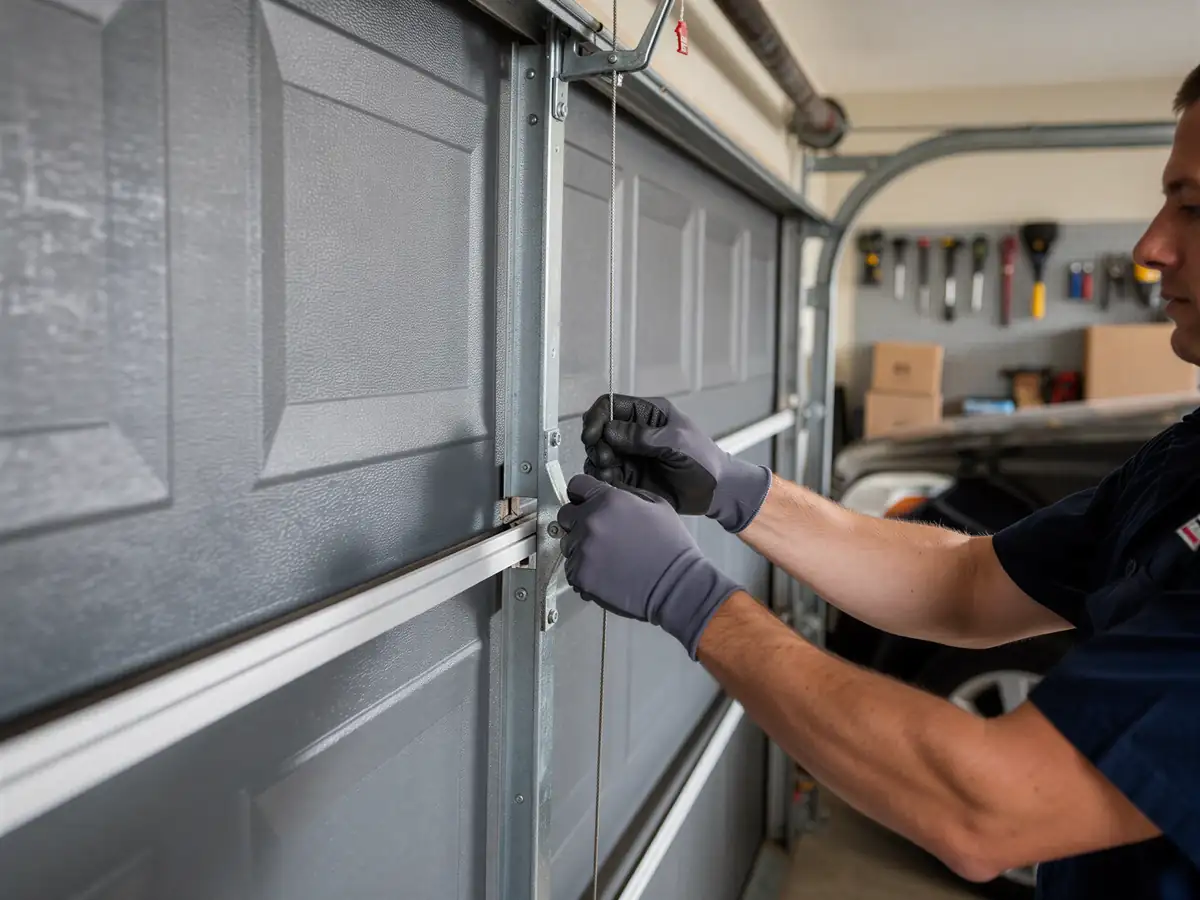
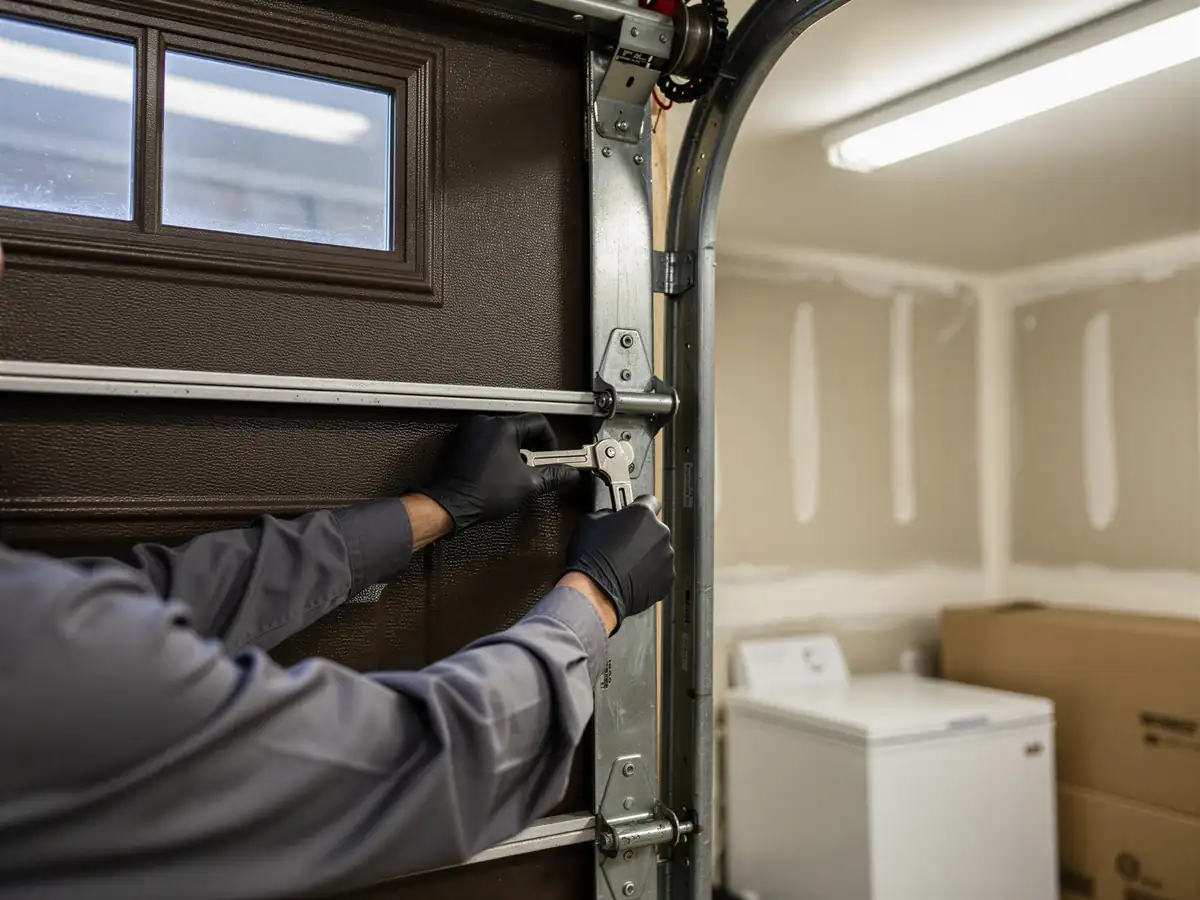
Lubrication, hardware inspection, track and roller check, spring tension and balance test, opener function check - runs shorter than a repair call, since we're not pulling anything apart unless we find a problem worth flagging. If we do find something, like a spring that's visibly stretched or a roller that's cracked, we'll tell you on the spot what it means and whether it's worth fixing now or watching.
Because we're coming from Eugene, about 15 miles out, we build the Harrisburg stop into a route rather than treating it as a same-hour emergency run
If your door is making noise or feels off but isn't stuck or unsafe, maintenance scheduled a few days out costs you nothing extra and saves us both a special trip. If the door won't move at all, that's a different call, and we'll say so.
- 15 miles
Getting It Booked In
We don't keep a depot in Harrisburg, so every visit here gets scheduled as part of the Eugene route rather than worked in same-day. That's not a knock on the town - it's just the honest version of how the distance works. If you want maintenance done before winter or before a known problem gets worse, booking a week or two ahead gives us room to group the trip efficiently, which keeps the visit itself affordable.
One limitation worth saying plainly: if a part needs ordering - a specific opener board, a spring sized for an older door - that adds lead time beyond the visit itself. We'll tell you up front if that's likely rather than let you assume the first trip solves everything.
Where This Job Goes Sideways
The mistake we see most in Harrisburg is someone spraying WD-40 on a noisy track or hinge and calling it maintained. That's a solvent, not a lubricant - it strips what grease is there and leaves the metal drier than before. On doors built around 1984, the tracks and hinges have had forty winters of cold-weather contraction and expansion, and dry metal under that kind of cycling wears fast.
The other place it goes wrong is waiting for a spring to fully snap before calling anyone. A spring that's lost tension gradually puts more load on the opener, the cables, and the bottom brackets the whole time it's weakening - so by the time it breaks, you're often not looking at a spring repair anymore, you're looking at an opener that's also been overworked. Catching the tension loss early is cheaper every time.
How We Fix It
On a maintenance visit we lubricate with the right product for steel hardware in a cold, moderate climate
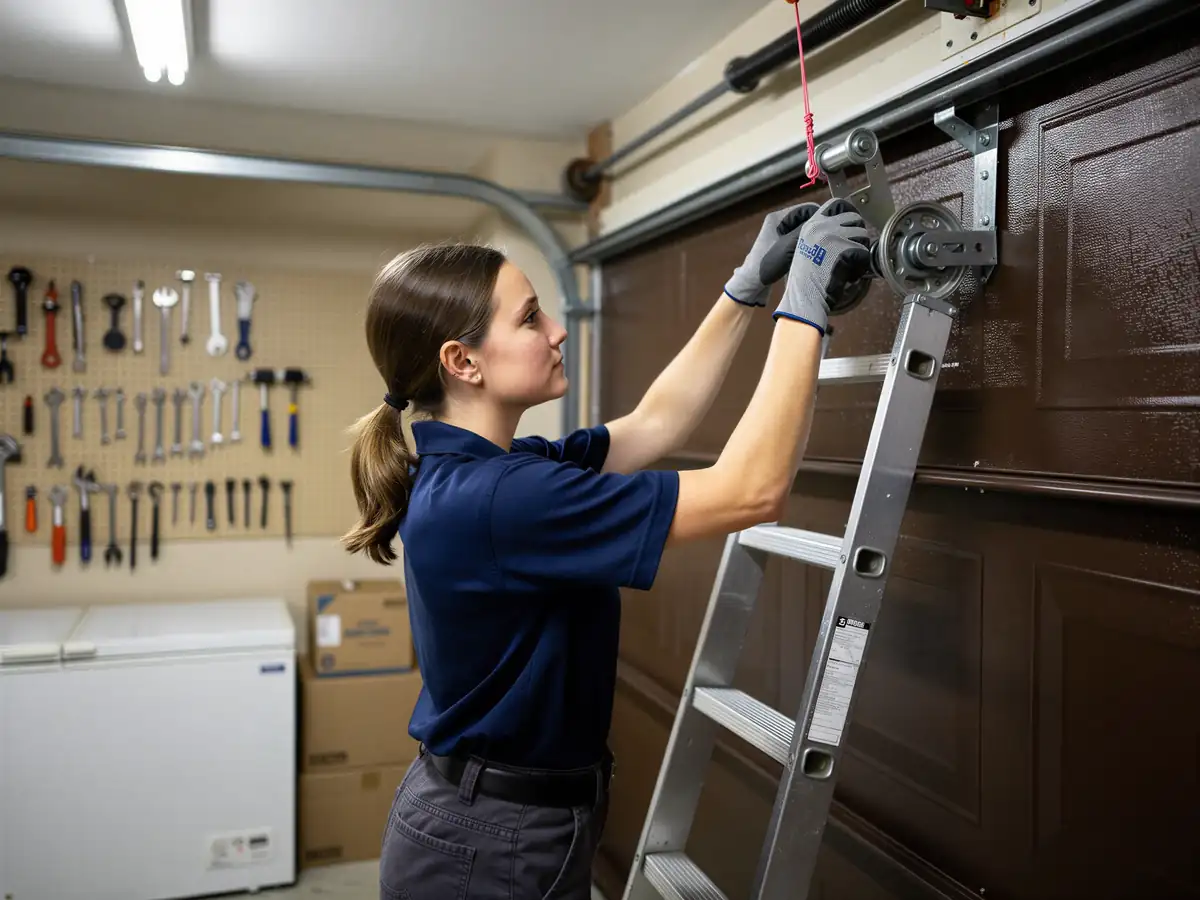
Not a generic household spray - and we check spring tension against what the door's weight actually calls for, not just whether it looks fine by eye. We inspect rollers, cables, and the bottom bracket hardware for the kind of wear that's common on doors from the early-to-mid 1980s, since that's the bulk of what Harrisburg has.
If we find an opener that's at the end of its working life
We'll say so rather than patch it and have you call again in six months. Sometimes the honest answer on a 40-year-old door is that maintenance buys you a few more good years, and sometimes it's that replacement is the better money. We'll tell you which one we're looking at before we do any work, not after.