How We Fix It
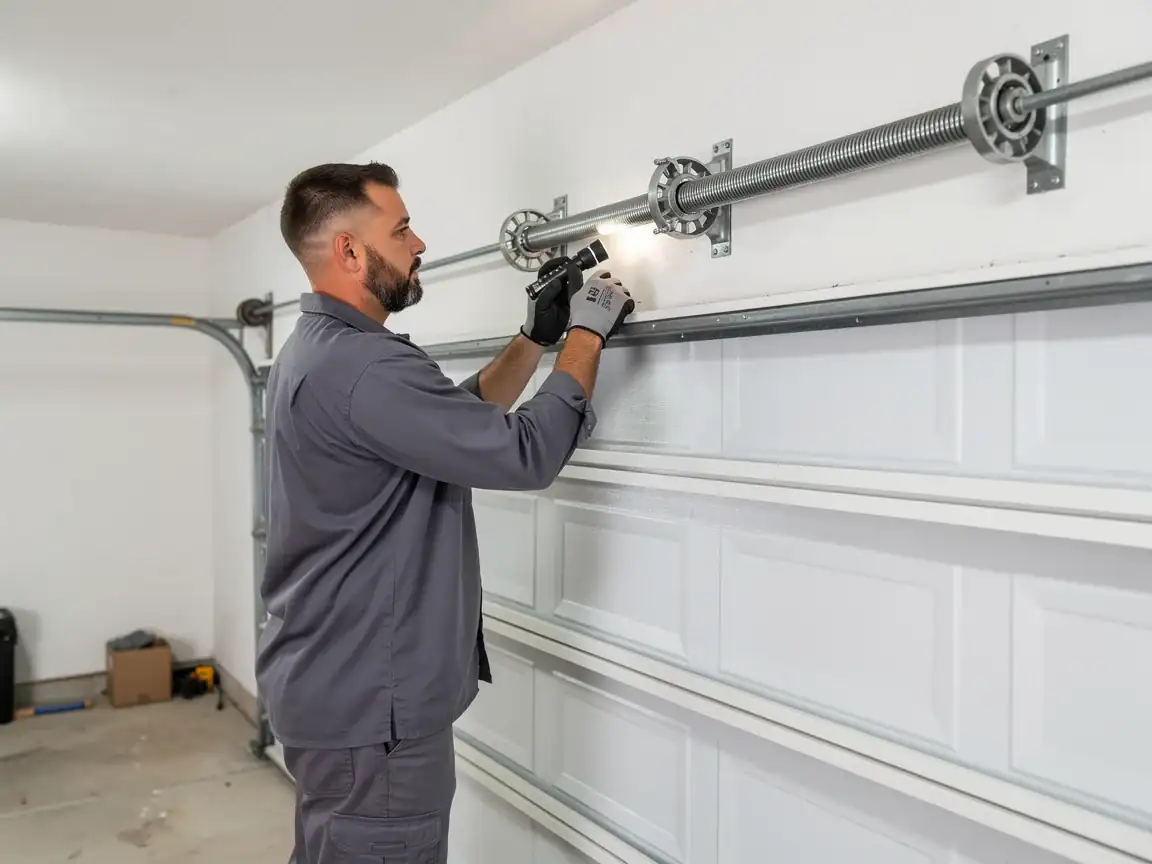
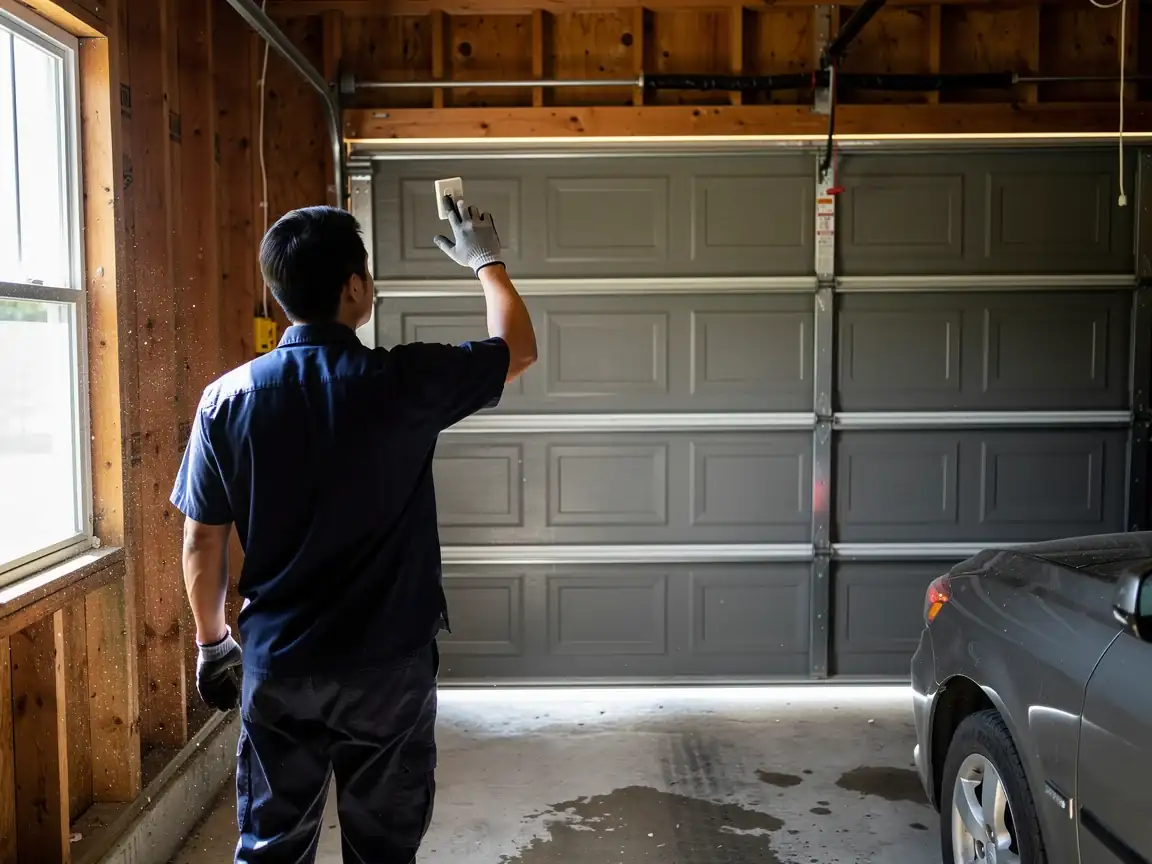
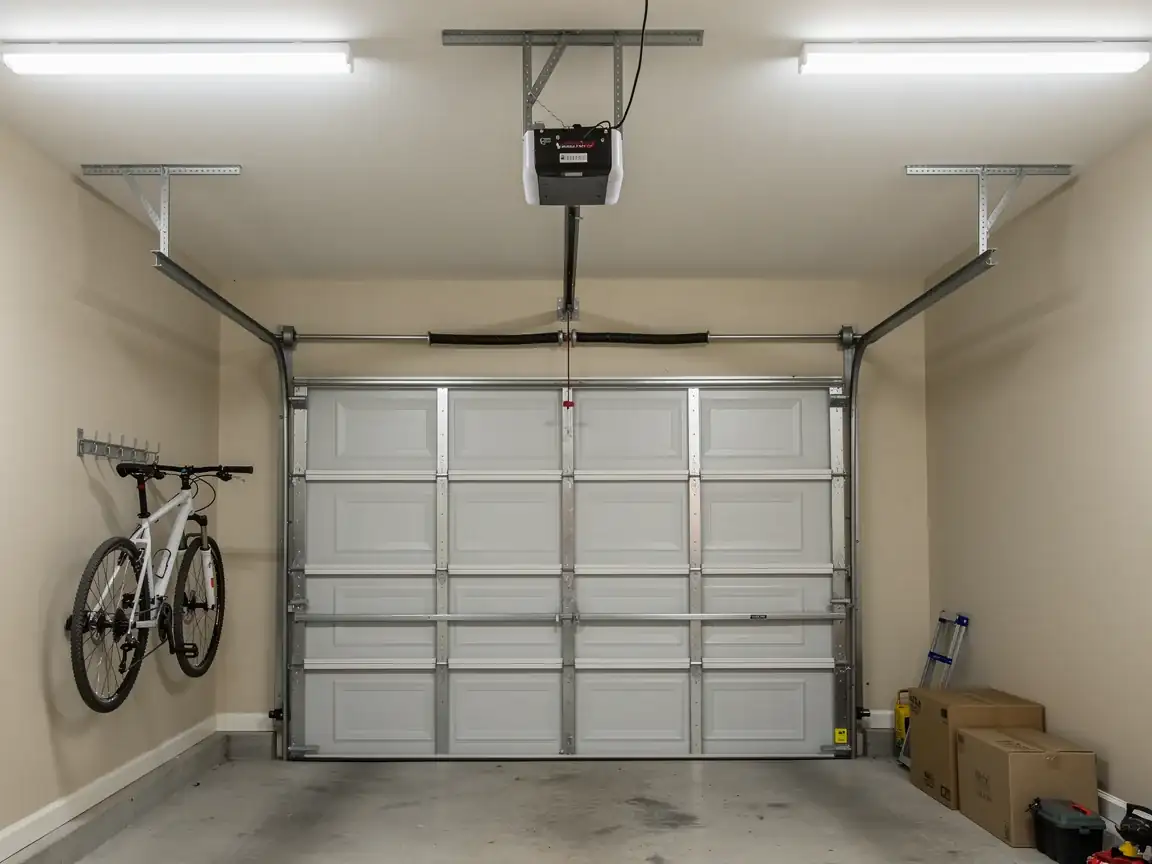
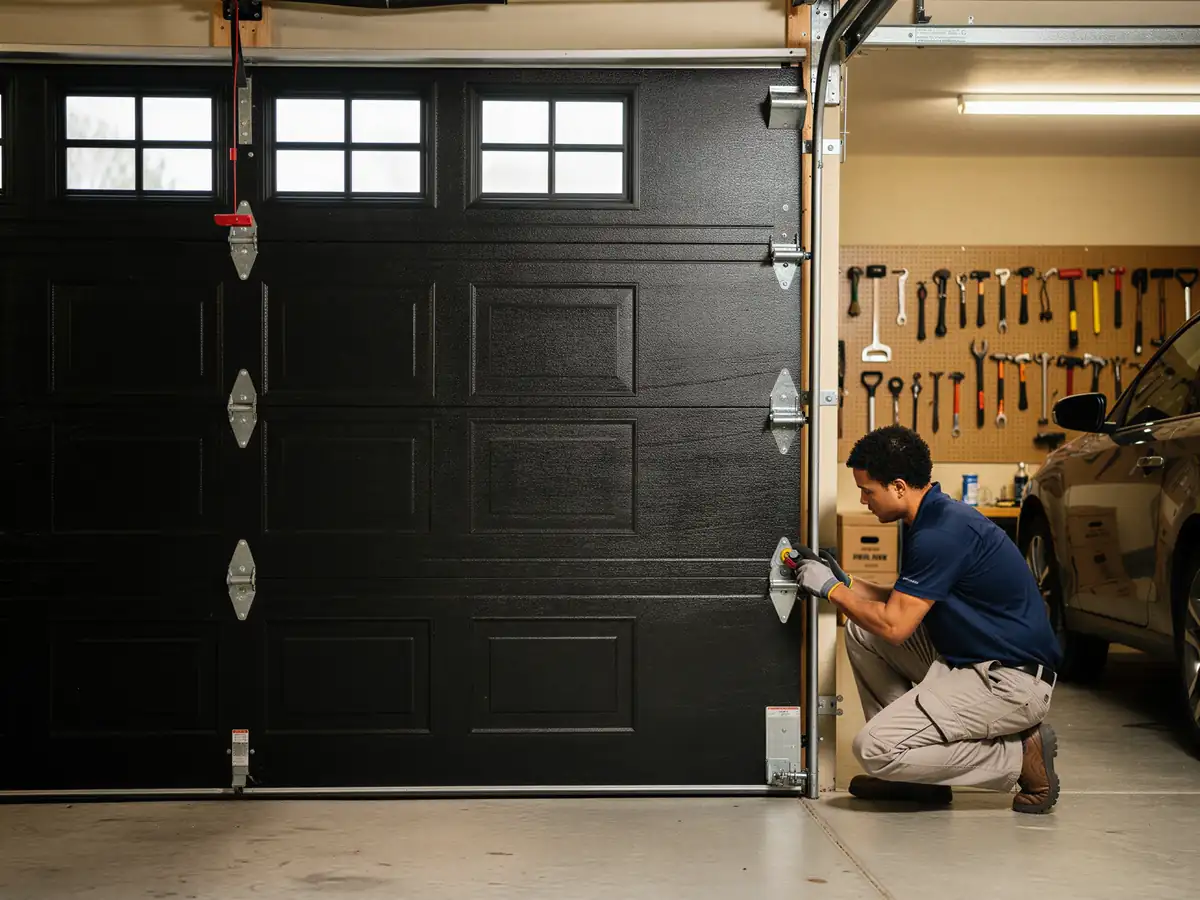
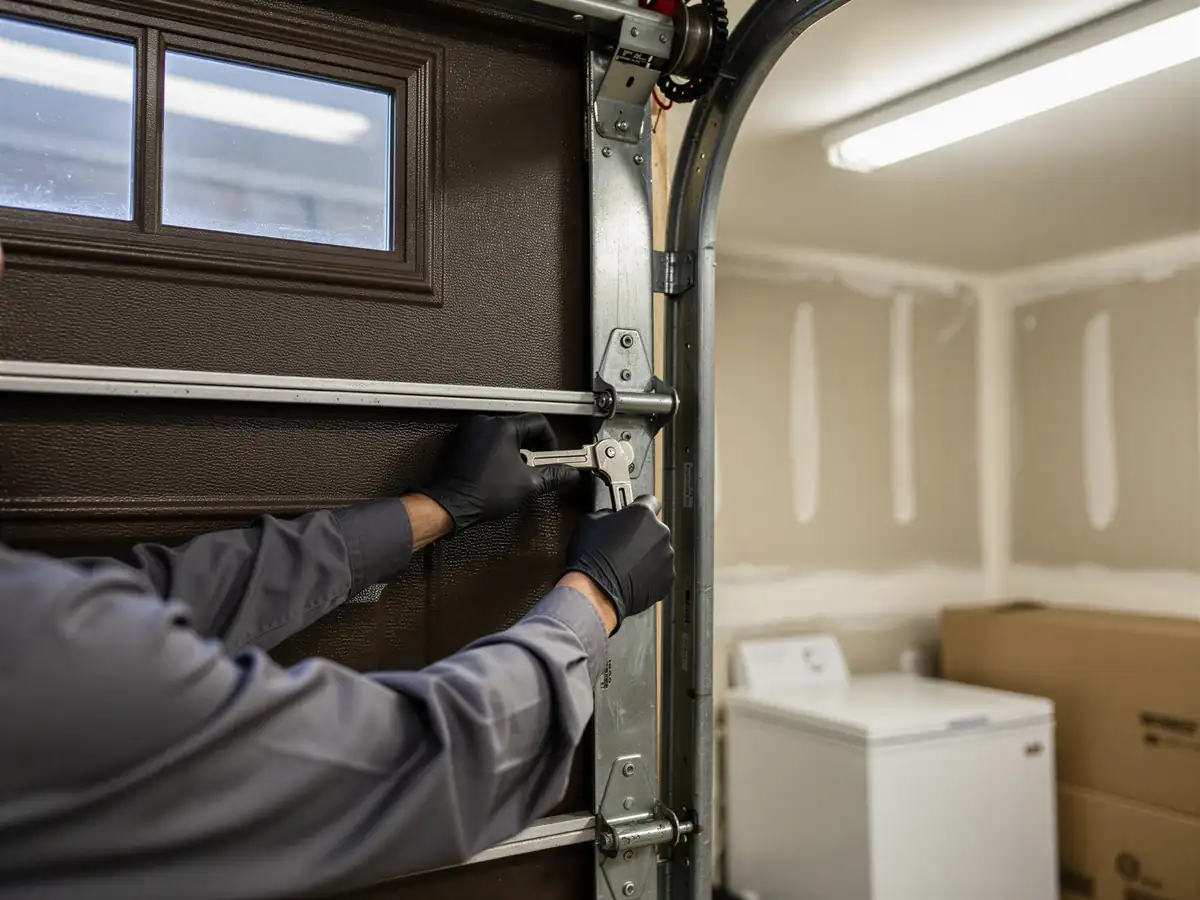
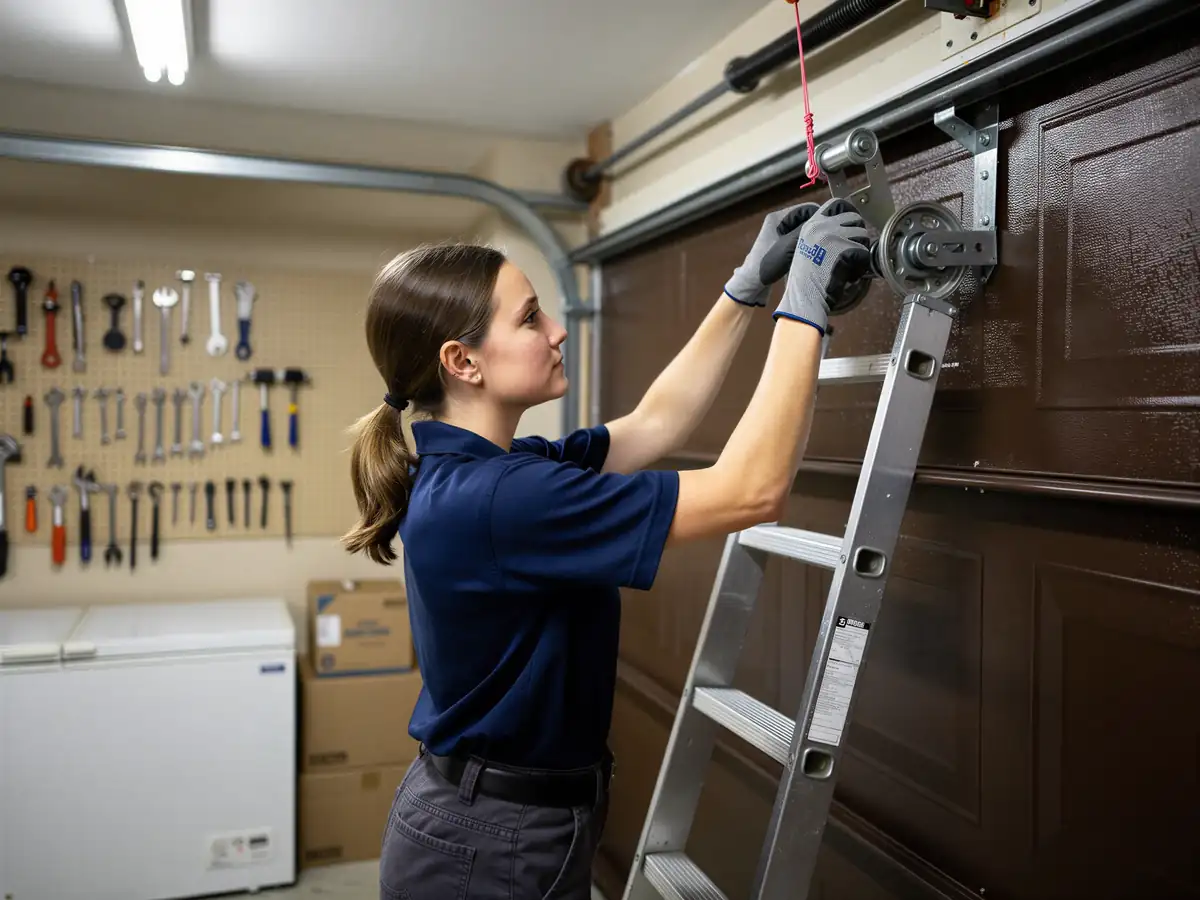
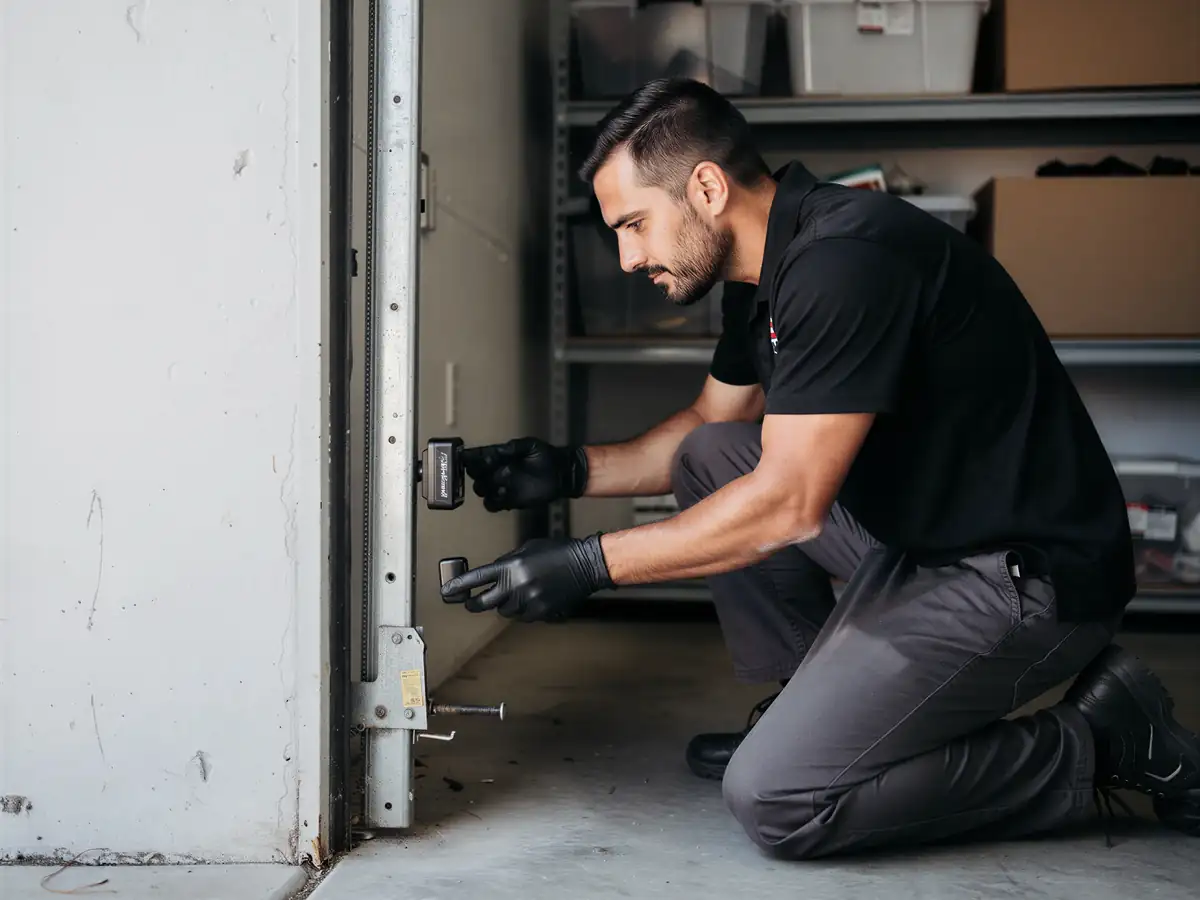
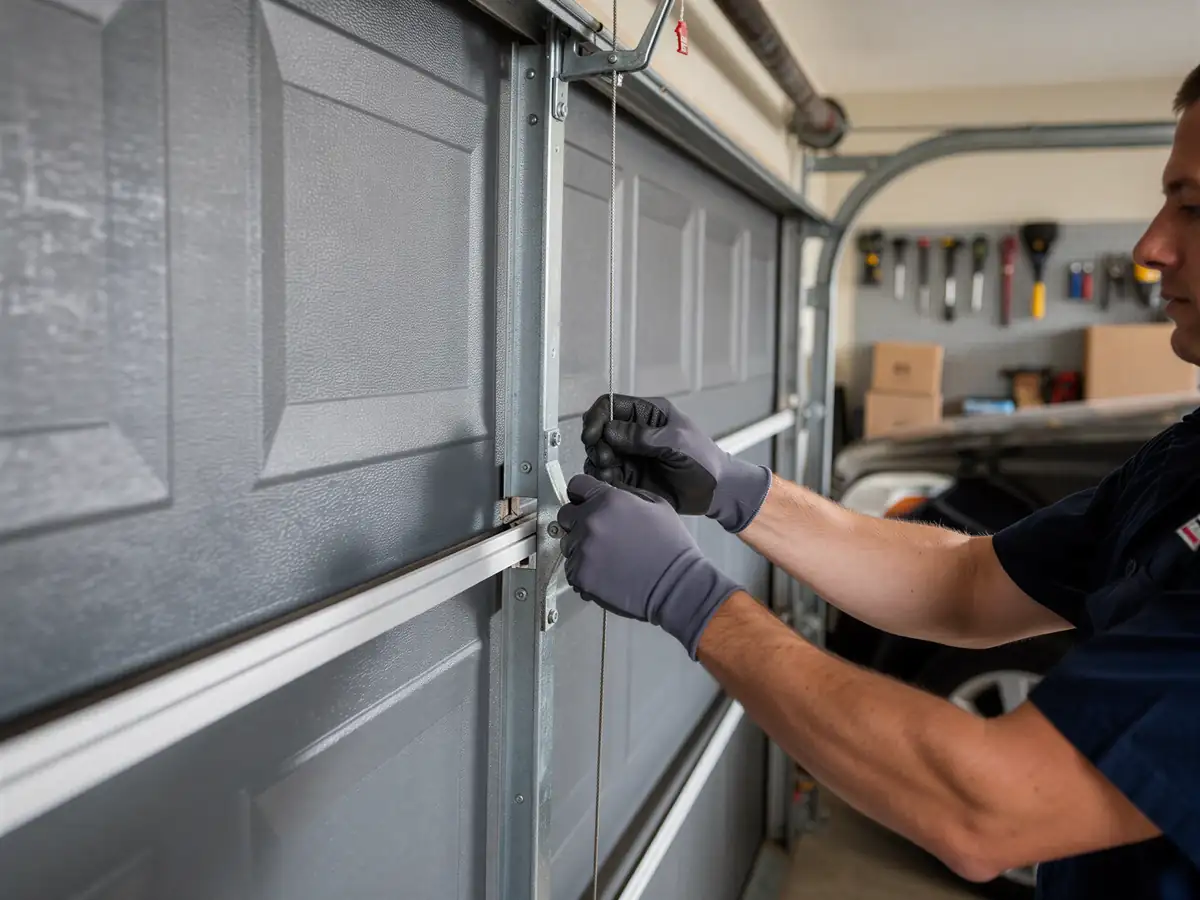
Most houses in Junction City went up around 1980, and a lot of those garage doors are still running the cable drums and track hardware that came with the house. When a cable snaps or frays off the drum, we pull the panel back into plane with clamps, unwind what's left of the old cable, and measure the drum for the correct wrap before running new aircraft cable to match the door's weight and spring setup. On a lot of these original installs, the drums themselves are worn enough from four decades of use that replacing just the cable doesn't hold - we check drum groove wear before we call the job done with cable alone. We always release spring tension first. A cable job on a door with live spring tension is how people lose fingers, and we don't cut that corner regardless of how simple the fix looks.
What Is on the Truck
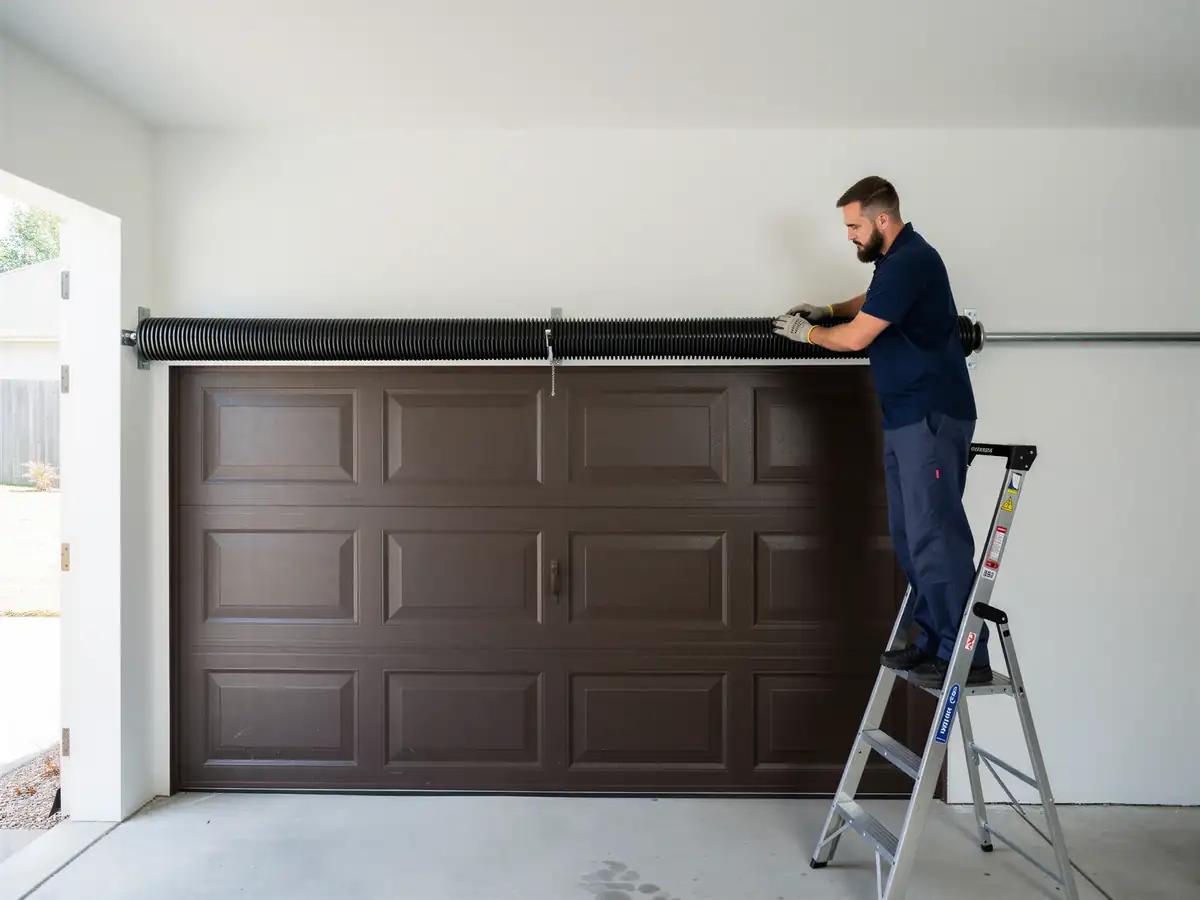
We carry standard-gauge aircraft cable in the common lengths and diameters used on residential sectional doors, plus drums and bearing plates sized for both torsion and extension setups, since Junction City's older stock has both depending on when the door itself was last replaced. What we don't always have on the truck is a drum matched to an unusual spring size from a door that's never been touched since 1980 - those come up occasionally on original installs, and if we hit one, we'll order the part rather than force a mismatch that unwinds again in six months.
The DIY Question
A broken cable under tension is not a weekend project. The spring holding that door up still has stored energy even with the cable gone, and winding bars, vice grips, and a torsion spring have put people in the ER for less. If the cable just slipped off the drum rather than snapping - which happens on doors that have racked slightly over the decades - that's sometimes a five-minute fix once tension is safely released. Telling the difference from outside the door without tools is the hard part, which is the honest reason we'd rather look at it than talk you through it over the phone.
Where This Job Goes Sideways
The job turns into something bigger when the cable isn't the only thing original. A drum groove worn oval, a bent track, or a spring that's stretched past spec will all make a fresh cable fail again within weeks if we don't catch them during the same visit. Houses built around 1980 that have never had the hardware upgraded are the most likely to carry two or three of these at once, since nobody replaces one part of a torsion system in isolation and expects it to behave like new. We'll flag what we find before we start, not after the bill.