How We Fix It
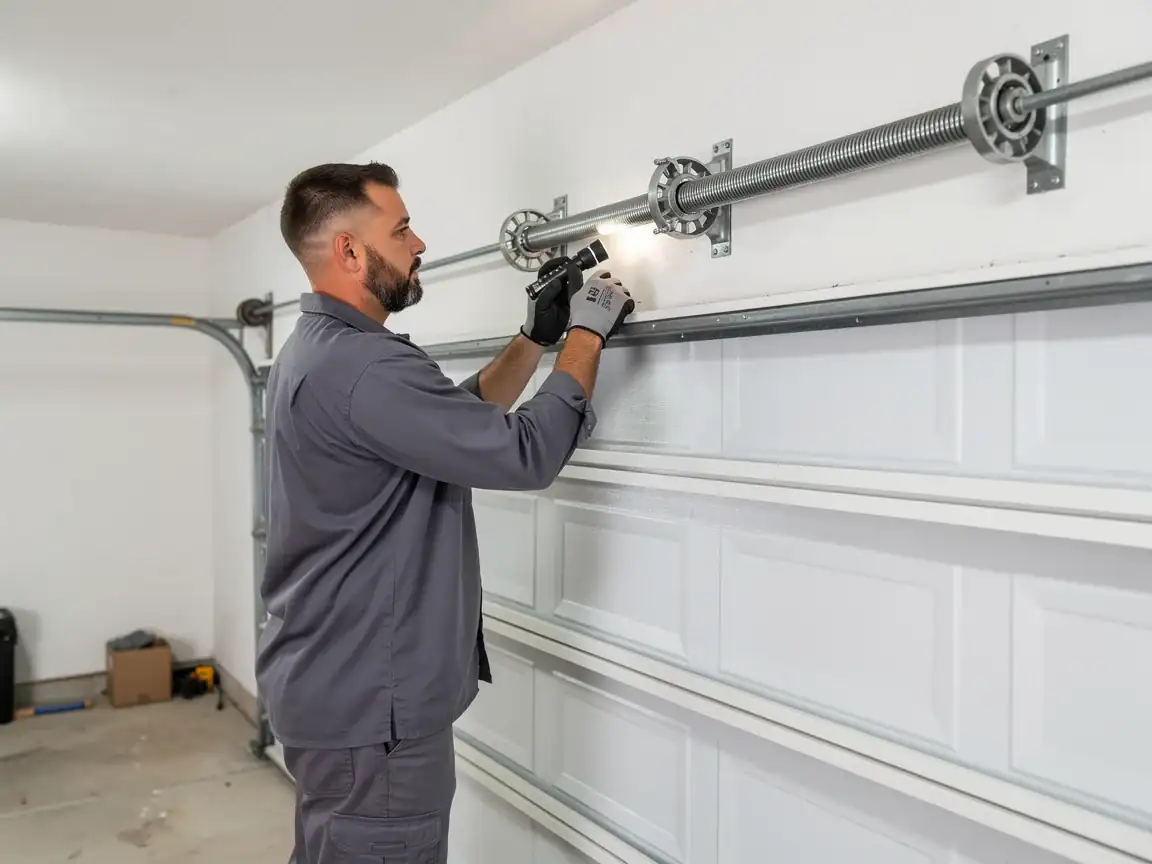
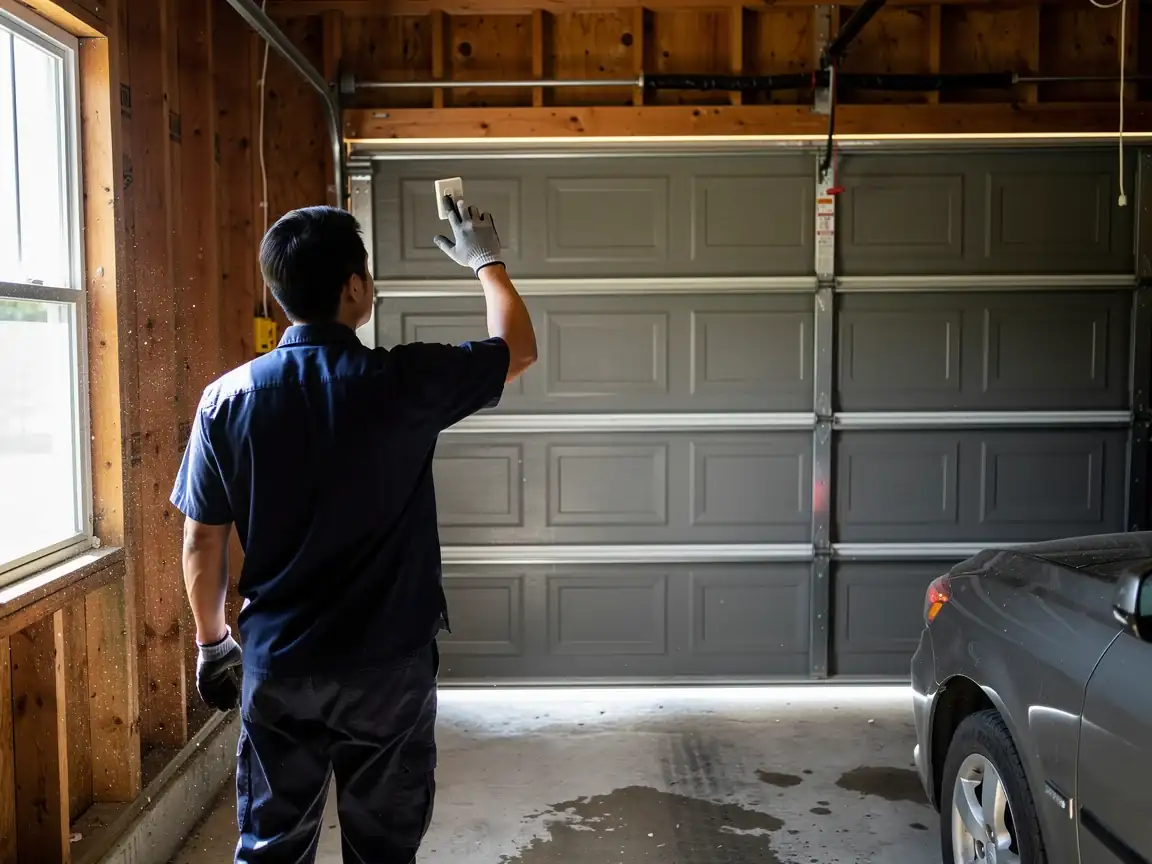
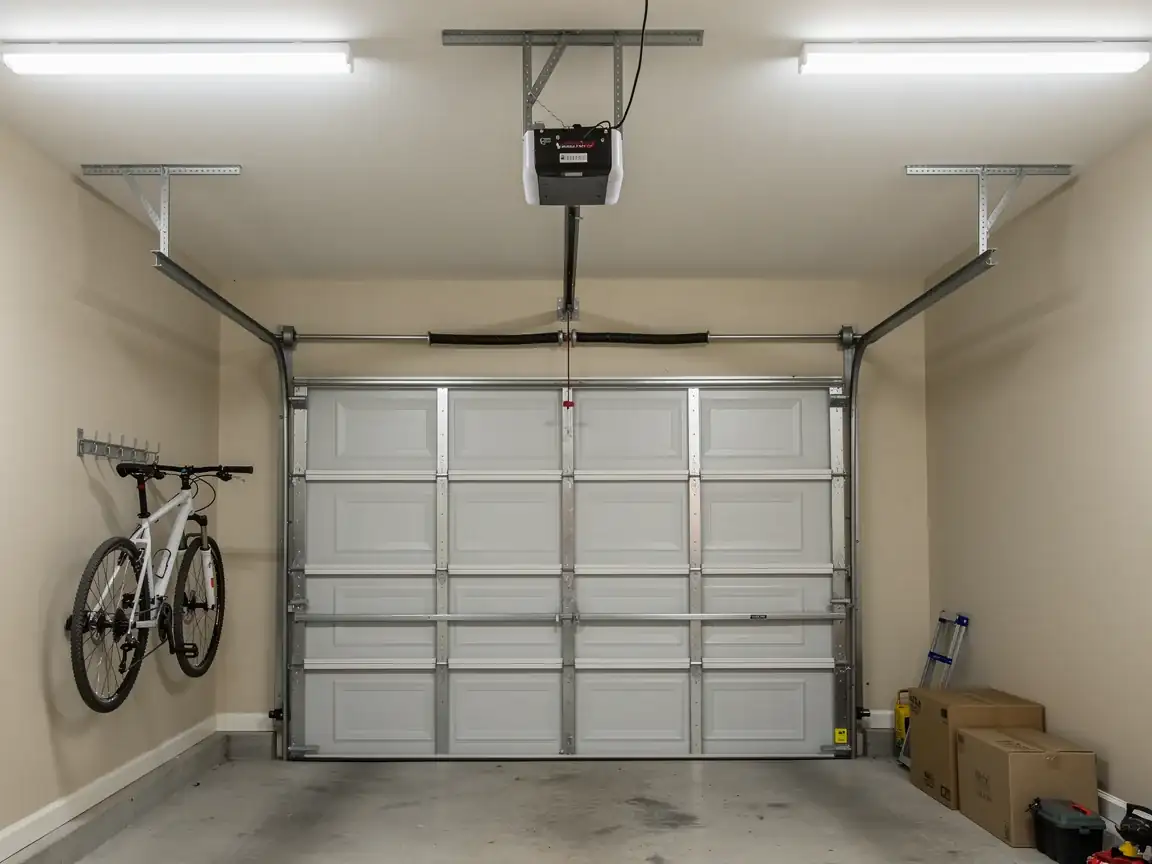
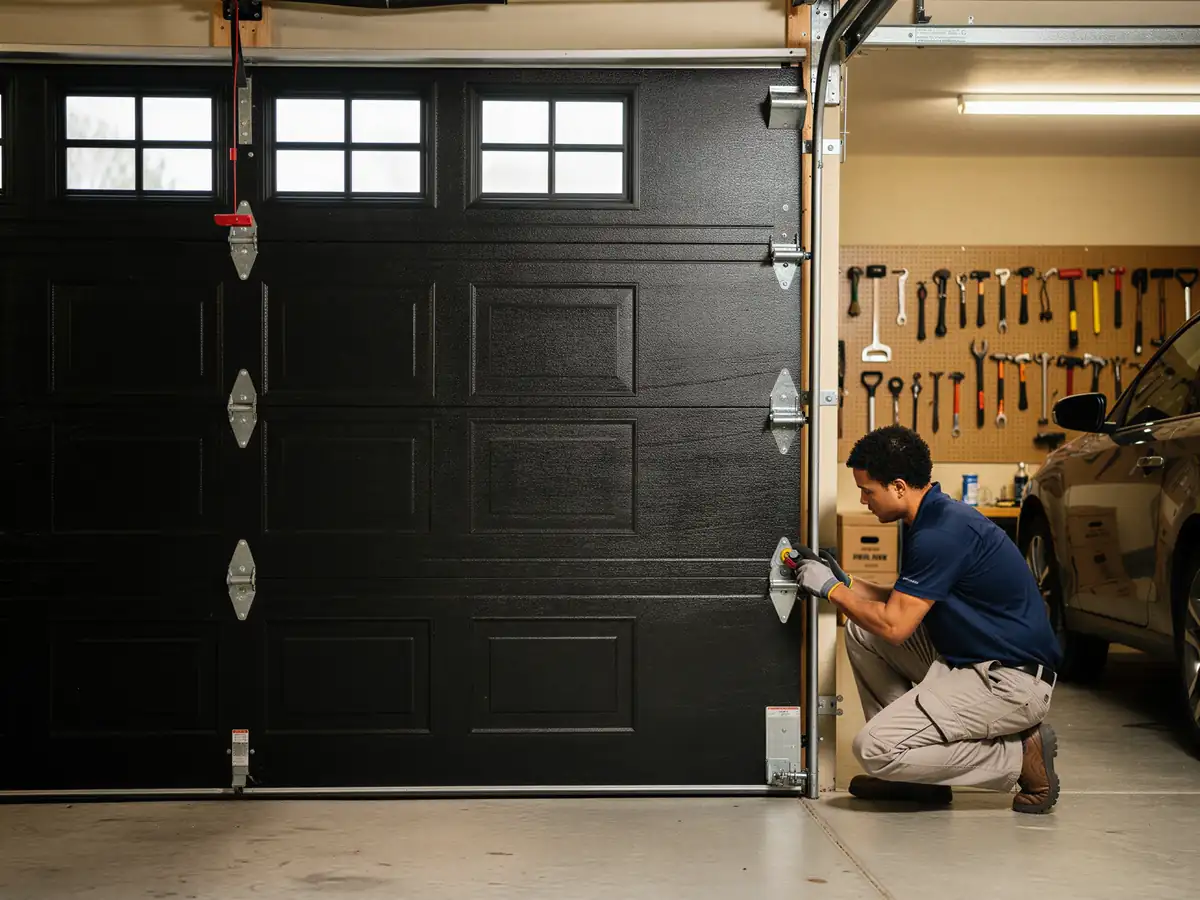
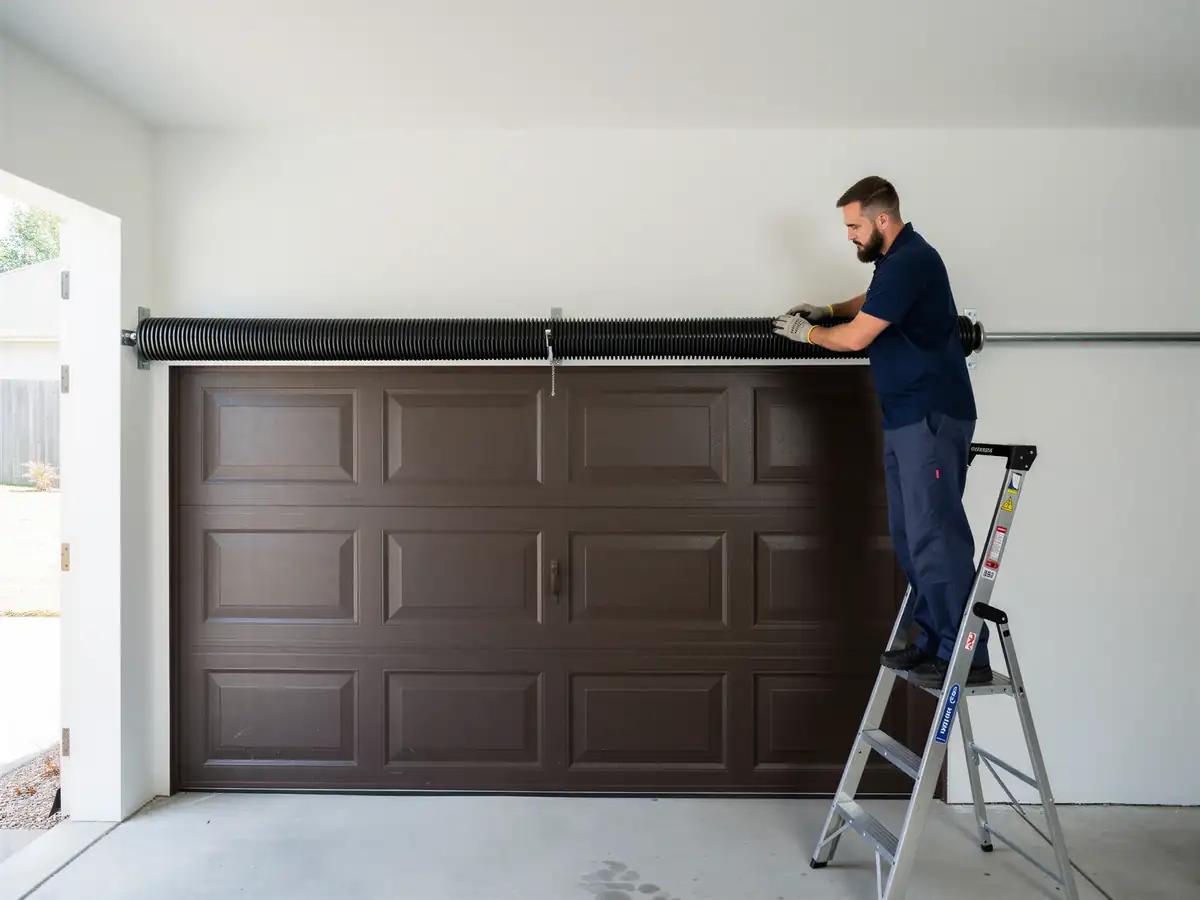
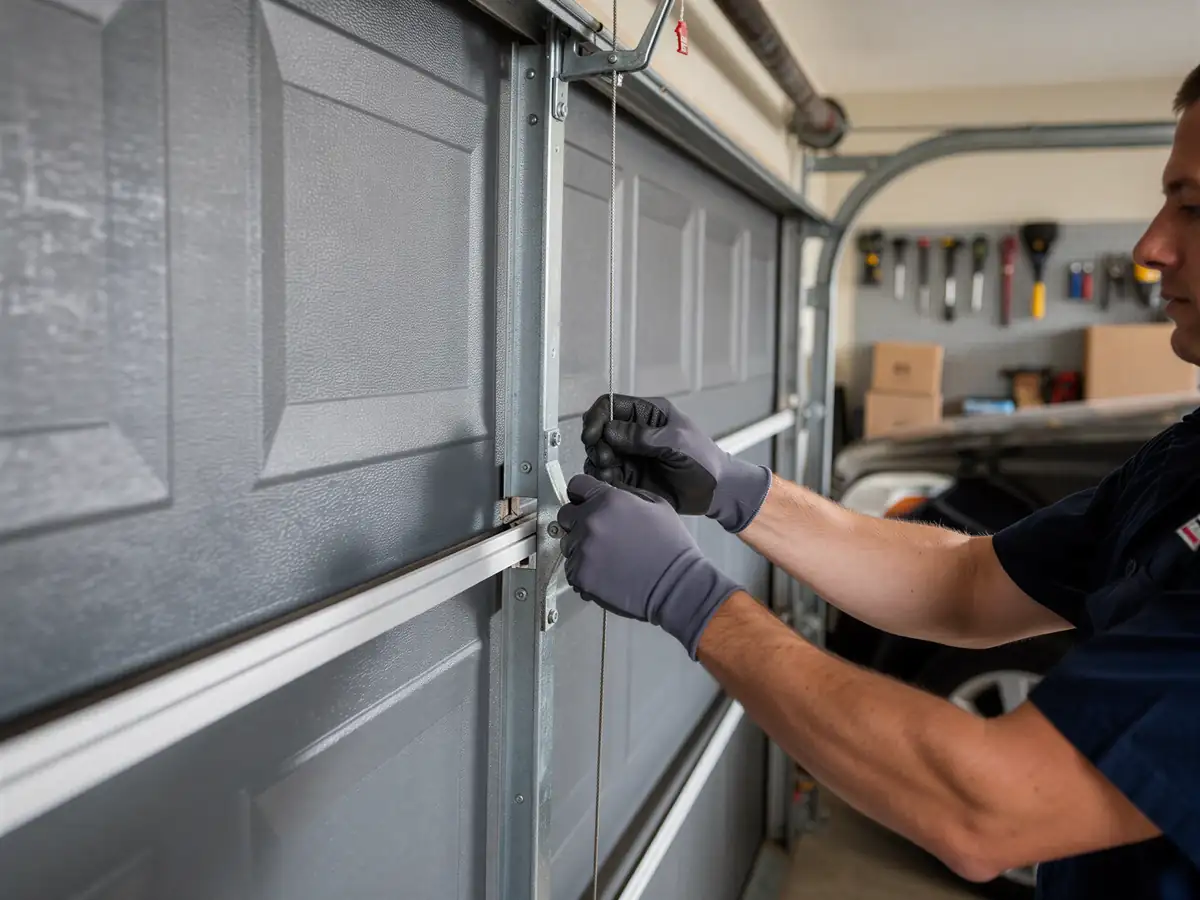
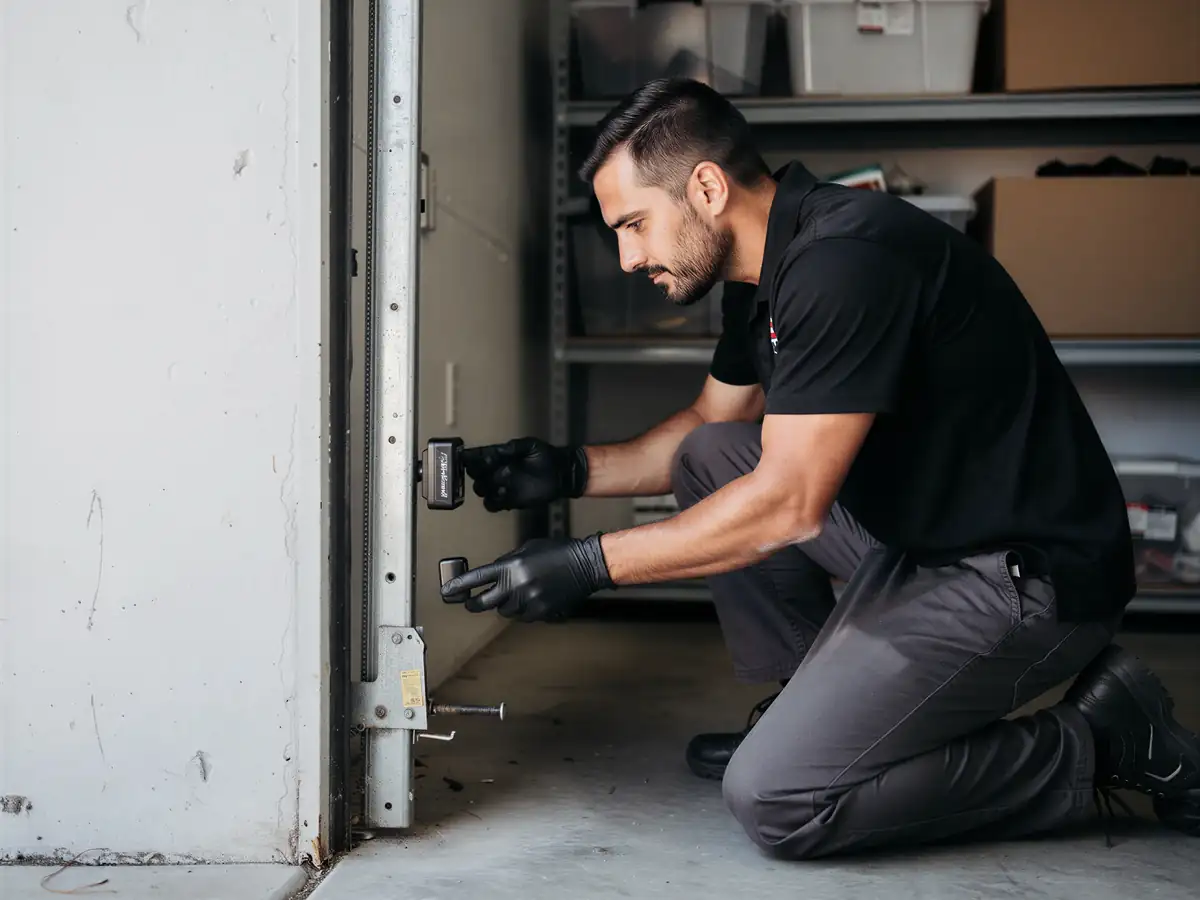
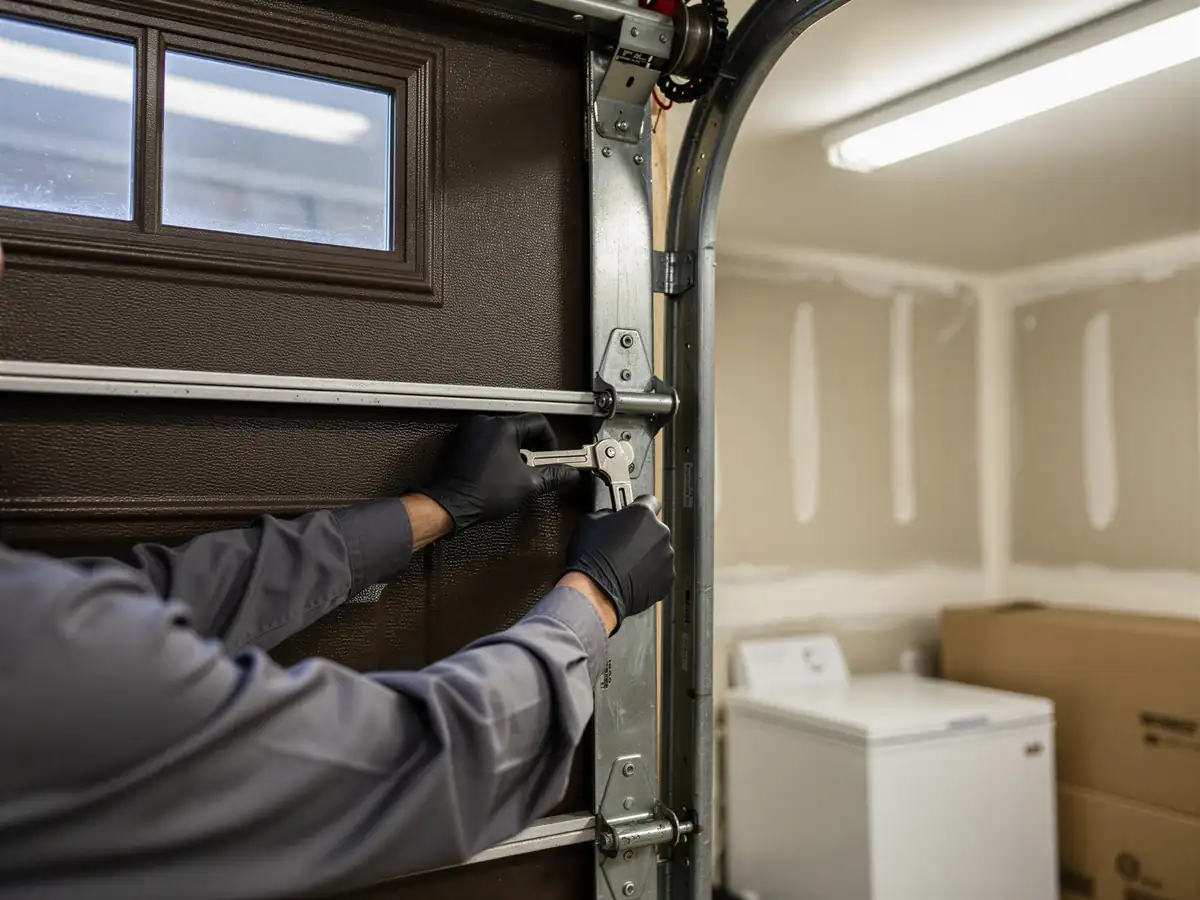
Most houses in Junction City went up around 1980, and that era of construction leaned on lighter-gauge track and steel rollers instead of the nylon rollers and heavier track you see on newer builds. When a door jumps track here, it's usually because a roller has worn down inside that older track channel, or a cable has slipped off the drum and let one side of the door drop while the other stayed up. We start by killing power to the opener so nothing tries to run while the door is cocked sideways. Then we check whether the track itself is bent - that lighter-gauge track from the 1980-ish build era bends more easily than what gets installed today, and once it's bent it has to be straightened or swapped, not just re-hung. If the track is straight and it's a roller or cable problem, we free the door, reset it in the track, and replace whatever let go. If the track is bent, that section gets replaced before the door goes back on it.
What Is on the Truck
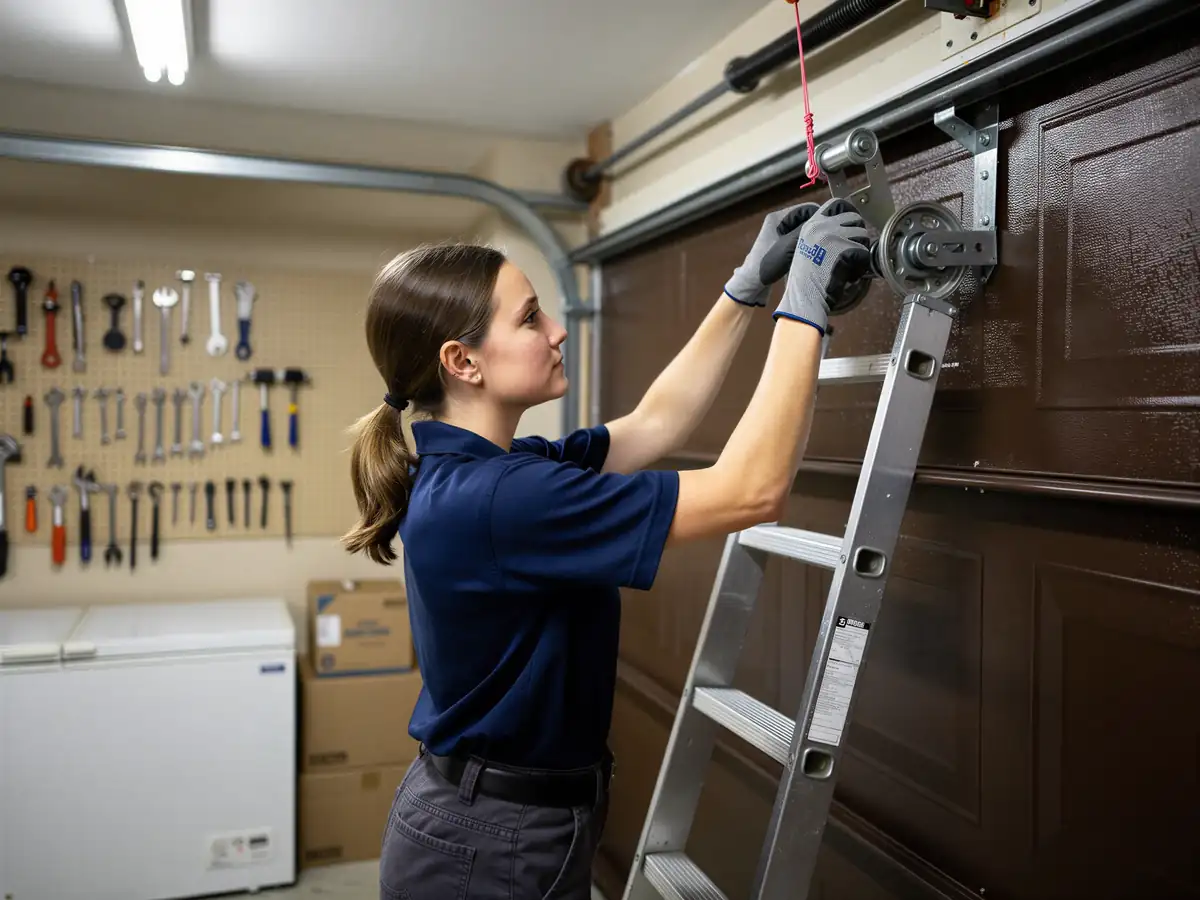
For Junction City calls we carry replacement track sections sized for the lighter-gauge channel common on 1980s-era garage doors, along with steel and nylon rollers, cables, and drums to cover both the original hardware and later upgrades homeowners may have added. We also carry torsion spring hardware, since a lot of doors from that build period were set up with extension springs that have since been swapped out by a previous repair. What we don't carry for every job is a replacement panel - if the door itself got bent or cracked when it came off track, that part gets ordered and the full fix happens on a second visit.
The DIY Question
If the door is only partway off track and the opener is unplugged, you can sometimes walk it back into the channel by hand, especially on a single door with no visible bend in the rail. Where this goes wrong is a cable under tension - if a cable has come off the drum while the spring is still loaded, pulling on the door can let it drop fast and that's not a safe thing to be standing under. If you see a bent track, a cable off the drum, or the door catty-corner in the opening, that's a call, not a weekend project.
Where This Job Goes Sideways
The job gets harder when the door has been off track long enough that someone tried to force it, which can crack a stile or bend a hinge beyond a simple straighten. It also gets harder on doors that have had mismatched hardware added over the years - an extension spring door from 1980 that picked up a torsion conversion later on, say - because then we're working out what's actually holding tension before we touch anything. We're honest when a repair isn't worth it: if the panel's cracked and the door's old enough that matching parts are a hunt, replacement often costs less in the long run than chasing parts for a door built in 1980.